
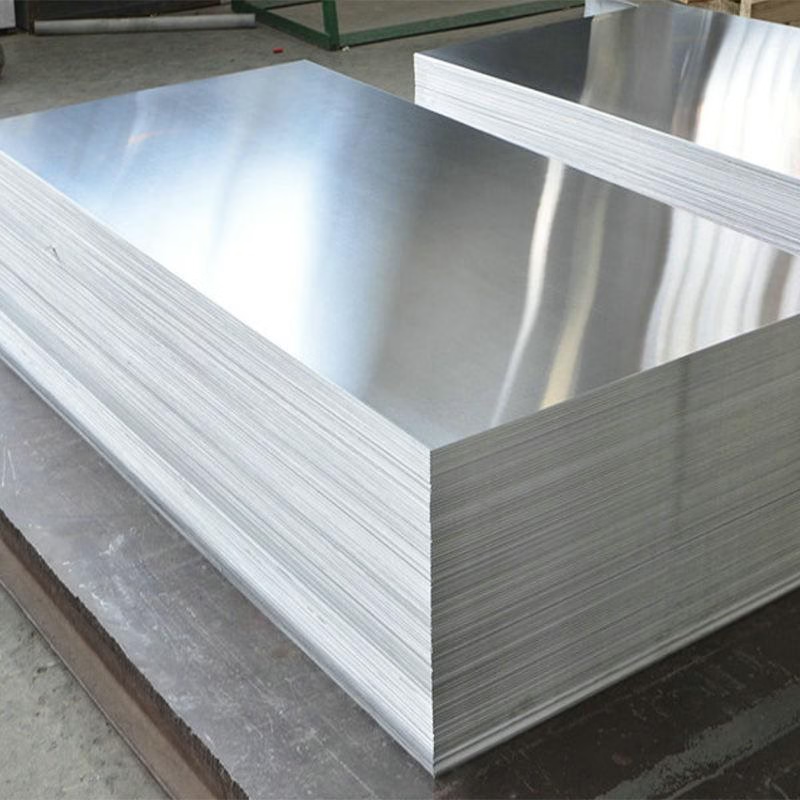
310S Stainless Steel Plate
AISI 310S (UNS S31008) high-chromium (24-26% Cr) high-nickel (19-22% Ni) austenitic stainless steel plate offering maximum oxidation resistance to 1150°C. Low carbon (≤0.08%) for superior weldability. Ideal for reformer tubes, furnace muffles, ethylene crackers. Thickness 3-100mm, ASME/API certified.
| Material | Austenitic Stainless Steel (High-Temperature Grade) |
|---|---|
| Grade / Standard | AISI 310S / UNS S31008 |
| Thickness | 3mm - 100mm (plate), 0.5mm - 6mm (sheet) |
| Width | 1000mm - 2500mm |
| Length | 2000mm - 12000mm (plate), 2000mm - 6000mm (sheet) |
| Delivery Condition | hot_rolled / cold_rolled |
| Surface Treatment | bare / polished |
| MOQ | 1 Ton |
| Delivery Time | 20-40 Days / Limited Stock for Common Sizes |
| Loading Port | Tianjin / Shanghai / Qingdao |
High-temp certified to 1150°C - Response within 24 hours
Overview of 310S Stainless Steel Plate
AISI 310S is a high-chromium, high-nickel austenitic stainless steel specifically engineered for extreme high-temperature service up to 1150°C, offering the best combination of oxidation resistance, sulfidation resistance, and carburization resistance among common austenitic stainless steel grades. Specified under ASTM A240 / EN 10088-2 standards with UNS designation S31008, 310S stainless steel plate contains nominally 24-26% chromium and 19-22% nickel with low carbon content (≤0.08%, the ‘S’ stands for low carbon similar to 304L/316L designation), providing exceptional resistance to high-temperature oxidizing and reducing atmospheres, molten salt corrosion, cyclic heating/cooling thermal shock, and aggressive industrial environments where standard austenitic grades like 304/316/321 would fail catastrophically within hours or days.
310S stainless steel plate has become the international standard material for the most demanding high-temperature industrial applications including petrochemical steam reformer tubes (800-1100°C), ethylene cracker pyrolysis coils (1000-1150°C), heat treatment furnace muffles and retorts (900-1200°C), glass manufacturing lehrs and annealing furnaces (700-1100°C), incinerator combustion chambers (950-1200°C), high-temperature thermal oxidizers (850-1100°C), power generation ultra-supercritical boiler superheater tubes (650-750°C), and industrial kiln furniture (900-1300°C) where resistance to catastrophic oxidation, creep rupture strength at extreme temperatures, and ability to withstand thousands of thermal cycles without cracking or warping are essential for multi-year service life. The combination of high chromium (24-26%) forming extremely stable Cr2O3 protective oxide scale, high nickel (19-22%) providing austenite stability and ductility at temperature, and low carbon (≤0.08%) preventing chromium carbide precipitation, makes 310S the material of choice when operating temperatures exceed the 900°C capability of 321 or when extreme oxidizing/sulfidizing conditions are present. 310S plate is supplied in thickness range from 3mm to 100mm with multiple surface finishes to meet demanding petrochemical, heat treatment, glass manufacturing, waste incineration, and high-temperature industrial furnace requirements.
Key Features and Surface Finishes
310S stainless steel plate is manufactured through hot rolling for thicker gauges (typically over 6mm) or cold rolling for thinner sheets, followed by solution annealing at 1040-1150°C with rapid water quenching or air cooling to achieve optimal low-carbon microstructure, complete dissolution of any carbides, maximum high-temperature oxidation resistance, and superior creep strength. The low carbon content (≤0.08%, typically 0.03-0.06% in modern production) combined with solution annealing prevents chromium carbide precipitation during welding or prolonged high-temperature service, maintaining chromium in solid solution for maximum oxidation resistance and eliminating intergranular corrosion concerns even without titanium or niobium stabilization.
The plate undergoes comprehensive quality control including chemical composition verification with special attention to chromium content (24-26%, critical for high-temperature oxidation resistance) and nickel content (19-22%, essential for austenite stability and thermal cycling resistance) by OES or ICP spectroscopy, mechanical property testing at both room temperature and elevated service temperatures (typically 650°C, 815°C, and 1000°C for creep-rupture and stress-rupture data required by petrochemical and power generation specifications), high-temperature oxidation testing per ASTM A262 or customer-specific protocols measuring oxide scale formation rate and metal loss at design temperature (typically 1000°C, 1100°C, or 1150°C for 100-1000 hour exposure), grain size analysis per ASTM E112 (typically ASTM No. 4-7 for high-temperature applications where larger grain size improves creep resistance), surface finish quality inspection, and dimensional inspection. Available surface finishes include No.1 (hot rolled, annealed, descaled — most common for thick plates and high-temperature industrial applications where surface finish is secondary to high-temperature performance), 2B (cold rolled, annealed, pickled — for moderate-temperature applications and equipment requiring better surface quality), No.4 (brushed satin finish for architectural high-temperature applications and visible equipment surfaces), and BA (bright annealed for specialized high-purity applications, though less common for 310S due to typical high-temperature service where surface finish degrades). Thickness range spans 3mm to 100mm with widths up to 2500mm and standard lengths of 6 meters, with precision cutting services available including plasma cutting for thick furnace plates (water jet cutting avoided due to potential for hydrogen absorption), laser cutting for moderate thicknesses requiring dimensional precision, and oxy-fuel cutting followed by grinding for very thick sections (>50mm).
Main Applications of 310S Stainless Steel Plate
310S stainless steel plate is the mandatory specification for petrochemical steam methane reformer (SMR) primary reformer tubes producing hydrogen and synthesis gas, operating at 800-950°C tube metal temperature (900-1100°C process gas temperature) and 25-40 bar pressure with mixed CH4/H2O atmosphere causing severe carburization, oxidation, and creep loading over 50,000-100,000 hour run lengths (5.7-11.4 years continuous operation), requiring 310S’s exceptional combination of carburization resistance, creep strength, and oxide scale stability; ethylene cracker pyrolysis furnace radiant coils operating at 1000-1150°C tube metal temperature (cracking naphtha, ethane, or propane feedstocks at 800-900°C process temperature) with severe cyclic carburization/decarburization and oxidation/reduction during normal operation and decoking cycles, representing one of the most demanding applications in chemical processing where 310S provides 2-5 year coil life compared to <1 year for lower grades; ammonia synthesis plant secondary reformer tubes and high-temperature shift converter internals operating at 800-950°C in reducing atmospheres containing CO, H2, and H2O; methanol synthesis gas generation reformer tubes; styrene production dehydrogenation reactor tubes operating at 600-650°C; and hydrogen peroxide concentrator heating elements. Heat treatment and metallurgical processing industries extensively use 310S for industrial furnace components including continuous carburizing furnace muffles and retorts (sealed chambers) operating at 900-950°C in carbon-rich atmospheres for case hardening of gears and bearings, requiring oxidation resistance on exterior surfaces and carburization resistance on interior surfaces over 10,000+ hour service; bright annealing furnace radiant tubes and muffles for stainless steel strip processing at 1000-1100°C in hydrogen/nitrogen protective atmospheres; vacuum furnace hot zone components (heating elements, shields, fixtures) for aerospace and tool steel heat treatment at 900-1250°C; sintering furnace conveyor belts and fixtures for powder metallurgy and metal injection molding (MIM) at 1100-1400°C (though for >1200°C, nickel-base alloys often preferred); nitrocarburizing furnace retorts at 550-600°C (lower temperature but highly corrosive salt bath environment); tempering furnace internals; hardening furnace door frames and seals; brazing furnace fixtures and support structures; aluminum solution heat treatment furnace components at 500-550°C; and titanium aging furnace internals at 450-550°C. Glass manufacturing facilities specify 310S for annealing lehr rollers and support structures operating at 400-700°C in continuous glass sheet production, lehrs for container glass annealing at 500-600°C, float glass tin bath exit rollers and annealing lehr components at 600-700°C, glass tempering furnace rollers operating at 600-700°C, fiberglass bushing plates and furnace components at 1100-1400°C (though platinum-rhodium alloys preferred for direct glass contact), and architectural glass bending furnace molds and fixtures at 600-700°C. Waste incineration and thermal treatment plants use 310S for municipal solid waste (MSW) incinerator primary combustion chamber refractory supports and structural components exposed to 950-1200°C with highly corrosive flue gas containing chlorides, sulfur compounds, and heavy metals, secondary combustion chamber (afterburner) internal structures ensuring complete organic destruction at 850-1100°C per emission regulations, hazardous waste incinerator rotary kiln tires and seals operating at 1000-1200°C, medical waste incinerator combustion chambers, sewage sludge incinerator components, and crematory retort structures operating at 800-1000°C. Industrial kiln and furnace applications include ceramic tile and pottery kiln furniture (setter plates, posts, beams) for fast-fire kilns operating at 1000-1200°C, though for continuous use above 1150°C mullite or silicon carbide refractories preferred; cement kiln preheater cyclone components at 800-900°C; lime kiln rotary components; calcination furnace internals for catalyst regeneration, carbon activation, and mineral processing at 700-1000°C; roller hearth furnace rollers for steel strip processing; pusher furnace structural components; and catalytic converter substrate manufacturing furnace components at 900-1100°C. Power generation facilities use 310S for ultra-supercritical (USC) coal-fired power plant final superheater and reheater tubes operating at 600-750°C steam temperature and 250-350 bar pressure (620-700°C tube metal temperature), advanced USC (A-USC) development projects targeting 700-760°C steam for 50%+ thermal efficiency, circulating fluidized bed (CFB) boiler superheater tubes in biomass and waste-to-energy plants with corrosive flue gas at 500-650°C, concentrated solar power (CSP) molten salt receiver tubes operating at 550-600°C, oxy-fuel combustion boiler components, and supercritical CO2 (sCO2) power cycle heat exchanger components (emerging technology). Other critical high-temperature applications include thermal oxidizer combustion chambers for industrial VOC (volatile organic compound) and HAP (hazardous air pollutant) destruction operating at 800-1100°C ensuring 99.99% destruction efficiency per air quality regulations, catalytic oxidizer catalyst support grids, regenerative thermal oxidizer (RTO) ceramic media retention grids, flare stack tips and burners exposed to 900-1200°C flame temperatures, industrial dryer combustion chambers for paint curing, textile processing, and food drying at 400-600°C, coal-fired power plant soot blower lances and retractable components exposed to 1000-1200°C when extended into furnace, black liquor recovery boiler superheater tubes in pulp and paper mills operating at 500-600°C in highly corrosive reducing atmosphere, sulfuric acid plant converter inlet/outlet piping and structural supports at 400-600°C, coke oven door frames and jambs exposed to 1000-1100°C, blast furnace hot blast stove components, electric arc furnace (EAF) roof panels and off-gas ductwork, ferrochrome production furnace components, and rocket engine test stand flame deflector structural supports.
Why Choose Us for 310S Stainless Steel Plate
Shandong Tanglu Metal Material Co., Ltd. supplies premium 310S stainless steel plate sourced from certified Chinese and international stainless steel mills including Tisco (Taiyuan Iron & Steel – China’s largest specialty stainless steel producer), Baosteel Stainless, Lisco, and POSCO (South Korea) with strict dual control of high chromium content (verified 24-26%) and high nickel content (verified 19-22%) ensuring maximum high-temperature oxidation resistance and creep strength, proven petrochemical reformer tube, ethylene cracker coil, industrial furnace, and power generation ultra-supercritical boiler project experience, and certified production facilities meeting ISO 9001, ISO 14001, ASME Section I (power boilers including USC specifications), ASME Section VIII (pressure vessels for high-temperature service), PED 2014/68/EU (European Pressure Equipment Directive), NACE MR0175/ISO 15156 for sour service oil and gas applications, and API 530 (calculation of heater tube thickness in petroleum refineries) requirements. Every 310S plate undergoes mandatory chemical composition analysis with special verification of chromium content (24-26%, critical element) and nickel content (19-22%, essential element) by OES spectroscopy with ICP verification for critical applications, carbon content control verification (≤0.08%), PMI (Positive Material Identification) testing available for critical high-temperature petrochemical and power generation projects preventing material mix-ups that could cause catastrophic failures, mechanical property testing including room temperature tensile/yield/elongation per ASTM A240 and elevated temperature creep-rupture or stress-rupture data at 650°C, 815°C, and 1000°C for refinery heater tube, reformer tube, and power generation superheater specifications requiring time-dependent strength verification, high-temperature oxidation testing per ASTM A262 or customer-specific protocols with specimens exposed to 1000-1150°C for 100-1000 hours measuring oxide scale thickness, metal loss, and scale spallation resistance providing verification of long-term high-temperature performance, grain size analysis per ASTM E112 (coarser grain size ASTM No. 4-6 preferred for high-temperature creep resistance, finer grain size ASTM No. 6-8 for moderate temperature strength), surface finish quality inspection, and dimensional inspection per ASTM A240 / EN 10088-2 latest revision with tighter tolerances available for critical petrochemical tube plate stock.
We offer comprehensive thickness range from 3mm thin sheets for furnace baffles and heat shields to 100mm thick plates for reformer tube headers and pressure vessel nozzles, multiple surface finishes (No.1 for industrial high-temperature service, 2B for moderate-temperature equipment, No.4 for architectural and visible components) with specialized descaling treatments available for improved high-temperature oxidation resistance, standard widths up to 2500mm and lengths up to 12 meters for large reformer projects and power plant construction, plus precision fabrication services including plasma cutting optimized for thick high-alloy plate minimizing heat-affected zone width and distortion, laser cutting for moderate thicknesses (≤25mm) requiring tight dimensional tolerances (±0.2mm) for furnace door frames and precision fixtures, oxy-fuel cutting followed by machined edge preparation for very thick sections (>50mm) including tube sheet blanks and pressure vessel components, edge beveling for welding preparation on reformer tubes and boiler components, solution annealing services at 1040-1150°C for customer-supplied components or fabricated assemblies requiring restoration of maximum high-temperature properties, and consultation on welding procedures and filler metal selection (ER310, ER310Mo, or nickel-base fillers) for critical high-temperature welded structures. With monthly supply capacity of 2,000 tons of high-temperature specialty stainless steel plates and established export experience to petrochemical refineries (steam reformers, ethylene crackers, hydrogen plants), heat treatment furnace manufacturers (car-bottom furnaces, roller hearth furnaces, vacuum furnaces), glass manufacturing plants (annealing lehrs, float glass lines, container glass production), waste incineration facilities (municipal solid waste, hazardous waste, medical waste incinerators), power generation projects (ultra-supercritical coal plants, biomass plants, concentrated solar power), industrial thermal oxidizer manufacturers, and high-temperature equipment fabricators in over 35 countries including major petrochemical markets (USA Gulf Coast, Middle East Saudi Arabia/UAE, Asian Singapore/South Korea/China, European Netherlands/Germany), we support both small orders for furnace maintenance and repairs (minimum 1 ton) and large project supply contracts for new reformer construction, ethylene cracker revamps, and power plant construction (100-500 ton projects). Each shipment includes original mill test certificate (MTC) conforming to EN 10204 3.1 standard with verified high chromium content (24-26%), high nickel content (19-22%), low carbon content (≤0.08%), complete chemical analysis of all elements including trace elements (Si, Mn, P, S, Mo if present), room temperature mechanical properties (tensile, yield, elongation, hardness), and heat treatment parameters (solution annealing temperature and cooling method documented), with EN 10204 3.2 third-party inspection, PMI report with Cr and Ni verification preventing material mix-ups, elevated temperature mechanical property data (creep-rupture at 650°C/815°C/1000°C for refinery and power generation specifications per ASME Section I and VIII, API 530/560/RP 941), high-temperature oxidation test results with specimen weight change and oxide scale thickness measurements after exposure to 1000°C, 1100°C, or 1150°C per customer specifications, grain size data and photomicrographs, NACE compliance certification for sour service refinery applications, API 530 compliance for refinery heater tubes, ASME Code Case certifications for ultra-supercritical power generation (Code Case 2180, 2199, 2328 for advanced materials), and independent third-party inspection (SGS, BV, TÜV, Intertek, ABS, DNV, Lloyds Register) available for critical petrochemical reformer, power generation ultra-supercritical boiler, waste incinerator, and high-temperature pressure vessel applications requiring enhanced documentation, complete material traceability to original heat number and production lot, code compliance verification per ASME/API/PED standards, project-specific material qualification testing, and witness testing of mechanical properties and high-temperature oxidation resistance per customer engineering specifications and international quality standards.
📐 Dimension & Size Table
| Thickness (mm) | Width (mm) | Length (mm) | Weight (kg/m²) |
|---|---|---|---|
| 3 | 1000-2000 | 2000-6000 | 24.15 |
| 4 | 1000-2000 | 2000-6000 | 32.20 |
| 5 | 1000-2000 | 2000-6000 | 40.25 |
| 6 | 1000-2000 | 2000-6000 | 48.30 |
| 8 | 1000-2200 | 2000-8000 | 64.40 |
| 10 | 1000-2200 | 2000-8000 | 80.50 |
| 12 | 1500-2200 | 3000-8000 | 96.60 |
| 16 | 1500-2200 | 3000-8000 | 128.80 |
| 20 | 1500-2500 | 3000-10000 | 161.00 |
| 25 | 1500-2500 | 3000-10000 | 201.25 |
| 30 | 1500-2500 | 3000-10000 | 241.50 |
| 40 | 1500-2500 | 3000-12000 | 322.00 |
| 50 | 1500-2500 | 3000-12000 | 402.50 |
| 60 | 1500-2200 | 3000-12000 | 483.00 |
| 80 | 1500-2200 | 3000-10000 | 644.00 |
| 100 | 1500-2000 | 3000-8000 | 805.00 |
* Custom sizes available upon request. Tolerances per relevant international standards.
🔬 Chemical Composition
| Element | Min | Max | Display Value | Note |
|---|---|---|---|---|
| C | - | 0.08 | ≤0.08 | Low carbon - 'S' grade, typically 0.03-0.06% |
| Si | - | 1.50 | ≤1.50 | Higher Si improves oxidation resistance |
| Mn | - | 2.00 | ≤2.00 | |
| P | - | 0.045 | ≤0.045 | |
| S | - | 0.030 | ≤0.030 | |
| Cr | 24.00 | 26.00 | 24.00-26.00 | KEY ELEMENT - High-temp oxidation resistance to 1150°C |
| Ni | 19.00 | 22.00 | 19.00-22.00 | KEY ELEMENT - Austenite stability & thermal cycling resistance |
| N | - | 0.10 | ≤0.10 | Optional |
| Fe | - | - | Balance | Base element (typically 48-52%) |
* Chemical composition may vary by heat, thickness and specification. Please refer to the actual mill test certificate.
⚙️ Mechanical Properties
| Property | Value | Unit | Test Condition |
|---|---|---|---|
| Tensile Strength (Rm) | ≥520 | MPa | Solution annealed, per ASTM A240 |
| Yield Strength (Rp0.2) | ≥205 | MPa | 0.2% proof stress at room temperature |
| Elongation (A) | ≥40 | % | Gauge length 50mm |
| Brinell Hardness (HBW) | ≤217 | HBW | Solution annealed |
| Rockwell Hardness (HRB) | ≤95 | HRB | Solution annealed |
| Impact Energy (KV2) | ≥100 | J | Charpy V-notch at +20°C |
| Density | 8.05 | g/cm³ | Reference value (higher due to high Ni content) |
| Elevated Temp Tensile (650°C) | ≥270 | MPa | Per ASME Section I/VIII |
| Elevated Temp Tensile (815°C) | ≥180 | MPa | Per ASME Section I/VIII |
| Elevated Temp Tensile (1000°C) | ≥90 | MPa | Typical for reformer service |
| Max Continuous Service Temp | 1150 | °C | Oxidation resistance limit |
| Intermittent Service Temp | 1200 | °C | Short-term exposure capability |
| Magnetic Permeability | ≤1.02 | μ | Non-magnetic austenitic structure |
* Values shown are minimum requirements unless otherwise stated.
📦 Commercial Information
| Packaging | Premium seaworthy export packing for 310S high-temperature stainless steel plates with protection suitable for petrochemical and high-temperature industrial applications. Thinner plates and sheets (≤10mm) individually wrapped with PE film and protective interleaving paper preventing surface damage, then bundled with heavy-duty corrosion-resistant steel strapping and protective wooden frame with moisture barrier to prevent edge damage and atmospheric corrosion during ocean freight and storage. Thicker plates (>10mm) for reformer tubes, furnace components, and pressure vessels bundled with marine-grade steel strapping and reinforced corner edge protectors, with weather-resistant and moisture-barrier interleaving paper between plates preventing surface scratching, staining, and corrosion. Bundle weight typically 3-6 tons optimized for container loading and crane handling at petrochemical fabrication facilities. Each bundle clearly tagged with heat number providing complete traceability, grade designation (310S / S31008 / 1.4845), verified chromium content (24-26%) and nickel content (19-22%) critical for high-temperature performance, dimensions, surface finish, applicable specifications (ASTM A240, ASME SA-240, API 530, EN 10028-7), and quantity. For critical petrochemical reformer and power generation projects, special identification includes customer project name, purchase order number, material test report (MTR) reference number, and specific heat treatment lot documentation. High-value reformer tube plate stock receives individual piece identification with heat number stamping or electrochemical etching enabling traceability of each tube back to original production heat. Wooden packaging with ISPM-15 fumigation certification standard for international shipment. For extended outdoor storage at petrochemical construction sites in humid or marine environments, additional VCI (Vapor Corrosion Inhibitor) wrapping and desiccant sachets available. Container loading optimized for 25-27 tons per 40FT high-cube container with proper weight distribution, securing with dunnage bags preventing shifting during ocean transport, and clear external marking for project logistics management. |
|---|---|
| Payment Terms | T/T (Telegraphic Transfer),L/C at Sight (Letter of Credit - preferred for large petrochemical projects),D/P (Documents against Payment),Advance Payment + Balance against B/L Copy,Milestone Payments (for large multi-shipment projects) |
| Price Term | FOB,CFR,CIF,EXW,DDP,DAP |
| Supply Capacity | 2,000 Tons/Month (High-Temperature Specialty Stainless Steel Plates) |
| Loading Port | Tianjin / Shanghai / Qingdao |
Why Choose Our 310S Stainless Steel Plate?
Maximum Oxidation Resistance to 1150°C
High chromium content (24-26%) forms exceptionally stable Cr2O3 protective oxide scale providing continuous service to 1150°C and intermittent to 1200°C. Superior to 304/316/321 (limited to 800-900°C) for reformer tubes, ethylene crackers, furnace muffles, and incinerators. Proven 5-10 year service life in extreme high-temperature petrochemical and industrial applications.
Verified High Cr-Ni Content Control
310S plate with verified chromium 24-26% and nickel 19-22% by OES spectroscopy, certified low carbon ≤0.08%, supplied with EN 10204 3.1/3.2 certificate including complete chemistry, elevated temperature mechanical properties at 650°C/815°C/1000°C per ASME requirements, high-temperature oxidation test data, grain size analysis, and heat treatment parameters documentation.
Superior Creep Strength at Extreme Temperature
Maintains useful tensile strength ≥270 MPa at 650°C, ≥180 MPa at 815°C, and ≥90 MPa at 1000°C. Excellent creep-rupture resistance for long-term high-temperature pressure loading. Meets ASME Section I (power boilers) and Section VIII (pressure vessels), API 530/560 (refinery heaters), and ultra-supercritical power generation Code Cases for 600-750°C service.
Petrochemical & Power Generation Code Certified
ASME Section I and Section VIII certified for high-temperature pressure vessels and boilers. API 530 compliant for refinery heater tubes. API 560 compliant for fired heaters. ASME Code Case 2180/2199/2328 for ultra-supercritical power generation. PED 2014/68/EU Category III/IV. NACE MR0175/ISO 15156 sour service. ISO 9001, ISO 14001 quality management.
Petrochemical Project Experience & Support
15+ years supplying 310S for steam reformers, ethylene crackers, USC boilers, and industrial furnaces. Technical support for material selection, welding procedures (ER310, ER310Mo fillers), and fabrication consultation. Common thicknesses (8-30mm) stock available. Heavy reformer tube plates (40-100mm) production 30-45 days. Experienced in large petrochemical project logistics and documentation.
🏭 Applications of 310S Stainless Steel Plate
310S stainless steel plate is the mandatory specification for the most demanding high-temperature petrochemical applications including steam methane reformer (SMR) primary reformer tubes in hydrogen plants, ammonia synthesis plants, methanol production facilities, and refinery hydrogen generation units, operating at 800-950°C tube metal temperature (corresponding to 900-1100°C process gas temperature) and 25-40 bar internal pressure in mixed CH4/H2O/CO/H2 atmospheres causing severe simultaneous carburization (carbon pickup from methane decomposition forming metal carbides and coke), oxidation (chromium oxide scale formation), and creep deformation under sustained tensile stress from internal pressure, with typical reformer tube run lengths of 50,000-100,000 hours (5.7-11.4 years of continuous 24/7/365 operation) before replacement due to accumulated creep strain, oxide scale spallation, or wall thinning; 310S provides the optimal combination of carburization resistance (high chromium and nickel content suppressing carbon diffusion), oxidation resistance (24-26% Cr forming stable Cr2O3 scale), and elevated temperature creep strength enabling these extended run lengths where lower grades like 321 (17-19% Cr) would fail within months from excessive oxidation and carburization; ethylene cracker pyrolysis furnace radiant coils (pyrolysis tubes) operating at 1000-1150°C tube outer wall metal temperature with 850-900°C process gas temperature inside tubes cracking naphtha, ethane, or propane feedstocks into ethylene and propylene monomers for polymer production, representing one of the single most severe corrosion environments in chemical processing industry due to combined cyclic carburization during cracking operation (carbon deposition on tube interior forming coke layer requiring periodic high-temperature steam-air decoking at 900-1000°C), oxidation on tube exterior from radiant burner combustion gases, extreme thermal gradients through tube wall (300-400°C ΔT from inside to outside surface), thermal shock during rapid startup/shutdown and emergency trips, and mechanical stress from internal pressure (3-5 bar) plus thermal expansion constraints, with typical pyrolysis coil service life 2-5 years (15,000-40,000 hours) before replacement due to creep rupture, oxide scale spallation causing hot spots and overheating, or coke formation reducing heat transfer and selectivity; 310S enables maximum coil life and furnace run length compared to alternatives where standard austenitic grades would fail catastrophically within weeks and even specialized HP (heat-resistant cast) alloys with 25% Cr and 35% Ni provide only marginally better performance at 3-5× material cost; secondary reformer tubes in ammonia plants and methanol synthesis facilities operating at 900-1050°C in highly reducing CO/H2/H2O atmosphere with catalyst pellet abrasion; styrene monomer production dehydrogenation reactor tubes at 600-650°C; hydrogen peroxide production concentrator reboiler tubes; and numerous specialty chemical high-temperature reactor and heat exchanger applications where 310S provides cost-effective high-temperature corrosion resistance and mechanical strength. Heat treatment and metallurgical processing industries extensively use 310S for precision industrial furnace components including atmosphere-controlled carburizing furnace muffles and retorts (sealed inner chambers isolating parts from furnace atmosphere) operating at 900-950°C in strongly carburizing endothermic gas atmospheres (20-40% CO, 30-40% H2, balance N2) for case hardening of automotive transmission gears, differential gears, bearings, and precision components, requiring exceptional carburization resistance on interior muffle surface preventing carbon pickup that would embrittle the muffle structure while maintaining oxidation resistance on exterior surface exposed to combustion gases, with typical muffle service life 5,000-10,000 operating hours (2-5 years with two-shift operation) before replacement due to warping, cracking, or excessive carburization; bright annealing furnace radiant tubes for stainless steel strip, wire, and fastener processing operating at 1000-1100°C in hydrogen or hydrogen-nitrogen protective atmospheres, where 310S radiant tubes contain electric heating elements or gas burners transferring heat by radiation to steel strip passing through sealed muffle under protective atmosphere preventing oxidation and achieving bright surface finish critical for stainless steel kitchen sinks, appliances, and architectural applications; vacuum furnace hot zone structural components including heating element supports, radiation shields, work supports, and door frames for aerospace aluminum and titanium heat treatment, tool steel hardening and tempering, brazing, and sintering operations at 900-1300°C under vacuum (10⁻³ to 10⁻⁵ mbar), though above 1200°C nickel-base alloys or molybdenum are often preferred; powder metallurgy sintering furnace mesh belts, pusher plates, and setter tiles operating at 1100-1400°C in hydrogen or dissociated ammonia atmospheres for iron, stainless steel, and hard metal (WC-Co) powder compacts; nitrocarburizing and ferritic nitrocarburizing furnace retorts exposed to corrosive cyanide or ammonia-based salt baths at 550-600°C; hardening furnace fixtures, quench baskets, and door seals; solution heat treatment furnace components for aluminum alloys (500-550°C) and precipitation hardening stainless steels (1000-1100°C); brazing furnace fixtures and supports for copper, silver, and nickel brazing at 700-1150°C; and general heat treatment shop furnace doors, frames, hearth plates, and structural components requiring high-temperature oxidation resistance with good thermal cycling durability. Glass manufacturing facilities specify 310S for annealing lehr (decorative annealing tunnel) conveyor rollers, support beams, and heating element retainers operating at 400-700°C in continuous flat glass, container glass, and specialty glass production, where glass sheets or containers exit forming process at 600-900°C and must be slowly cooled through glass transition temperature (≈550°C) to room temperature at controlled rate (1-10°C/min) preventing residual stress and cracking; 310S rollers provide excellent oxidation resistance, dimensional stability preventing sagging under load at temperature, and surface finish quality avoiding glass surface defects; float glass production annealing lehr components and tin bath exit area structures at 600-700°C; glass tempering furnace rollers for automotive and architectural safety glass operating at 600-700°C with rapid quenching thermal shock; fiberglass production bushing support structures and furnace components at 1100-1400°C (though for direct molten glass contact, platinum-rhodium alloys are preferred due to glass contamination concerns with chromium); borosilicate laboratory glassware forming furnace components; and optical glass lens molding furnace fixtures requiring high-temperature stability and non-contaminating surface. Waste incineration and thermal treatment industries use 310S for municipal solid waste (MSW) incinerator primary combustion chamber refractory anchor systems, grate support structures, and secondary air injection nozzles exposed to 950-1200°C with extremely corrosive flue gas containing chlorides (from PVC plastics and other chlorinated materials generating HCl), sulfur compounds (from organic sulfur forming SO2/SO3), heavy metals (lead, cadmium, mercury volatilizing and depositing), and alternating oxidizing/reducing conditions causing accelerated high-temperature corrosion that would destroy carbon steel within days and standard stainless steels (304/316) within months; secondary combustion chamber (afterburner) structural components ensuring complete organic compound destruction at 850-1100°C residence time per EPA and EU emission regulations; hazardous waste incinerator rotary kiln tires (riding rings), kiln seals, and burner nozzles operating at 1000-1200°C incinerating toxic organic chemicals, pharmaceutical waste, and contaminated materials; medical and pathological waste incinerator combustion chambers and afterburners; sewage sludge incinerator grate systems and freeboard area structures; crematory retort combustion chambers, burner assemblies, and exhaust duct components operating at 800-1000°C; and animal carcass disposal incinerator structures. Industrial kiln applications include fast-fire ceramic tile kiln furniture (setter plates, support posts, spacing bars, beams) for roller hearth kilns operating at 1000-1200°C with 30-60 minute firing cycles producing floor tiles, wall tiles, and sanitary ware, though for continuous operation above 1150°C and highly alkaline glaze vapor environments, mullite, cordierite, or silicon carbide ceramic refractories often preferred due to better thermal shock resistance and lower reactivity with glaze components; pottery and tableware kiln furniture for bisque and glost firing at 900-1300°C; technical ceramics (alumina, zirconia, silicon nitride) sintering kiln supports operating at 1200-1600°C where 310S used for lower temperature zones and structural supports while refractory materials contact parts directly; cement kiln preheater cyclone suspension hangers and structural components at 800-900°C; lime and dolomite calcining kiln components; catalyst regeneration and activation furnace internals at 700-1000°C; roller hearth furnace rollers for steel strip processing; and pusher furnace push pads and side rails. Power generation facilities increasingly specify 310S for ultra-supercritical (USC) and advanced ultra-supercritical (A-USC) coal-fired power plant final superheater and final reheater tubes targeting 600-760°C steam temperature and 250-350 bar pressure to achieve thermal efficiency >45-50% compared to 38-42% for subcritical plants, reducing CO2 emissions per kWh by 20-30%; USC plants operating at 600-620°C steam (≈620-650°C tube metal temperature) widely use 310S for final superheater outlet sections, while A-USC development projects targeting 700-760°C steam temperature are evaluating 310S for lower-temperature sections with nickel-base alloys (Inconel 617, 740H, Haynes 282) for highest temperature zones; circulating fluidized bed (CFB) boiler superheater pendant tubes and platens in biomass and waste-to-energy applications operating at 500-650°C in highly corrosive flue gas containing alkali chlorides (KCl, NaCl) from biomass combustion causing accelerated fireside corrosion; concentrated solar power (CSP) molten salt central receiver tubes operating at 550-600°C with nitrate molten salt (60% NaNO3, 40% KNO3) heat transfer fluid; oxy-fuel combustion boiler superheaters operating in high-CO2 flue gas at 500-700°C.
📋 Quality & Certification
Our Certifications
- ✅ ISO 9001:2015
- ✅ Bureau Veritas (BV)
- ✅ SGS Certified
Mill Certificate Type
- 📋 EN 10204 3.1
- 📋 EN 10204 3.2
- 📋 Certificate of Origin
❓ Frequently Asked Questions
What is the maximum continuous operating temperature for 310S stainless steel?
310S stainless steel is rated for CONTINUOUS SERVICE up to 1150°C (2100°F) in oxidizing atmospheres, providing the highest maximum operating temperature among common austenitic stainless steel grades. This temperature limit is based on HIGH-TEMPERATURE OXIDATION RESISTANCE where 310S's high chromium content (24-26%) forms an exceptionally stable, adherent chromium oxide (Cr2O3) protective scale that grows slowly and remains protective at temperatures up to 1150°C, while above this temperature the oxide scale begins to volatilize (forming gaseous CrO3 in presence of oxygen and water vapor), spall during thermal cycling, and allow accelerated metal wastage at rates >0.5-1.0 mm/year making equipment service life uneconomically short. Specific temperature capability depends on performance criterion: (1) OXIDATION RESISTANCE - 310S provides excellent resistance forming protective Cr2O3 scale at continuous temperatures: 900-1000°C (metal loss <0.1-0.2 mm/year, suitable for 5-10 year furnace component life), 1000-1100°C (metal loss 0.2-0.5 mm/year, typical for reformer tubes and ethylene cracker coils with 2-5 year replacement cycles), 1100-1150°C (metal loss 0.5-1.0 mm/year, acceptable for short-run specialty applications or with increased wall thickness corrosion allowance); above 1150°C continuous, oxidation rate increases dramatically requiring upgrade to 310HCbN (niobium-stabilized variant with controlled nitrogen addition), nickel-base alloys (Inconel 600/601/617/625, Haynes 214/230), or ceramic materials; (2) CREEP STRENGTH - For applications involving sustained mechanical loading (internal pressure in tubes, dead load on furnace structures), maximum temperature depends on applied stress and required service life following ASME Boiler and Pressure Vessel Code allowable stress values: at 650°C, 310S allowable stress ≈85 MPa enabling pressure vessel and boiler tube design, at 815°C allowable stress ≈40 MPa suitable for moderate-pressure applications, at 1000°C allowable stress ≈12 MPa limiting use to low-stress furnace components and unpressurized structures; for high-stress applications (pressure vessels, reformer tubes under internal pressure), practical creep-limited temperature typically 650-850°C for 100,000 hour design life, while low-stress applications (furnace muffles, kiln furniture, heat shields) can operate to full 1150°C oxidation limit; (3) MICROSTRUCTURAL STABILITY - 310S austenitic structure remains stable to 1150°C, though sigma phase (brittle Fe-Cr intermetallic) can form during prolonged exposure to 600-900°C potentially reducing ductility after extended service (>20,000-50,000 hours), requiring periodic inspection for critical pressure-retaining components; (4) CARBURIZATION RESISTANCE - in strongly carburizing atmospheres (high CO, CH4, or hydrocarbon content at elevated temperature), 310S resists carbon pickup better than lower-alloy grades due to high Cr-Ni content, remaining effective to ≈1050-1100°C for reformer and pyrolysis tube service, above which specialized HP alloys (25Cr-35Ni cast) or coatings may be beneficial. INTERMITTENT/SHORT-TERM CAPABILITY: 310S can withstand intermittent or short-term exposure to 1200-1250°C (2190-2280°F) for limited duration (hours to days) without catastrophic oxidation, melting (melting point ≈1400-1450°C), or structural collapse, critical for: incinerator afterburners with transient temperature spikes during high-BTU waste combustion, furnace components experiencing upset conditions or rapid heating during startup, heat treatment fixtures with short high-temperature cycles, and emergency overheat scenarios; after exposure to 1200-1250°C, thicker oxide scale (5-20mm) will form and may spall upon cooling, but structural integrity typically maintained if duration <100 hours cumulative. TEMPERATURE LIMITS BY SPECIFIC APPLICATION: Steam reformer tubes: 800-950°C tube metal temperature continuous for 50,000-100,000 hours; Ethylene cracker coils: 1000-1150°C tube outer wall continuous for 15,000-40,000 hours; Heat treatment furnace muffles: 900-1050°C continuous for 5,000-10,000 hours between replacements; Glass annealing lehrs: 400-700°C continuous indefinitely with periodic maintenance; Waste incinerators: 950-1150°C continuous in primary/secondary chambers; Industrial furnace retorts: 900-1100°C continuous for batch or continuous processing; Ceramic kiln furniture: 1000-1150°C continuous, limited by thermal shock rather than oxidation; Power generation USC superheaters: 600-650°C tube metal temperature (corresponding to 600-620°C steam) for 200,000+ hours boiler life. For applications requiring continuous service above 1150°C, material alternatives include: 310HCbN (niobium-stabilized 310 with nitrogen addition, suitable to 1175-1200°C), RA330 (19Cr-35Ni-1.25Si, superior oxidation resistance to 1200°C), Inconel 600 (15Cr-76Ni, to 1150°C with better creep strength than 310S), Inconel 601 (23Cr-60Ni-1.4Al, aluminum oxide formation, to 1250°C), Inconel 617 (22Cr-52Ni-13Co-9Mo, exceptional creep strength to 1000°C for A-USC power generation), Haynes 214 (16Cr-75Ni-4.5Al, alumina-forming for 1200-1300°C oxidation resistance), or for the most extreme temperatures >1300°C, ceramic materials (mullite, alumina, silicon carbide) or platinum-group metals.
Why is 310S specified for ethylene cracker furnace tubes instead of 321 or other grades?
310S is the MANDATORY material specification for ethylene cracker pyrolysis furnace radiant tubes (also called cracking coils or pyrolysis tubes) due to the uniquely severe combination of extreme temperature, aggressive carburizing/oxidizing environment, and thermal cycling that exceeds the capability of all lower-alloy stainless steels including 304, 316, and 321. CRITICAL REQUIREMENTS FOR ETHYLENE CRACKER SERVICE: (1) EXTREME TEMPERATURE CAPABILITY - Pyrolysis coils operate at 1000-1150°C tube outer wall metal temperature (radiant zone exposure to burner flames) with 850-900°C process gas temperature inside tubes, far exceeding the 900°C oxidation limit of 321 (17-19% Cr) which would form excessive oxide scale, spall, and fail within weeks at cracker operating temperature; 310S's 24-26% chromium content forms exceptionally stable Cr2O3 oxide scale remaining protective at 1000-1150°C enabling typical 2-5 year coil life (15,000-40,000 operating hours) before replacement due to accumulated creep deformation, oxide scale buildup reducing heat transfer, or coke formation on tube interior reducing selectivity and causing hot spots; (2) CYCLIC CARBURIZATION/DECARBURIZATION RESISTANCE - During normal cracking operation, naphtha or ethane feedstock decomposes inside tubes depositing carbon (coke) on tube interior surface, with carbon diffusing into tube wall metal forming metal carbides (chromium carbides, iron carbides) that embrittle the structure; periodic decoking operations using steam-air mixtures at 900-1000°C remove coke deposits but also decarburize (extract carbon from) tube wall metal creating cyclic carburization/decarburization that accelerates metal dusting, grain boundary cracking, and microstructural degradation; 310S's high chromium (24-26%) and high nickel (19-22%) content significantly reduces carbon solubility and diffusion rate compared to lower-alloy austenitic grades, while high chromium promotes formation of protective chromium-rich carbide layer on tube ID that slows further carbon ingress; 321's lower chromium (17-19%) and nickel (9-12%) provides inferior carburization resistance leading to faster carbon pickup, deeper carburized zones, and embrittlement reducing coil life by 50-70%; (3) OXIDATION RESISTANCE ON TUBE EXTERIOR - Tube outer surfaces exposed to radiant burner flames containing O2, H2O, CO2, and combustion products at 1200-1400°C flame temperature (1000-1150°C tube wall temperature) must form stable oxide scale resisting spallation during thermal cycling; 310S forms dense, adherent Cr2O3 scale growing at 0.3-0.8 mm/year at 1000-1100°C, while 321 would form rapidly-growing, poorly-adherent scale at these temperatures leading to accelerated oxidation breakthrough and tube failure; (4) CREEP STRENGTH AT EXTREME TEMPERATURE - Coils operate under internal pressure (3-5 bar typical) plus thermal expansion stresses requiring adequate creep rupture strength at 1000-1100°C for 20,000-40,000 hour service life; 310S maintains tensile strength ≈90-120 MPa at 1000°C and demonstrates acceptable creep rates <0.01%/1000hr under typical coil operating stresses (15-30 MPa hoop stress from internal pressure), while 321 has significantly lower strength at these temperatures (≈60-80 MPa at 1000°C) and higher creep rates leading to excessive diameter expansion, sagging, and creep rupture; (5) THERMAL SHOCK RESISTANCE - Cracker furnaces undergo frequent thermal cycles from ambient to operating temperature during startups (typically 50-100°C/hour controlled heating rate taking 12-20 hours to reach operating temperature), emergency shutdowns (rapid cooling), and planned turnarounds, plus rapid localized temperature changes during decoking operations; 310S's austenitic structure provides excellent thermal shock resistance with sufficient ductility at temperature to accommodate thermal expansion/contraction stresses without cracking, while its higher nickel content (19-22% vs 9-12% for 321) provides superior resistance to thermal fatigue cracking after hundreds of thermal cycles over multi-year service. PERFORMANCE COMPARISON AT CRACKER CONDITIONS (1050°C tube wall temperature, carburizing atmosphere, 25,000 hour target life): 304/304L - CATASTROPHIC FAILURE within 500-2000 hours due to excessive oxidation (inadequate chromium content 17-19% forming rapidly-growing oxide scale >5mm thick), severe carburization embrittlement, and inadequate creep strength, making these grades completely unsuitable for cracker service and never specified; 316/316L - RAPID FAILURE within 2,000-5,000 hours as molybdenum (2-3% Mo) provides no benefit at high temperature and actually accelerates oxidation above 750°C forming volatile MoO3, inadequate chromium (16-18%) for oxidation resistance at cracker temperatures, severe carburization, and marginal creep strength; 321 - PREMATURE FAILURE within 8,000-15,000 hours (1-2 years vs 2-5 year target) due to inadequate oxidation resistance at 1000-1150°C (17-19% Cr insufficient), faster carburization rate, lower creep strength at temperature, and titanium carbide stabilization providing no benefit for carburization resistance; 310S - SUCCESSFUL SERVICE achieving 15,000-40,000 hours (2-5 years) coil life meeting industry standard, with failure modes typically creep rupture from accumulated diameter expansion, oxide scale buildup reducing heat transfer efficiency necessitating higher firing rates and eventually causing localized overheating and hot spots, or coke formation on tube ID reducing ethylene selectivity and increasing pressure drop; HP MODIFIED ALLOYS (25Cr-35Ni centrifugally-cast tubes) - EXTENDED SERVICE life 30,000-60,000 hours possible due to higher chromium and nickel content providing superior carburization and oxidation resistance, but 3-5× material cost and limited availability to specialized foundries make HP alloys reserved for most critical coil positions while standard 310S wrought tubes used for majority of coil length; COATINGS - Advanced ethylene crackers may use 310S base tubes with interior aluminide coatings or chromium diffusion coatings reducing carburization and coking, extending coil life 50-100%, but coating adds significant cost and requires specialized application processes. INDUSTRY PRACTICE: All major ethylene producers (ExxonMobil, Chevron Phillips, Shell, Sabic, Sinopec, LyondellBasell) and cracker licensors (Lummus Technology, Technip Stone & Webster, Linde, KBR) specify 310S as standard material for pyrolysis coil radiant tubes, with some upgrading to HP cast alloys or advanced coatings for longest-run high-severity crackers, but NEVER specifying lower grades like 304/316/321 which would cause catastrophic failures, unplanned shutdowns, and safety hazards. For these reasons, 310S has been the industry-standard ethylene cracker radiant tube material for 40+ years with no lower-cost alternative providing equivalent performance at 1000-1150°C in combined carburizing/oxidizing service with thermal cycling.
What welding procedures and filler metals are recommended for 310S plate fabrication?
Welding 310S high-chromium, high-nickel stainless steel requires specific procedures and filler metal selection to maintain high-temperature oxidation resistance, mechanical properties, and avoid common defects. FILLER METAL SELECTION: (1) ER310 (AWS A5.9 / ASME SFA-5.9) - STANDARD filler metal matching 310S base metal composition (24-26% Cr, 19-22% Ni) used for GTAW/TIG and GMAW/MIG welding of 310S to 310S or 310S to other austenitic grades, providing weld metal with equivalent high-temperature oxidation resistance, creep strength, and thermal expansion match to base metal; typical weld metal composition 25% Cr, 20.5% Ni, 0.08-0.15% C (slightly higher carbon than ER310S for better weld pool fluidity), ferrite number FN 8-15 providing balanced solidification reducing hot cracking tendency; suitable for reformer tubes, furnace components, and all applications requiring maximum high-temperature performance; (2) ER310Mo (AWS A5.9) - OPTIONAL filler adding 2-3% molybdenum to standard ER310 composition, specified for improved high-temperature creep strength in reformer tubes, power generation superheaters, and pressure vessels operating at 650-900°C under sustained loading where molybdenum solid-solution strengthening improves creep-rupture life by 20-40%; note that molybdenum provides NO benefit for oxidation resistance and actually DEGRADES oxidation performance above 750°C forming volatile MoO3, so ER310Mo should only be used when creep strength is limiting design factor, not for furnace muffles, kiln furniture, or other primarily oxidation-limited applications; (3) NiCr FILLER METALS (ERNiCr-3 / Inconel Filler Metal 82, ERNiCrFe-5 / Inconel Filler Metal 182) - Nickel-base filler metals with 18-22% Cr, 67-72% Ni sometimes used for welding 310S in CRITICAL HIGH-TEMPERATURE applications including steam reformer tubes, ethylene cracker coils, and USC power generation superheaters where maximum high-temperature strength and resistance to stress-corrosion cracking are required; nickel-base weld metal provides superior creep-rupture strength above 850°C and better resistance to carburization than austenitic stainless weld metal, though at significantly higher cost ($40-60/kg vs $15-25/kg for ER310); also used for dissimilar welding of 310S to nickel-base alloys (Inconel 600/625/800H) in reformer inlet/outlet transition sections; (4) ER309/ER309L (AWS A5.9) - General-purpose austenitic filler (22-24% Cr, 12-14% Ni) sometimes used for less critical 310S applications operating below 900°C or for economic reasons when slight reduction in high-temperature oxidation resistance is acceptable; NOT recommended for reformer tubes, cracker coils, or applications requiring maximum 1000-1150°C oxidation resistance; (5) ER2553 (AWS A5.9, designation for 309LMo) - Sometimes specified for 310S pressure vessel and boiler applications requiring both high-temperature strength and some aqueous corrosion resistance, though rarely optimal choice. WELDING PROCESS SELECTION: (1) GTAW/TIG (Gas Tungsten Arc Welding) - PREFERRED for critical applications including reformer tube fabrication, tube-to-header welds, root passes on pressure vessels, and all applications requiring maximum weld quality, X-ray soundness, and high-temperature service reliability; use ER310 or ER310Mo filler (2.0-4.0mm diameter), pure argon (99.99%+) or argon+1-3% hydrogen shielding gas (hydrogen increases arc cleaning and penetration, beneficial for 310S's higher oxide content), pure argon backing gas MANDATORY for full-penetration welds to prevent interior oxidation (sugaring), DC electrode negative (DCEN) polarity, amperage 100-300A depending on thickness, travel speed 8-15 cm/min, tight arc length (2-3mm) for excellent weld bead profile and minimal heat-affected zone; for reformer tubes (typical wall thickness 8-15mm), orbital GTAW automated welding systems provide consistent quality and complete penetration with X-ray inspection; (2) GMAW/MIG (Gas Metal Arc Welding) - Most productive for thick sections (>6mm) in furnace fabrication, pressure vessel construction, and structural welding; use ER310 or ER310Mo wire (0.9-1.6mm diameter), shielding gas argon+1-2% O2 or tri-mix (Ar+He+CO2) for better penetration on thick high-alloy plate, spray transfer mode (>280A) for thick plates or pulsed-spray for positional welding, heat input control 1.0-3.0 kJ/mm balancing productivity with grain growth minimization; (3) SMAW/Stick (Shielded Metal Arc Welding) - Field welding and repair of furnaces, reformers, and industrial equipment where portability required; use E310-15, E310-16 covered electrodes (lime or titania coating types) with rigorous moisture control (store <150°F/<65°C and <50% RH, bake at 250-300°C for 1 hour before use if exposed to humidity) preventing hydrogen-induced porosity, DCEP polarity, proper inter-pass cleaning removing all slag; (4) SAW (Submerged Arc Welding) - Automated high-deposition welding of thick plate (>12mm) for large reformer headers, pressure vessel shells, and furnace structures using ER310 wire with neutral flux; (5) FCAW (Flux-Cored Arc Welding) - Sometimes used with gas-shielded flux-cored 310 wire for high-deposition fabrication, though solid wire GMAW generally preferred for critical applications. CRITICAL WELDING PARAMETERS: (1) HEAT INPUT CONTROL - Maintain 1.0-3.0 kJ/mm heat input to balance adequate fusion and penetration with minimizing grain growth that reduces high-temperature creep resistance; for reformer tubes and critical high-temperature service, lower heat input 1.0-2.0 kJ/mm preferred producing finer grain size in HAZ (heat-affected zone) with better creep properties; calculate heat input: kJ/mm = (Arc Voltage × Current × 60) / (1000 × Travel Speed mm/min); maximum interpass temperature 150-200°C to control grain size, measured 75mm from weld; (2) PREHEAT - Generally NOT required for 310S even for thick sections (>50mm) due to austenitic structure and low carbon content preventing hydrogen cracking and martensite formation; however, preheat to 50-150°C may be beneficial when welding in very cold environments (<0°C) to prevent moisture condensation and improve weld quality; NEVER preheat above 200°C as this promotes carbide precipitation reducing corrosion resistance; (3) SHIELDING AND BACKING GAS - CRITICAL for 310S: use pure argon (99.99%) backing gas for all full-penetration welds to prevent interior surface oxidation (sugaring/chromium oxide-carbide formation) that would reduce high-temperature oxidation resistance and create stress concentrations; for reformer tubes and pressure vessel nozzles, purge with argon or forming gas (95% N2 + 5% H2) until oxygen content <50-100 ppm verified by oxygen analyzer before striking arc, maintaining purge until weld cools below 200°C; inadequate purging causes chromium depletion on weld root and HAZ reducing high-temperature performance; (4) JOINT PREPARATION - Machine or grind joint edges to bright metal removing all oxide scale, mill scale must be completely removed within 50-75mm of joint using grinding, wire brushing (dedicated stainless steel brush never used on carbon steel), or chemical pickling; oxide inclusions in weld metal from contaminated joint surfaces cause lack of fusion, porosity, and reduced high-temperature strength; (5) POST-WELD HEAT TREATMENT - 310S does NOT require PWHT for stress relief or sensitization prevention due to low carbon content (≤0.08%); however, SOLUTION ANNEALING at 1040-1150°C may be specified for critical reformer tubes and pressure vessels to: dissolve any carbides formed during welding, restore maximum high-temperature oxidation resistance, homogenize weld metal microstructure, and relieve residual stresses improving creep resistance; solution annealing must be followed by rapid cooling (water quench or fast air cool) to prevent carbide precipitation during cooling through 900-600°C range; for large welded structures where full solution annealing is impractical, local stress relief at 870-900°C (below carbide precipitation range) may be performed for dimensional stability. COMMON WELDING DEFECTS AND PREVENTION: (1) HOT CRACKING (Solidification Cracking) - 310S has moderate susceptibility to centerline hot cracking in weld metal due to relatively wide solidification temperature range; prevent by: maintaining weld metal ferrite number FN 8-15 using ER310 filler providing balanced austenite-ferrite solidification mode, avoiding excessive constraint, using proper joint design with adequate root gap (2-3mm), controlling heat input preventing excessively large weld pools, and ensuring proper travel speed and technique; (2) POROSITY - Use properly stored dry filler metals (electrodes baked at 250-300°C if moisture exposure suspected), clean dry base metal, adequate shielding gas flow rates (12-18 L/min for TIG, 20-30 L/min for MIG), wind protection, and proper arc voltage/current preventing excessive turbulence entraining atmospheric contamination; (3) LACK OF FUSION - High chromium content in 310S forms tenacious oxide film requiring: thorough pre-weld cleaning, adequate heat input for fusion, proper welding technique with adequate weave pattern on thick sections, and hydrogen addition to shielding gas (1-3% H2 in argon) providing arc cleaning action breaking up oxide films; (4) SIGMA PHASE EMBRITTLEMENT - Prolonged exposure to 600-900°C during multi-pass welding can precipitate brittle sigma phase in weld metal and HAZ; prevent by: controlling interpass temperature <150-200°C, avoiding extended hold times in sigma formation range, and solution annealing after welding for critical applications; (5) CARBIDE PRECIPITATION - Although 310S's low carbon minimizes risk, heavy multipass welds with slow cooling can form chromium carbides at grain boundaries; prevent by: limiting heat input, controlling interpass temperature, and solution annealing for critical high-temperature service restoring full corrosion resistance. QUALITY CONTROL FOR CRITICAL APPLICATIONS: Reformer tubes and pressure vessels require: 100% radiographic or ultrasonic testing of all welds per ASME Section VIII, PMI verification of filler metal and tack welds using XRF analyzer confirming chromium and nickel content preventing mix-ups, liquid penetrant testing of final weld surfaces, hardness testing verifying weld metal and HAZ <250 HV (austenitic structure maintained), metallographic examination of procedure qualification welds verifying ferrite content FN 8-15 and grain size, and elevated temperature mechanical testing (creep-rupture at service temperature) for critical reformer and power generation applications per ASME Section IX qualification requirements.
How does 310S compare to HP (heat-resistant cast) alloys for reformer and cracker tubes?
310S wrought austenitic stainless steel and HP-modified heat-resistant cast alloys represent two different metallurgical approaches to extreme high-temperature reformer and ethylene cracker tube service, each with distinct advantages, limitations, and economic considerations. MATERIAL COMPOSITION COMPARISON: 310S (WROUGHT) - 24-26% Cr, 19-22% Ni, ≤0.08% C, balance Fe, manufactured by hot working (forging, rolling, extrusion) of cast ingots producing fine-grained wrought microstructure; HP40 (CAST STANDARD) - 24-26% Cr, 33-37% Ni, 0.35-0.45% C, balance Fe, centrifugally cast directly into tube form; HP45 (CAST MODIFIED) - 26-28% Cr, 33-37% Ni, 0.40-0.50% C, balance Fe; HP50 (CAST MODIFIED) - 28-30% Cr, 33-37% Ni, 0.40-0.50% C, balance Fe; HPM (CAST MODIFIED) - 25-28% Cr, 33-37% Ni, 0.40-0.50% C, 1.5-2.5% Nb (niobium/columbium stabilization), balance Fe; MICRO-ALLOYED HP - Standard HP + additions of tungsten (1-2% W), niobium (1-2% Nb), rare earths (0.01-0.05% RE), and/or controlled silicon (1.5-2.5% Si) for enhanced creep strength and carburization resistance. PERFORMANCE COMPARISON: (1) HIGH-TEMPERATURE OXIDATION RESISTANCE - HP alloys (particularly HP45/HP50 with 26-30% Cr) provide SUPERIOR oxidation resistance compared to 310S due to higher chromium content forming more stable Cr2O3 scale; at 1050-1100°C typical ethylene cracker temperature, HP alloys show 30-50% slower oxide scale growth rate (0.2-0.5 mm/year vs 0.3-0.8 mm/year for 310S), translating to extended tube life before oxide scale buildup degrades heat transfer; for steam reformer service at 850-950°C, both 310S and HP perform adequately with similar oxidation rates, making the cost difference harder to justify; (2) CARBURIZATION RESISTANCE - HP alloys with higher nickel content (33-37% vs 19-22% for 310S) show SIGNIFICANTLY BETTER resistance to carbon ingress and metal dusting in carburizing atmospheres; in ethylene cracker pyrolysis coils exposed to cyclic carburization/decarburization, HP alloys develop shallower carburized zones (1-3mm depth vs 2-5mm for 310S after equivalent service time), reducing embrittlement and microcracking that limit coil life; micro-alloyed HP grades with niobium, tungsten, or rare earth additions show even better carburization resistance by forming stable MC-type carbides that block carbon diffusion paths; this advantage is most pronounced in severe naphtha cracking service, less critical for lighter feedstocks (ethane, propane); (3) CREEP-RUPTURE STRENGTH - HP alloys demonstrate 50-100% HIGHER creep strength than 310S at 900-1100°C due to combination of higher nickel content providing solid solution strengthening, controlled carbon content enabling fine carbide precipitation strengthening, and as-cast coarser grain structure (ASTM No. 2-4 vs No. 4-7 for wrought 310S) reducing grain boundary area and creep rate; this superior creep resistance allows HP tubes to operate at higher internal pressures, tolerate greater thermal expansion stresses, and achieve longer service life before creep-induced diameter expansion (coil 'bagging') or creep rupture; typical reformer tube service life: 310S achieves 50,000-80,000 hours, HP40/45 achieves 80,000-120,000 hours before replacement due to creep deformation; (4) THERMAL FATIGUE RESISTANCE - 310S wrought material with finer grain size and more uniform microstructure provides BETTER thermal shock and thermal cycling resistance compared to HP cast alloys, important for crackers with frequent startups/shutdowns or reformers with variable operating rates; HP tubes more susceptible to thermal fatigue cracking at welds and geometric discontinuities after extensive cycling; (5) WELDABILITY - 310S VASTLY SUPERIOR weldability compared to HP cast alloys: 310S can be readily welded using ER310 filler with conventional GTAW/GMAW procedures producing sound welds with good ductility and X-ray quality; HP alloys are DIFFICULT to weld due to high carbon content (0.40-0.50% C) causing extensive carbide precipitation in heat-affected zones, wide solidification range promoting hot cracking, and cast microstructure with columnar grain structure and potential casting defects (porosity, segregation); HP tube welding requires: specialized high-nickel filler metals (ERNiCr-3, ERNiCrFe-5, or proprietary formulations), strict preheat (300-400°C) and post-weld heat treatment procedures, often multiple repair cycles to achieve X-ray quality, and even with optimal procedures, weld joints remain weak points susceptible to cracking; in practice, HP tubes are often joined using mechanical couplings or cast elbows/fittings rather than welding, or transitions are made to wrought alloys (310S, 800HT, Inconel 600) at lower-temperature sections for ease of welding to headers and piping. ECONOMIC CONSIDERATIONS: (1) MATERIAL COST - HP alloys cost 2.5-4× more than 310S (as of 2024: 310S wrought tubes ≈$8,000-12,000/ton FOB, HP40/45 centrifugal cast tubes ≈$20,000-35,000/ton, advanced micro-alloyed HP ≈$35,000-50,000/ton) due to higher nickel content (33-37% Ni vs 19-22%), specialized centrifugal casting process, limited number of qualified foundries worldwide, and lower production volumes; (2) PROCUREMENT LEAD TIME - 310S tubes available from multiple mills with 2-4 month lead times for standard sizes; HP tubes require 4-8 month lead times with limited suppliers (specialty foundries in USA, Europe, China) and minimum order quantities often 20-50 tons; (3) TUBE LIFE ECONOMICS - Despite higher initial cost, HP alloys often provide better lifecycle economics for severe service: ethylene cracker radial coils in high-severity naphtha service using HP45/HP50 achieving 30,000-50,000 hours vs 15,000-25,000 hours for 310S, with tube replacement costs (including furnace downtime worth $500,000-2,000,000/day for world-scale cracker) favoring HP despite 3-4× material cost premium; reformers operating at design conditions (850-900°C, 100,000 hour target life) often successfully use 310S with acceptable economics, while reformers pushed to high severity (>950°C, high steam-to-carbon ratio) benefit from HP alloy longevity; (4) FABRICATION COST - 310S lower fabrication cost due to easier welding, bending, and fitting of wrought material; HP tubes require specialized foundry capabilities, precise dimensional control in casting process, extensive NDT (X-ray, ultrasonic), and often higher scrap rates increasing installed cost. INDUSTRY SELECTION PRACTICES: ETHYLENE CRACKERS - Modern world-scale crackers (1,000,000+ tons/year ethylene capacity) typically specify: Radiant coil inlet section (lower temperature 800-950°C, highest pressure 5-8 bar): 310S or HP40 depending on feedstock severity; Radiant coil middle section (1000-1100°C, peak heat flux): HP45, HP50, or micro-alloyed HP grades for maximum service life; Radiant coil outlet section (1050-1150°C, lower pressure <3 bar, highest carburization): HP45/HP50 or advanced micro-alloyed HP; Convection section tubes (400-800°C): Standard austenitic grades 304H, 321, or 347H sufficient at lower cost; Transfer line exchangers: 310S or HP40 adequate. STEAM REFORMERS - Hydrogen plants and ammonia synthesis gas generation: Primary reformer tubes (800-950°C tube metal, 25-40 bar pressure, 50,000-100,000 hour design life): 310S MOST COMMON for cost-effectiveness, HP40/45 for highest severity or longest run length requirements; Reformer outlet manifolds and pigtails: 310S or cast HP fittings; Secondary reformer (if present): Refractory-lined vessels with 310S or HP internals. FURNACE AND INDUSTRIAL APPLICATIONS - Heat treatment furnace muffles and retorts (900-1050°C): 310S wrought fabrications STRONGLY PREFERRED for ease of welding, forming, and repair; Waste incinerator components: 310S due to complex welded fabrications and thermal cycling; Glass lehrs and ceramic kilns: 310S for structural components and formed parts. The choice between 310S and HP alloys ultimately depends on: operating severity (temperature, pressure, atmosphere), required service life vs turnaround intervals, feedstock composition (light vs heavy hydrocarbons), fabrication complexity (welded vs cast components), procurement lead time constraints, and total lifecycle cost analysis considering material, fabrication, installation, and replacement costs over plant lifetime.
What thickness of 310S plate is recommended for steam reformer tube manufacturing?
Steam methane reformer (SMR) primary reformer tubes for hydrogen production, ammonia synthesis gas generation, and methanol production are critical high-temperature pressure-containing components requiring careful thickness selection based on ASME Boiler and Pressure Vessel Code Section I calculations, API 530 (Calculation of Heater-Tube Thickness in Petroleum Refineries) design methods, and operating condition severity. TYPICAL REFORMER TUBE SPECIFICATIONS: (1) TUBE OUTER DIAMETER - Standard reformer tubes range 75-200mm OD (3-8 inch nominal) depending on reformer capacity, heat flux requirements, and catalyst loading; larger diameter tubes (150-200mm OD) typical for modern large-scale hydrogen plants (>100,000 Nm³/hr H2 production) and world-scale ammonia plants (2,000-3,000 tons/day NH3), medium diameter (100-150mm OD) for mid-size industrial hydrogen plants and older ammonia plants, smaller diameter (75-100mm OD) for compact reformers, methanol plants, and specialty applications; (2) WALL THICKNESS CALCULATION - Minimum required thickness determined by ASME Section I or API 530 formulas accounting for: Internal pressure (25-40 bar typical for primary reformers, lower pressure 3-15 bar for secondary reformers), operating temperature (800-950°C tube metal temperature, corresponding to 850-1050°C process gas temperature), allowable stress at temperature from ASME Section II Part D (for 310S at 900°C, allowable stress ≈20-30 MPa, decreasing with temperature), corrosion/oxidation allowance (1.5-3.0mm for 100,000 hour design life accounting for both ID carburization and OD oxidation), manufacturing tolerance (+12.5% typical per ASTM A213), and weld joint efficiency (1.0 for seamless tubes, 0.85-1.0 for welded tubes depending on inspection requirements). STANDARD REFORMER TUBE WALL THICKNESSES: Small reformer tubes (75-100mm OD, <30 bar, 850-900°C): Calculated minimum thickness typically 6-10mm, commercially available seamless 310S tubes per ASTM A213 TP310S in sizes like 88.9mm OD × 8.0mm wall, 101.6mm OD × 9.5mm wall, providing adequate pressure capability with corrosion allowance for 50,000-80,000 hour service; Medium reformer tubes (100-150mm OD, 30-35 bar, 900-950°C): Calculated minimum thickness 10-16mm, common commercial sizes 114.3mm OD × 12.7mm wall, 141.3mm OD × 14.2mm wall, 168.3mm OD × 15.9mm wall; Large reformer tubes (150-200mm OD, 35-40 bar, 900-950°C): Calculated minimum thickness 14-22mm, common sizes 168.3mm OD × 17.5mm wall, 219.1mm OD × 22.2mm wall for highest-severity large-scale hydrogen and ammonia plants. WALL THICKNESS SELECTION FACTORS: (1) INTERNAL PRESSURE - Primary reformers operate at relatively moderate pressure compared to other refinery/petrochemical equipment (25-40 bar vs 100-200+ bar for hydrocrackers), so pressure loading is significant but not the dominant thickness driver; using ASME Section I thin-wall formula: t_min = (P × D) / (2 × S × E + P) where P = design pressure (bar), D = outside diameter (mm), S = allowable stress (MPa), E = weld joint efficiency; for example, 150mm OD tube at 35 bar and 900°C (allowable stress ≈25 MPa): t_min = (3.5 MPa × 150mm) / (2 × 25 MPa × 1.0 + 3.5 MPa) ≈ 10mm; (2) HIGH-TEMPERATURE CREEP - At reformer operating temperatures (800-950°C tube metal), time-dependent creep becomes more critical than instantaneous pressure stress; tubes must maintain structural integrity over 50,000-100,000 hours (5.7-11.4 years continuous operation) without excessive creep deformation (diameter expansion, sagging) or creep rupture; ASME allowable stress values at temperature already account for creep by using lower of: 1/3 ultimate tensile strength, 2/3 yield strength, 67% of creep strength for 1% strain in 100,000 hours, or 80% of stress for creep rupture in 100,000 hours, whichever is lowest; at 900°C, creep criteria typically control resulting in allowable stress ≈20-30 MPa; thicker walls provide margin against creep deformation; (3) CORROSION/OXIDATION ALLOWANCE - Reformer tubes experience metal loss from: (a) Interior surface carburization - carbon from methane feedstock diffuses into tube wall forming metal carbides, with subsequent decarburization during catalyst regeneration or process upsets causing metal dusting and erosion; typical ID metal loss rate 0.3-0.8mm per 100,000 hours depending on operating severity, steam-to-carbon ratio, and feedstock composition; (b) Exterior surface oxidation - exposure to radiant burner flames and combustion products at 1000-1200°C causes chromium oxide scale formation and growth; typical OD metal loss (effective thickness reduction from oxide scale) 0.5-1.5mm per 100,000 hours; Total corrosion allowance typically 1.5-3.0mm added to pressure-required thickness ensuring adequate remaining wall at end of design life; (4) THERMAL STRESS - Large temperature gradients through tube wall (ΔT = 50-150°C from ID to OD depending on heat flux and wall thickness) create thermal stresses that must be accommodated without cracking; thicker walls increase thermal stress but provide greater section modulus resisting stress; optimal thickness balances these factors; (5) FABRICATION CONSIDERATIONS - Reformer tubes typically manufactured as centrifugally-cast or static-cast cylinders (for HP alloys) or hot-finished seamless tubes (for wrought 310S per ASTM A213), then welded to cast or wrought fittings, elbows, and inlet/outlet pigtails; very thin walls (<6mm) difficult to cast with uniform quality and to weld without burn-through; very thick walls (>25mm) increase material cost, thermal stress, and fabrication difficulty; practical commercial range 8-22mm for most reformer applications. PLATE THICKNESS FOR REFORMER TUBE MANUFACTURING: When reformer tubes are fabricated from 310S plate (rather than purchased as seamless tubes per ASTM A213), typical manufacturing process: (1) CUT plate to width equal to tube circumference plus weld joint gap: Width = π × (OD - wall thickness) + weld prep allowance; (2) FORM plate into cylindrical shape using rolling machines (pyramid roll, plate roll) or press brake for smaller diameters; (3) WELD longitudinal seam using automated GTAW or GMAW with ER310 filler, producing submerged-arc or TIG orbital weld; (4) STRESS RELIEVE or SOLUTION ANNEAL (1040-1150°C) to remove forming stresses and restore microstructure; (5) MACHINE weld reinforcement flush, inspect by RT/UT, and final dimension/straightness inspection. PLATE THICKNESS SELECTION: For 100mm OD reformer tube × 10mm wall fabricated from plate: Order 310S plate thickness 10-12mm (allowing for machining allowance if required) × width 315-325mm (π × 100mm) × length per project requirements; multiple tube sections cut from single plate for economy; For 150mm OD × 15mm wall: Plate 15-17mm thick × 470-480mm wide; For 200mm OD × 20mm wall: Plate 20-22mm thick × 630-640mm wide. Advantages of plate-formed tubes: Custom dimensions not available in standard seamless tube sizes, lower cost for small quantities or specialty sizes, ability to use thicker plate for very heavy-wall applications, and integration with welded headers and manifolds in shop fabrication. Disadvantages: Longitudinal weld seam is potential weak point for creep, corrosion, and failure (seamless tubes eliminate this risk), more extensive NDT and quality control required, weld joint efficiency factor <1.0 increases required thickness per code calculations, and some end-users or specifications prohibit welded construction for reformer tubes preferring seamless per ASTM A213. INDUSTRY PRACTICE: Modern large-scale hydrogen plants and ammonia synthesis facilities predominantly specify seamless reformer tubes per ASTM A213 TP310S (wrought) or centrifugally-cast HP alloy tubes purchased from specialized manufacturers (Mannesmann, Sandvik, Kubota, Schmidt+Clemens, Thermocoax, TPCO) with full heat-by-heat certification, dimensional inspection, hydrostatic testing, and PMI verification; plate-formed welded reformer tubes used primarily for: small merchant hydrogen plants, reformer retrofits and repairs where custom sizes needed, lower-pressure secondary reformers and auxiliary equipment, and cost-sensitive projects in regions with limited access to premium seamless tubes. For critical primary reformer applications, seamless tubes are strongly preferred despite 20-40% cost premium over plate-formed alternatives due to elimination of longitudinal weld seam as potential failure location and better long-term creep-rupture reliability demonstrated over 60+ years of reformer operating experience worldwide.
Get Reformer/Furnace 310S Quote for
310S Stainless Steel Plate
Submit your requirements and receive a competitive price quote within 24 hours.
- ✓ Fast response within 24 hours
- ✓ Competitive factory-direct pricing
- ✓ Free technical consultation
- ✓ Mill test certificate provided
- ✓ Flexible payment terms available
⏱ High-temp certified to 1150°C - Response within 24 hours
Send Your Inquiry
All fields marked with * are required