
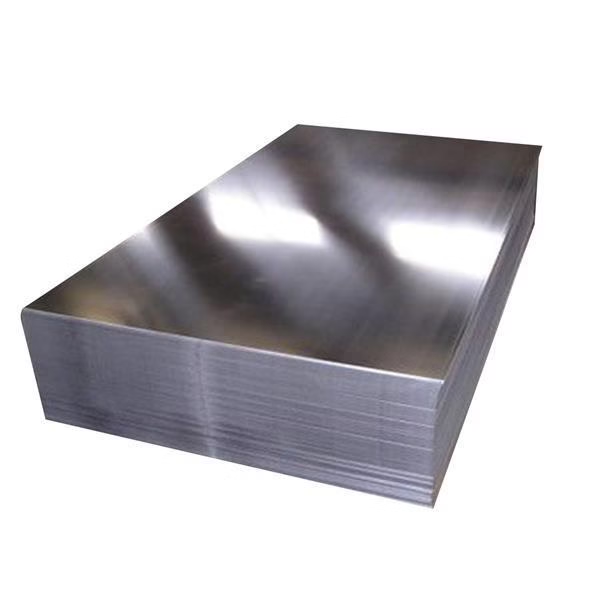
Tinplate Sheet — T1 / T2 / T3 / T4 / T5 (Electrolytic Tinplate / ETP)
Tinplate Sheet (Electrolytic Tinplate / ETP) — T1 / T2 / T3 / T4 / T5 / DR8 / DR9 / DR10 — cold-rolled steel with electrolytic tin coating (E1.0-E11.2 g/m²) for food cans, beverage cans, aerosol containers, paint cans, and decorative tin packaging. Thickness 0.10-0.60mm, width 600-1100mm. EN 10202 / ASTM A623 / JIS G 3303 certified. Food contact compliant.
| Material | Electrolytic Tinplate (ETP) — Cold-Rolled Low-Carbon Steel with Electrolytic Tin Coating (Both Surfaces) |
|---|---|
| Grade / Standard | T1 / T2 / T2.5 / T3 / T4 / T5 (Single-Reduced SR) | DR8 / DR8.5 / DR9 / DR9.5 / DR10 (Double-Reduced DR) |
| Thickness | 0.10mm - 0.60mm (Steel Base Thickness) |
| Width | 600mm - 1100mm |
| MOQ | 5 Tons |
| Delivery Time | 15-25 Days (Stock Standard Grades) / 30-45 Days (Custom Specification) |
| Loading Port | Tianjin / Shanghai / Qingdao |
Overview of Tinplate Sheet (Electrolytic Tinplate / ETP)
Tinplate Sheet (Electrolytic Tinplate, ETP) is cold-rolled low-carbon steel coated on both surfaces with a thin layer of pure tin (Sn) applied by continuous electrolytic deposition, producing a composite material that combines the mechanical strength and formability of steel with the exceptional corrosion resistance, food safety compliance, solderability, and bright metallic appearance of tin coating — making tinplate the global standard packaging material for food cans, beverage cans, aerosol containers, paint cans, chemical containers, and a broad range of consumer product packaging where shelf-stable barrier protection, aesthetic brightness, and printability are simultaneously required. The electrolytic tinplating process replaced the older hot-dip tinning process in the mid-20th century, enabling precise control of tin coating weight from as little as 1.0 g/m² per side (E1.0 coating) to 11.2 g/m² per side (E11.2 coating), dramatically reducing tin consumption versus hot-dip methods while maintaining or improving coating uniformity, adhesion, and corrosion protection — a development that made tinplate economically viable as a mass-market food packaging material and led to the modern global canned food industry.
Tinplate is specified by two independent parameters that together define the material: steel base hardness temper (T1 through T5 for single-reduced tinplate, DR8 through DR10 for double-reduced tinplate) and tin coating weight (expressed as coating class E1.0 through E11.2 in g/m² per surface, or as differential coating where the inner and outer surface tin weights differ for specific applications). The steel base for tinplate is ultra-low carbon (ULC) or low-carbon cold-rolled steel with carbon content typically 0.003-0.13% depending on temper, annealed and temper-rolled to develop the precise yield strength, elongation, and surface quality required for high-speed can-making operations on modern three-piece can forming lines (side-seam welding lines) and two-piece can drawing and wall ironing (DWI) lines operating at 1,000-3,000 cans per minute. Tinplate grades range from T1 (softest, most formable, for complex drawn shapes) to T5 (hardest, highest strength, for can ends and lids requiring rigidity) in single-reduced (SR) temper, and DR8, DR9, DR10 in double-reduced (DR) temper — where the steel substrate receives an additional cold reduction after annealing to achieve significantly higher yield strength (500-600 MPa) for ultra-thin can ends and tabs that reduce material usage per can unit. Tinplate Sheet is produced to international standards EN 10202 (European), ASTM A623 (American), JIS G 3303 (Japanese), and GB/T 2520 (Chinese), with leading global producers including ArcelorMittal, Tata Steel, U.S. Steel, Nippon Steel, Baosteel, and HBIS supplying tinplate to the global packaging industry. Tanglu Group supplies tinplate sheet from qualified Chinese tinplate mills — primarily Baosteel Tinplate, HBIS Tinplate, and Suzhou Baosteel Packaging — with complete material certification meeting EN 10202, ASTM A623, and customer-specific can-maker specifications for global food, beverage, and packaging industry customers.
Key Features and Manufacturing Process
Tinplate Sheet manufacturing is one of the most sophisticated and precisely controlled steel production processes, requiring integration of high-speed continuous cold rolling, ultra-clean annealing, precision electrolytic tin deposition, and surface passivation treatment across production lines spanning hundreds of meters operating at speeds of 200-600 meters per minute. The manufacturing sequence begins with steelmaking — typically basic oxygen furnace (BOF) or electric arc furnace (EAF) followed by continuous casting of low-carbon or ultra-low-carbon steel billets, with carbon content precisely controlled to the target range for the specified temper grade (T1 tinplate base requires lower carbon than T5 for the required hardness differential). Hot rolling produces strip in the 1.5-3.0mm thickness range, which is pickled (hydrochloric acid or sulfuric acid pickling) to remove hot-roll scale before cold rolling. Cold rolling on a 4-stand or 5-stand tandem cold mill with total reduction ratios of 75-90% reduces the hot-rolled strip to the final substrate thickness of 0.10-0.60mm for single-reduced tinplate. For double-reduced (DR) tinplate, an additional cold reduction of 20-40% is applied after batch or continuous annealing on a temper mill specifically configured for high-reduction passes, developing the very high yield strength (500-600 MPa) characteristic of DR tinplate grades.
The annealing process for tinplate base steel is critical for developing the correct recrystallized grain structure and mechanical properties. Batch annealing (box annealing at 660-720°C for 8-20 hours in hydrogen-nitrogen protective atmosphere) produces slightly softer material with better formability and lower directionality — preferred for T1/T2 grades requiring maximum drawability. Continuous annealing (at 700-780°C for 30-90 seconds on CAL lines operating at 400-600 m/min) produces slightly higher strength for a given temper target due to finer grain size and is used for T3-T5 grades and DR tinplate base. After annealing, the steel strip passes through a temper rolling mill (elongation mill) with 0.5-2.0% reduction to suppress yield point elongation, adjust surface roughness, and achieve the final mechanical properties for the specific temper grade. The electrolytic tinplating process deposits pure tin (Sn, 99.85% minimum purity per EN 10202) from an acidic stannous sulfate or methylsulfonic acid (MSA) plating bath onto both strip surfaces simultaneously using insoluble platinum-titanium anode arrays at current densities of 15-60 A/dm² and strip speeds of 200-400 m/min. The deposited tin coating weight (ranging from 1.0 to 11.2 g/m² per surface) is precisely controlled by adjusting plating current and strip speed — calibrated continuously by X-ray fluorescence (XRF) coating weight measurement gauges providing real-time feedback to the plating current control system. Immediately after electrolytic tin deposition, the freshly plated strip passes through high-frequency induction or electrical resistance reflow (flow brightening) heating to melt and briefly liquefy the tin layer (above tin melting point 232°C), which produces the characteristic bright, specular tin surface and forms a thin FeSn₂ alloy layer at the steel-tin interface that provides adhesion and barrier properties. Without reflow, the as-plated tin is matte and lacks adhesion. After reflow, the strip is immediately water quenched to freeze the tin surface in the bright reflowed condition. The final surface treatment — chemical passivation — applies a thin chromium-based conversion coating (dichromate or cathodic electrolytic chromate treatment, producing approximately 1-7 mg/m² Cr per surface as Cr₂O₃ passivation layer, designated Type 300 passivation per EN 10202) that dramatically improves tin surface oxidation resistance during storage, improves lacquer adhesion in can-making, and provides additional corrosion protection. An oil coating of acetyl tributyl citrate (ATBC) or dioctyl sebacate (DOS) at 1-10 mg/m² is applied as a final surface lubrication treatment to protect the tin surface during storage and improve blank and panel handling in high-speed can-making presses. Tinplate is supplied as sheet in cut-to-length form (standard dimensions 600-1100mm width × 600-1200mm length for sheet-fed can-making lines) or as coil (for coil-fed can-making and continuous processing lines), with each delivery lot accompanied by full material certification including chemical composition, temper verification (HR30T hardness per EN 10202, RA30T per alternative test), tin coating weight by XRF, surface passivation verification, and surface quality inspection. Tanglu Group supplies tinplate in both sheet and coil form with complete documentation meeting EN 10202 and customer-specific can-maker quality standards.
Main Applications of Tinplate Sheet
Tinplate Sheet is the dominant material for rigid metal food and beverage packaging worldwide, with global tinplate production of approximately 14-16 million tons per year supporting the canned food, beverage, aerosol, and general packaging industries that collectively represent the most important applications for tinplate in order of consumption volume. Three-piece food cans (body + top end + bottom end) represent the largest single application for tinplate globally, consuming tinplate for the cylindrical can body (side-seam welded from a tinplate blank, using T3-T4 tinplate base with E2.8-E5.6 tin coating for standard food applications), the sanitary can end (double-reduced DR8-DR9 tinplate for thin, rigid can ends), and the full-open easy-peel lid for tuna, pet food, and ready-meal cans. Food cans are used for tomatoes, tomatoes products (paste, sauce, diced), vegetables (peas, corn, green beans, carrots), fruits (peaches, pears, mandarin oranges, lychee), fish and seafood (tuna, sardines, salmon, anchovies, mackerel), meat products (corned beef, luncheon meat, spam, stew), soups and broths, condensed milk, evaporated milk, baby formula, and ready-to-eat meals — representing the backbone of global food security infrastructure providing shelf-stable nutrition with 2-5 year shelf life without refrigeration. Beverage cans (two-piece drawn and wall-ironed aluminum is dominant for carbonated soft drinks and beer, but tinplate two-piece DWI cans are produced in specific Asian markets) and promotional tinplate beverage cans for specialty drinks, gift packaging, and premium products use T4-T5 tinplate with light tin coating.
Aerosol containers represent the second major tinplate application, with three-piece tinplate aerosol cans (body + dome top + bottom cone) manufactured from T4-T5 tinplate with E2.8-E5.6 coating for personal care aerosols (deodorant, hair spray, shaving foam, body spray), household product aerosols (air freshener, insecticide, furniture polish, oven cleaner), industrial aerosols (lubricants, penetrating oils, paints, adhesives), and food aerosols (whipped cream, cooking spray). Tinplate aerosol cans provide superior pressure resistance versus aluminum monobloc aerosol cans for high-pressure applications, and the ability to produce printed tinplate aerosol bodies with photographic-quality lithographic printing makes tinplate the preferred choice for premium personal care aerosol packaging. Paint cans and chemical containers represent a significant tinplate application where T3-T5 tinplate with E2.8-E8.4 coating is used for round paint cans (0.5L to 25L capacity), rectangular paint cans and paint pails, thinner and solvent cans, adhesive tins, and industrial chemical containers requiring the corrosion resistance, solvent resistance (when lacquer-lined), and the structural rigidity of tinplate for handling and stacking. Decorative tin boxes and gift packaging represent a premium tinplate application where T2-T3 tinplate with tight surface quality requirements (zero surface defects, smooth matte or bright finish) and high coating weight (E5.6-E8.4) is lithographically printed (offset printing with up to 6 colors + varnish) and formed into hinged lid boxes, round tins with slip lids, square tins with tight-fit lids, rectangular confectionery tins, biscuit tins, tea caddies, and collectible tin gift boxes for confectionery, biscuits, tea, coffee, chocolate, tobacco, and promotional products. These decorative tin packaging products represent a growing premium market where tinplate’s printability (brilliant colors on the bright tin background), tactile quality, and perceived premium aesthetics provide marketing advantages versus plastic or cardboard alternatives for brand positioning in the gift and premium food segments. Bottle caps and crown caps (beer bottle caps, soft drink bottle caps, metal screw caps) use T5 and DR8 tinplate with light tin coating (E1.0-E2.8) and lacquer or enamel coating for the most demanding mechanical forming applications (crown cap blanking and forming at >1,000 caps per minute requires maximum hardness and minimum thickness for material efficiency). Edible oil cans and tin containers for olive oil, sunflower oil, sesame oil, and specialty culinary oils use lacquer-lined tinplate (T3-T4, E2.8-E5.6) for the combination of corrosion resistance to oil oxidation products, compliance with food contact regulations, and the traditional premium aesthetic of metal oil containers. Tea caddies and coffee tins use lithographically decorated T2-T3 tinplate for attractive retail packaging maintaining product freshness. Pharmaceutical packaging including tablet tins, lozenge tins, first aid kit containers, and medical supply tins uses tinplate for the combination of tamper evidence, child resistance (when appropriate closures are fitted), barrier protection, and regulatory compliance with pharmaceutical packaging standards. Tanglu Group supplies tinplate for all these applications in standard and custom dimensions with complete food-contact compliance documentation and can-maker quality certifications.
Why Choose Us for Tinplate Sheet
Shandong Tanglu Metal Material Co., Ltd. supplies Tinplate Sheet from qualified Chinese tinplate mills — principally Baosteel Tinplate Co., Ltd. (Shanghai), HBIS Tinplate (Tangshan), and Suzhou Baosteel Packaging Steel Co., Ltd. — that are recognized global suppliers to major multinational can-makers including Crown Holdings, Ball Corporation, Ardagh Group, Silgan Containers, Toyo Seikan, and regional Asian can manufacturers, with proven production capability for the stringent surface quality, mechanical property consistency, tin coating weight accuracy, and passivation quality requirements of high-speed can-making lines operating at 1,000-3,000 cans per minute where any tinplate surface defect, hardness non-uniformity, or coating weight deviation causes costly line stoppages and product rejection. Our tinplate supply range covers all standard temper grades — T1, T2, T2.5, T3, T4, T5 (single-reduced SR) and DR8, DR8.5, DR9, DR9.5, DR10 (double-reduced DR) — with tin coating weights from E1.0 to E11.2 g/m² per surface in standard equal coating (E x/x) and differential coating configurations (E5.6/2.8 for food cans requiring higher internal corrosion protection, E8.4/2.8 for highly corrosive food products). Steel base thickness range 0.10mm to 0.60mm, sheet dimensions 600-1100mm width × 600-1200mm length for sheet-fed can-making lines, or coil form for coil-fed operations and continuous processing.
Every tinplate shipment includes original mill test certificate (MTC) per EN 10204 3.1 reporting: chemical composition of steel base, HR30T surface hardness (per EN 10202 Table 4 hardness ranges for each temper grade), tin coating weight by XRF measurement (per surface and combined, meeting EN 10202 Table 6 minimum coating weight requirements), surface passivation treatment type (Type 300 cathodic chromate), surface oil type and application rate (ATBC or DOS at specified g/m²), sheet dimension and flatness verification, and surface quality inspection (freedom from pinholes, tin bare spots, reflow irregularities, streak marks, and mechanical damage). Additional documentation available: food contact compliance declaration per EU Regulation 10/2011 (plastic food contact materials as framework reference for metal packaging) and German BfR/Bundesinstitut recommendations for tin packaging, FDA compliance statement per 21 CFR for USA market, China GB 4806.9 food contact metal packaging compliance, enamel/lacquer application parameters for can-makers applying internal and external coatings, and technical data sheets for spring-back, formability, and weldability parameters used in can-making line setup. Supply capacity 3,000 tons per month of tinplate and tin-free steel (TFS/ECCS) from established mill partnerships, with stock availability of standard T3/T4/T5 grades in common sheet sizes enabling 15-25 day delivery for urgent packaging requirements and 30-45 day lead time for custom specifications including non-standard dimensions, specialty coating weights, and differential coating configurations.
📐 Dimension & Size Table
| Grade / Temper | HR30T Hardness | Yield Strength (Approx.) | Typical Application |
|---|---|---|---|
| T1 (SR) | 46 ± 3 HR30T | ~170-205 MPa | Deep-drawn components, complex formed tin shapes, bottle caps (easy draw) |
| T2 (SR) | 50 ± 3 HR30T | ~205-240 MPa | Decorative tins, gift boxes, drawn lids, aerosol domes (moderate draw) |
| T2.5 (SR) | 52 ± 3 HR30T | ~220-255 MPa | General food can bodies, medium-draw components |
| T3 (SR) | 56 ± 3 HR30T | ~240-275 MPa | Food can bodies (most common), general packaging, paint can bodies |
| T4 (SR) | 60 ± 3 HR30T | ~275-310 MPa | Can ends, aerosol bodies, crown caps, harder applications |
| T5 (SR) | 64 ± 3 HR30T | ~310-360 MPa | Can ends requiring high rigidity, bottle caps, crown caps (hard temper) |
| DR8 (DR) | 73 ± 3 HR30T | ~450-520 MPa | Thin can ends, ring-pull tabs, beverage can end stock |
| DR9 (DR) | 76 ± 3 HR30T | ~500-570 MPa | Ultra-thin can ends, easy-open ends, lightweight can lids |
| DR10 (DR) | 80 ± 3 HR30T | ~540-620 MPa | Maximum strength ultra-thin can components, easy-open tab stock |
* Custom sizes available upon request. Tolerances per relevant international standards.
🔬 Chemical Composition
| Element | Min | Max | Display Value | Note |
|---|---|---|---|---|
| C | 0.003 | 0.130 | 0.003-0.130 | Grade dependent — T1 base ULC (≤0.010%), T5/DR base higher C (≤0.130%) |
| Mn | 0.15 | 0.60 | 0.15-0.60 | Solid solution strengthening — higher in harder temper grades |
| P | - | 0.020 | ≤0.020 | Strict control for formability and tin adhesion quality |
| S | - | 0.030 | ≤0.030 | Low sulfur for deep drawing formability and surface quality |
| Si | - | 0.030 | ≤0.030 | Very low silicon — high Si impairs tin coating adhesion and reflow quality |
| Cu | - | 0.200 | ≤0.200 | Residual element — controlled for corrosion and food safety compliance |
| Cr | - | 0.100 | ≤0.100 | Residual element control |
| Ni | - | 0.150 | ≤0.150 | Residual element control |
| Al | 0.010 | 0.080 | 0.010-0.080 | Deoxidizer — critical for surface cleanliness and tin coating uniformity |
| N | - | 0.006 | ≤0.006 | Low nitrogen — controlled for aging resistance in T1/T2 soft temper grades |
| Tin Coating (Sn) | 99.85 | 100 | ≥99.85% Sn purity | Electrolytic tin purity per EN 10202 — pure tin for food contact safety |
| Passivation (Cr) | 1 | 7 | 1-7 mg/m² Cr | Type 300 chromate passivation layer weight per EN 10202 |
* Chemical composition may vary by heat, thickness and specification. Please refer to the actual mill test certificate.
⚙️ Mechanical Properties
| Property | Value | Unit | Test Condition |
|---|---|---|---|
| Hardness T1 (HR30T) | 46 ± 3 | HR30T | Rockwell 30T superficial hardness — primary tinplate temper verification method per EN 10202 |
| Hardness T2 (HR30T) | 50 ± 3 | HR30T | Per EN 10202 Table 4 — single-reduced T2 temper |
| Hardness T2.5 (HR30T) | 52 ± 3 | HR30T | Per EN 10202 Table 4 — single-reduced T2.5 temper |
| Hardness T3 (HR30T) | 56 ± 3 | HR30T | Most common tinplate grade — food can bodies and general packaging |
| Hardness T4 (HR30T) | 60 ± 3 | HR30T | Per EN 10202 Table 4 — single-reduced T4 temper |
| Hardness T5 (HR30T) | 64 ± 3 | HR30T | Hardest single-reduced grade — can ends, crown caps |
| Hardness DR8 (HR30T) | 73 ± 3 | HR30T | Double-reduced — significantly higher strength than SR grades |
| Hardness DR9 (HR30T) | 76 ± 3 | HR30T | Per EN 10202 Table 4 — double-reduced DR9 temper |
| Hardness DR10 (HR30T) | 80 ± 3 | HR30T | Hardest double-reduced grade — ultra-thin can end stock |
| Tin Coating Weight E2.8 (per surface) | 2.8 min (avg) | g/m² | Minimum average coating weight per surface — standard food can grade |
| Tin Coating Weight E5.6 (per surface) | 5.6 min (avg) | g/m² | Higher coating weight for more corrosive food products |
| Tin Coating Weight E8.4 (per surface) | 8.4 min (avg) | g/m² | High coating weight for highly corrosive products (citrus, sulfur-bearing foods) |
| Steel Base Thickness Range | 0.10 - 0.60 | mm | Base metal thickness before tin coating addition |
| Thickness Tolerance | ±0.010 | mm | Standard thickness tolerance per EN 10202 for tinplate |
| Flatness (Coil Set / Crossbow) | ≤ 5 | mm/m | Critical for high-speed can-making press flatness requirements |
* Values shown are minimum requirements unless otherwise stated.
📦 Commercial Information
| Packaging | Specialized packaging for tinplate sheet designed to protect the sensitive bright tin surface from scratching, corrosion, moisture ingress, and mechanical damage during ocean freight transit and storage at can-making plants and packaging converters worldwide. Tinplate sheet is extremely susceptible to surface damage — even minor scratches and pressure marks on the bright tin surface are visible to the human eye and constitute cosmetic defects that cause rejection at can-makers and decorating plants performing lithographic printing directly on the tin surface. Individual tinplate sheets are interleaved with acid-free tissue paper or polyethylene interleaving film between each sheet to prevent metal-to-metal contact and surface scratching during transit vibration — this interleaving is mandatory for T1-T3 grades supplied for decorative tin box manufacturing where surface appearance is critical. Sheet stacks are formed with precisely aligned edges (±2mm maximum edge misalignment) to prevent sheet edge damage and enable efficient handling at can-making lines using magnetic sheet separators and vacuum cup sheet feeders that require consistent sheet stack geometry. Stacks of 500-2,000 sheets (stack weight 500-2,500 kg depending on thickness) are placed on heavy-duty wooden pallets with anti-slip surface treatment (minimum 1,200 × 1,000mm pallet for standard sheet widths) with full-perimeter wooden edge protection battens to prevent sheet edge damage from forklift handling, pallet strapping contact, and transit movement. Polyethylene stretch film (minimum 50μm thickness, 4-6 wrap layers) is applied over the sheet stack and wooden edge protection to provide moisture barrier and mechanical impact protection. VCI (volatile corrosion inhibitor) paper or VCI polyethylene film is included inside the stretch wrap layer for corrosion protection during ocean transit — particularly important for tinplate supplied to humid tropical markets (Southeast Asia, Latin America, Sub-Saharan Africa) where condensation during container transit can cause tin surface oxidation and white rust formation if VCI protection is absent. Each pallet is banded with PET strapping (minimum 19mm width, 2 lengthwise + 2 widthwise straps) with corner protectors at strap contact points on pallet edges. Tinplate coil packaging uses similar VCI paper wrapping with steel outer protective wrap bands and precision inner/outer diameter steel ring protectors for coil eye and outer surface protection. Pallet identification includes product specification label (grade/temper, tin coating class, thickness, sheet dimensions, quantity, weight, heat number, and applicable standard) and export documentation barcode label for customs and logistics tracking. Complete export documentation package — commercial invoice, packing list, bill of lading, certificate of origin, EN 10204 3.1 mill certificate, food contact compliance certificate — provided in waterproof document envelope attached to each pallet. Container loading uses full pallet configurations (20FT FCL: 16-20 pallets, 40FT FCL: 20-24 pallets) with wooden blocking and strapping to prevent pallet movement during ocean transit. Maximum stack height per container tier is limited based on pallet weight and container floor load rating. Desiccant bags (silica gel or calcium chloride, minimum 500g per container) placed in container corners to control humidity during sealed container ocean transit. |
|---|---|
| Payment Terms | T/T (Telegraphic Transfer),L/C (Letter of Credit),D/P (Documents against Payment),Western Union,PayPal |
| Price Term | FOB,CFR,CIF,EXW |
| Supply Capacity | 3,000 Tons/Month (Tinplate Sheet and Tin Mill Products) |
| Loading Port | Tianjin / Shanghai / Qingdao |
Why Choose Our Tinplate Sheet — T1 / T2 / T3 / T4 / T5 (Electrolytic Tinplate / ETP)?
EN 10202 / ASTM A623 / JIS G 3303 Full Certification
Every tinplate shipment includes original mill test certificate per EN 10204 3.1 reporting HR30T surface hardness (per EN 10202 temper grade ranges), tin coating weight by XRF per surface (meeting EN 10202 Table 6 minimum coating weight requirements for each coating class E1.0-E11.2), passivation type (Type 300 chromate), surface oil type and application rate, chemical composition of steel base, and full dimensional verification. Food contact compliance certification per EU Regulation 10/2011, FDA 21 CFR, and GB 4806.9 available as standard documentation.
Full Temper Range SR and DR — Custom Dimensions
Complete temper range from T1 (softest, maximum drawability) through T5 (hard, rigid) in single-reduced, and DR8 through DR10 in double-reduced for ultra-thin, high-strength can ends. Tin coating weights E1.0 to E11.2 g/m² in equal and differential configurations. Steel base thickness 0.10-0.60mm, sheet width 600-1100mm, sheet length 600-1200mm. Custom sheet dimensions cut to can-maker blanking requirements. Coil supply available for coil-fed can-making lines.
Food Contact Safe — Global Regulatory Compliance
Tinplate supplied with complete food contact safety documentation: EU Regulation 10/2011 declaration, FDA 21 CFR 177 compliance (USA market), GB 4806.9-2016 (China market), Japanese Food Sanitation Act compliance (Japan market). Pure tin coating (≥99.85% Sn purity per EN 10202) and Type 300 chromate passivation meeting all applicable food packaging regulations. Suitable for direct food contact without internal lacquer (for low-corrosivity food products) or with standard can-maker applied epoxy or polyester internal lacquer systems.
Baosteel / HBIS Origin — Global Can-Maker Approved
Tinplate sourced from Baosteel Tinplate Co. Ltd. and HBIS Group — approved suppliers to Crown Holdings, Ball Corporation, Ardagh Group, Silgan, Toyo Seikan, and major regional Asian can manufacturers. Mill qualification documentation including can-maker approved supplier status, weldability parameters for side-seam welding (resistance welding current range, welding speed), and lacquer adhesion data available to support customer can-making line qualification. Proven track record of consistent quality across multiple production lots for high-volume can-making programs.
Stock Availability — T3 / T4 / T5 Standard Grades
Standard tinplate grades T3/T4/T5 with E2.8/2.8 and E5.6/5.6 tin coating in common sheet dimensions (700-1000mm width × 700-1000mm length) maintained in warehouse stock for 15-25 day delivery to urgent packaging and can-making requirements. Custom temper, non-standard coating weight, differential coating, and special sheet dimensions produced to order in 30-45 days. Minimum order 5 tons per specification for stock grades, 10 tons for custom orders.
🏭 Applications of Tinplate Sheet — T1 / T2 / T3 / T4 / T5 (Electrolytic Tinplate / ETP)
Tinplate Sheet is the foundational material of the global canned food industry and rigid metal packaging sector, providing the unique combination of barrier protection, formability, printability, recyclability, and food safety compliance that has made metal cans the dominant packaging format for shelf-stable food and beverages for over 200 years — and continues to drive tinplate consumption growth as sustainability-conscious consumers and brand owners rediscover the environmental credentials of infinitely recyclable metal packaging versus single-use plastic alternatives. Three-piece food cans manufactured from tinplate sheet represent the largest and most established application for tinplate, with the global three-piece food can market consuming approximately 8-10 million tons of tinplate annually across the full spectrum of canned food categories. Standard food can production uses T3 tinplate base (HR30T hardness 56±3) with E2.8/2.8 or E5.6/2.8 differential tin coating (higher tin on the food-contact inner surface for corrosion protection against food acids and sulfur compounds, lower tin on the external surface for lacquer adhesion and printing) for cylindrical can bodies of 52-99mm diameter in 73mm, 99mm, and 115mm standard heights (American 211, 307, 404 can sizes; European 52×72mm, 74×113mm standard sizes). The can body is produced from a tinplate blank through either: (a) three-piece side-seam welding — blanks are roll-formed into cylinders and longitudinal side seams are resistance welded (SOUDRONIC-type welding process), with the welded seam then stripe-coated with lacquer to restore corrosion protection at the seam area; or (b) for smaller-diameter cans, impact extrusion or deep drawing processes. End (lid) components are produced from DR8 or DR9 double-reduced tinplate (higher strength, thinner gauge for material efficiency) on end-making machines that blank the end from tinplate strip and form the curled edge for double-seaming onto the can body. The complete food can system — body + bottom end (applied at the cannery before filling) + top end (applied after filling and processing) — provides hermetic seal and commercial sterility for filled foods after retort sterilization at 121°C for 20-90 minutes, achieving 2-5 year ambient-temperature shelf life for virtually all processed food categories from tomatoes and tuna to soups and pet food. High-corrosivity food products including tomatoes and tomato-based products (high acidity, pH 3.8-4.5), citrus products (high acidity + citric acid), tropical fruit products (pineapple, mango — high corrosivity), fish and seafood products (particularly tuna and mackerel which produce hydrogen sulfide during processing — causing characteristic 'sulfur staining' or black discoloration of tin coating unless specially formulated C-enamel lacquer with zinc oxide is applied), and pet food (high protein, high sulfur content) require higher tin coating weight (E5.6 or E8.4 on the food-contact surface) and specific internal lacquer systems to provide the barrier protection needed for commercial shelf life without tin dissolution exceeding regulatory limits (European maximum 200 mg/kg tin in canned food per Regulation EC 1881/2006). Aerosol can manufacturing is the second major tinplate application, with global aerosol can production exceeding 14 billion units annually, predominantly manufactured from tinplate for the can body (T4-T5 single-reduced tinplate, E2.8-E5.6 coating, 0.17-0.26mm thickness) with aluminum ends and valves for personal care aerosols (deodorant, hair spray, shaving cream), household aerosols (air freshener, insecticide, furniture care), and industrial aerosols (lubricant, penetrating oil, adhesive, paint). Tinplate aerosol can bodies are produced on three-piece side-seam welding lines (same technology as food can bodies) or from extruded aluminum bodies — the tinplate three-piece welded aerosol body dominates in Europe and Asia for diameters above 52mm where the higher hoop strength of tinplate versus aluminum enables the use of thinner gauge material for equivalent pressure resistance (aerosol cans must withstand internal pressure of 14-20 bar for hydrocarbon propellant systems and 16-25 bar for compressed gas propellant systems per EN 15006 / DOT specifications). Lithographic printing of tinplate aerosol bodies on cylindrical (round) lithographic printing presses (up to 6-color UV offset printing with high-gloss varnish) produces the photographic-quality decorative printing that makes tinplate aerosol cans the preferred packaging choice for premium personal care brands (Nivea, Axe/Lynx, Gillette, L'Oréal) where the printed tin surface provides superior visual impact, tactile premium feel, and brand differentiation versus plastic or paper-labeled containers. Paint cans and chemical container manufacturing represents the third major tinplate application volume, with the global paint can market consuming tinplate for 250mL to 25L round paint cans (traditional 'lever lid' and 'ring pull' configurations), rectangular paint cans and pails, and specialty chemical containers. Paint can bodies are manufactured from T3-T4 tinplate with internal lacquer lining (epoxy phenolic or polyester lacquer providing solvent resistance for solvent-borne paints, or unlined tinplate for water-borne latex paint formulations where the tin coating provides sufficient protection against water-based media) and external printing or labeling. The premium paint brands (Dulux/AkzoNobel, Sherwin-Williams, Nippon Paint, Kansai Paint) specify can designs with lithographic external printing and gold-lacquer internal lining on tinplate cans that provide the visual quality, stack stability, and solvent resistance required for shelf display in home improvement retail environments. Decorative tin box and gift packaging manufacturing is a fast-growing premium tinplate application driven by consumer preference for gift packaging that conveys quality, craftsmanship, and sustainability — with hinged-lid rectangular tins for biscuits and confectionery (Bahlsen, Walkers Shortbread, Ferrero Rocher seasonal tins), slip-lid round tins for tea and coffee (Fortnum & Mason, Twinings, Whittard of Chelsea), deep-drawn rectangular tins for chocolate and candy (Thorntons, Lindt, Godiva), collectible character tins for children's confectionery, and promotional holiday tins for seasonal gift sets representing the primary product categories. These decorative tins are manufactured from T2-T3 tinplate (maximum formability for the complex hinged lid forming, embossing, and edge-seaming operations) with the highest tin coating weight (E5.6-E8.4) for enhanced surface brightness and oxidation resistance during the 3-6 month retail shelf life of seasonal decorative tin products. The lithographic printing quality on tinplate (photographic resolution with spot colors, metallics, embossing, and matte/gloss varnish combinations) enables the premium visual appearance that justifies the cost premium of decorative tinplate packaging versus cardboard equivalents in the gift confectionery market. Crown caps and bottle caps for glass bottle closures use T5 and DR8 tinplate — the globally produced 26mm standard crown cap for beer bottles and 38mm metal screw cap for glass condiment jars and food bottles represent very high-volume tinplate applications where the high hardness (T5, DR8) and tight thickness tolerance are critical for high-speed cap blanking and forming machines operating at 1,000-3,000 caps per minute. Pharmaceutical tin packaging including round tins for tablet dispensing (aspirin tins, vitamin tins, lozenge tins), first aid kit metal boxes, and medical supply storage tins use T2-T3 tinplate for the combination of tamper evidence, barrier protection, and regulatory compliance (FDA 21 CFR food and drug contact materials, EU pharmaceutical packaging regulations). Tanglu Group supplies tinplate for all can-making and packaging applications with application-specific technical consultation for tin coating weight selection, lacquer system compatibility, hardness specification, and regulatory documentation requirements.
📋 Quality & Certification
Our Certifications
- ✅ ISO 9001:2015
- ✅ CE Marking
- ✅ Bureau Veritas (BV)
- ✅ SGS Certified
Mill Certificate Type
- 📋 EN 10204 3.1
- 📋 EN 10204 3.2
- 📋 Original Mill Certificate
- 📋 Third Party Inspection Available
- 📋 Certificate of Origin
❓ Frequently Asked Questions
What is the difference between tinplate temper grades T1, T2, T3, T4, T5 and double-reduced DR8, DR9, DR10?
Tinplate temper grades define the hardness and strength of the steel base, determined by the degree of cold work hardening and annealing applied during manufacturing. Selecting the correct temper is critical for can-making performance — too soft a temper and the can panel lacks rigidity; too hard a temper and the material cracks during drawing operations.
Single-Reduced (SR) Grades T1 through T5:
These grades are produced by a single cold rolling pass to final thickness, followed by annealing and skin pass rolling. The temper number reflects increasing hardness from T1 (softest) to T5 (hardest):
T1 (HR30T = 46±3): The softest tinplate grade with maximum formability and elongation. Used for deep-drawn components requiring severe deformation without cracking — complex drawn tin box shapes, conical aerosol dome tops, drawn and ironed (DWI) can bodies, bottle cap liners, and pharmaceutical tin components with complex contoured shapes. Lowest strength limits T1 to applications where panel rigidity is provided by the can geometry (convex shapes) rather than material strength.
T2 (HR30T = 50±3): Moderate formability with slightly higher strength than T1. Primary application is decorative tin box manufacturing (biscuit tins, gift tins, confectionery tins) where the hinged lid forming, edge seaming, and embossing operations require controlled formability, and printed decorative external surfaces require a smooth, defect-free tin surface that T2's softer base provides more reliably than harder grades.
T2.5 (HR30T = 52±3): Intermediate grade between T2 and T3 for applications requiring more strength than T2 but better formability than T3. Used for food can bodies of smaller diameter and paint can bodies with moderate draw depth.
T3 (HR30T = 56±3): The most widely produced and consumed tinplate grade globally — the standard specification for the majority of three-piece food can bodies (tomatoes, vegetables, fish, pet food), general packaging, and aerosol can bodies where balanced formability and panel rigidity are required. T3 provides the optimal combination of ease of forming on high-speed can-making lines and sufficient rigidity for stacked can handling and retail display.
T4 (HR30T = 60±3): Higher strength for can components requiring greater rigidity — can end stock for smaller-diameter easy-open ends, aerosol can bodies requiring higher hoop strength, crown cap stock, and general packaging where higher pressure or stacking loads are involved.
T5 (HR30T = 64±3): Hardest single-reduced grade for maximum rigidity in can ends and crown caps. Used for full-open easy-open ends of larger-diameter food cans (where the larger diameter requires higher end panel strength to resist vacuum bulging during sterilization), crown cap stock (requires hardness to resist deformation during cap application at high speed), and metal screw caps.
Double-Reduced (DR) Grades DR8 through DR10:
DR tinplate receives an additional cold rolling pass (20-40% reduction) after the primary annealing step, achieving significantly higher hardness and yield strength (450-620 MPa) than any single-reduced grade while maintaining thinner gauge. DR grades are used primarily for can end stock and ring-pull tab stock where the very high strength allows thinner gauge to be used without compromising end panel rigidity — each gram of tinplate saved per end × billions of cans produced per year represents enormous material cost savings:
DR8 (HR30T = 73±3, yield ~450-520 MPa): Standard double-reduced grade for beverage can end stock, easy-open can ends for food cans, and ring-pull tab stock. Enables 10-15% gauge reduction versus equivalent T5 SR end stock.
DR9 (HR30T = 76±3, yield ~500-570 MPa): Higher strength DR grade for ultra-thin easy-open ends and lightweight can design programs where maximum material efficiency is the priority.
DR10 (HR30T = 80±3, yield ~540-620 MPa): Maximum strength DR grade for the thinnest possible can end and tab stock — used by leading can-makers pursuing lightweighting programs to minimize tinplate consumption per can unit.
What does tin coating weight (E2.8, E5.6, E8.4) mean and how do I select the right coating weight for my application?
Tin coating weight designates the mass of pure tin deposited per unit area on each surface of the tinplate, expressed in grams per square meter (g/m²) per surface. The coating weight designation (E2.8, E5.6, E8.4, etc.) indicates the minimum average tin coating weight in g/m² that must be present on each surface of the tinplate as verified by X-ray fluorescence (XRF) measurement per EN 10202. Understanding tin coating weight selection is essential for can-makers and packaging engineers to ensure adequate corrosion protection for the packed product without over-specifying tin content (higher tin weight = higher cost).
Coating Weight Designation System (EN 10202):
EN 10202 uses E-class designation: E1.0, E1.5, E2.0, E2.8, E4.0, E5.6, E8.4, E11.2 — where the number indicates the minimum average tin coating weight in g/m² per surface. Equal coating (both surfaces same): designated as E2.8/2.8 (same coating weight on both sides). Differential coating (inner surface higher tin for corrosion protection, outer surface lower tin to minimize cost): designated as E5.6/2.8 (inner surface 5.6 g/m² minimum, outer surface 2.8 g/m² minimum). The outer/external surface of a can always receives the lower tin coating weight in differential coating specifications.
Corrosion Protection and Coating Weight Selection:
The tin layer provides corrosion protection through two mechanisms: physical barrier (tin metal separating food from steel) and electrochemical protection (in most foods, tin is anodic to steel — tin corrodes sacrificially to protect the steel substrate, preventing iron dissolution into food). Higher tin coating weight provides: longer time before tin coating is consumed (longer shelf life), better protection against pinholes that expose steel base, higher tolerance for aggressive food products.
Food Product Corrosivity and Recommended Coating Weight:
Low corrosivity (2-3 year shelf life): Water-based products, dairy products (condensed milk, evaporated milk — relatively neutral pH), dried fruits in syrup, some vegetables. Recommended: E2.8/2.8 equal coating, or E2.8/2.8 with internal lacquer. This is the minimum standard coating for most processed food applications.
Moderate corrosivity: Meat products (stew, corned beef, luncheon meat — proteins and fats provide some protection), soups and broths, legumes (peas, beans — moderate sulfur content), some fruits in syrup. Recommended: E2.8/2.8 with appropriate internal lacquer system, or E5.6/2.8 differential coating (higher tin on food contact inner surface).
High corrosivity: Tomatoes and tomato products (pH 3.8-4.5, high organic acid content — the most aggressive standard food product for tinplate), citrus fruits and juices (high citric acid, low pH), tropical fruits (pineapple — bromelain enzyme activity), carbonated beverages in tinplate. Recommended: E5.6/2.8 differential coating with appropriate internal lacquer (epoxy phenolic or equivalent), or E8.4/2.8 for extreme cases.
Very high corrosivity (sulfur-staining risk): Fish and seafood (tuna, mackerel, sardines, salmon — hydrogen sulfide production during heat processing causes black tin sulfide staining on unprotected tin surface), pet food (high protein, high sulfur). Recommended: E8.4/2.8 differential coating with C-enamel lacquer (containing zinc oxide pigment that reacts with hydrogen sulfide to form white zinc sulfide instead of black tin sulfide), providing both barrier protection and stain prevention.
Non-food applications (paint, chemicals, aerosol): Tin coating weight selection based on the corrosivity of the contained product toward steel — solvent-borne paints typically need lacquer-lined tinplate (E2.8 coating), water-borne latex paints can use unlined tinplate (E2.8-E5.6), aggressive solvents and acids require E5.6-E8.4 with appropriate chemical-resistant lacquer. Tanglu Group provides coating weight selection guidance based on product type and target shelf life — contact our technical team with your product formulation information for a recommendation.
What is differential tin coating and when should it be specified for food can applications?
Differential tin coating is a tinplate configuration where the tin coating weight on the two surfaces of the tinplate differs — the food-contact inner surface receives a higher tin coating weight for corrosion protection against the food product, while the external surface receives a lower tin coating weight since it will be protected by external lacquer or lithographic printing rather than relying on tin corrosion resistance alone. Differential coating is one of the most important tinplate specification parameters for can-makers, as it allows optimization of tin usage and cost per can unit without compromising food safety or product shelf life.
How Differential Coating is Produced:
During electrolytic tinplating, the strip passes through plating cells where the current density can be independently controlled for the upper and lower surfaces (using separate upper and lower anode arrays with independent rectifier circuits). By applying higher current to the food-contact surface during plating, a higher tin deposition rate is achieved on that surface while the external surface receives less current and lower tin deposition — producing differential coating in a single continuous plating pass. The differential coating configuration is specified at the time of mill order and cannot be changed after production.
Designation of Differential Coating (EN 10202):
Differential coating is designated as E(inner)/E(outer) — for example:
E5.6/2.8: Inner surface (food contact) 5.6 g/m² minimum tin, outer surface 2.8 g/m² minimum tin
E8.4/2.8: Inner surface 8.4 g/m² minimum, outer surface 2.8 g/m² minimum
E8.4/5.6: Higher tin on both surfaces for extreme corrosivity products
Identification of Coated Surfaces at Can-Maker:
Differential-coated tinplate must be correctly oriented when fed into the can-making line so the higher-tin surface becomes the food-contact inner surface. Identification methods include: edge marking with ink stripe on the higher-tin edge (standard EN 10202 marking practice), different surface appearance (slightly different brightness or matte character visible under raking light inspection), XRF spot measurement by quality control at the can-maker receiving inspection, and coil/sheet clearly marked with 'inner surface' identification on the mill certificate and packaging labels.
Economic Benefit of Differential Coating:
For a standard food can using E5.6/2.8 differential coating versus E5.6/5.6 equal coating, the tin saving is 2.8 g/m² × 2 surfaces (inner and outer area of can body) for the external surface reduction. At tin metal price of approximately USD 25,000-35,000 per metric ton and tinplate consumption of 500-600 kg per million cans, the tin cost saving from differential coating versus equal high-tin coating represents USD 3,500-5,000 per million cans — a significant cost reduction for high-volume can production programs.
Application Recommendations:
Use equal low coating (E2.8/2.8) for: general food products with low corrosivity, non-food applications where lacquer provides primary protection, decorative tins with lacquer on both surfaces.
Use differential coating (E5.6/2.8) for: standard corrosivity food products (vegetables, meat, soups) where higher inner tin improves corrosion barrier without over-specifying outer surface.
Use high differential coating (E8.4/2.8 or E8.4/5.6) for: highly corrosive food products (tomatoes, citrus, tropical fruit) where maximum inner surface tin is needed for target shelf life, and outer surface may need E5.6 if external corrosion in humid storage is a concern.
What internal lacquer systems are used for food can tinplate and how do they affect tinplate specification?
Internal lacquer (enamel) systems are applied to the interior of tinplate food cans by can-makers before filling to provide an additional barrier between the food product and the tinplate surface, enhancing corrosion protection, preventing flavor and color interaction between metal and food, and enabling use of lighter-weight tin coatings while maintaining food safety and shelf life performance. Understanding lacquer systems helps in specifying the correct tinplate for lacquered can applications.
Why Internal Lacquers Are Used:
Although tin coating alone provides corrosion protection for low-corrosivity foods, many food products — particularly those with high acidity, high sulfur content, or strong pigments — require an additional organic coating barrier to: prevent tin dissolution into food product exceeding regulatory limits (EU: 200 mg/kg maximum tin in canned food), prevent iron dissolution that causes rust discoloration, prevent sulfur compounds from reacting with tin to form black tin sulfide staining (fish, pet food), prevent flavors and colors from the food leaching into or reacting with the tin surface (fruit juices, tomato products), and extend product shelf life beyond what tin coating alone can reliably protect.
Major Internal Lacquer Systems Used in Food Can Manufacturing:
1) Epoxy Phenolic Lacquer (EP Lacquer):
The most widely used internal lacquer for food cans globally. Two-component thermosetting system (epoxy resin crosslinked with phenolic hardener) baked at 190-210°C for 10-12 minutes on a roller coater or spray coater. Excellent adhesion to tinplate, outstanding chemical resistance to most food acids, oils, fats, and aqueous food products. Film thickness 3-7 g/m² dry film weight, provides excellent barrier and resistance to retort sterilization temperatures (121°C for 90 minutes without film degradation). Standard internal lacquer for vegetables, meat, soups, fruit products. EU food contact compliance per Regulation 10/2011 with migration testing required — BPA (bisphenol A) free versions increasingly specified by major food brands due to consumer concerns about epoxy BPA migration.
2) C-Enamel (Zinc Oxide Lacquer):
Epoxy phenolic lacquer base with zinc oxide (ZnO) pigment addition (typically 5-15% ZnO in dried film). The zinc oxide reacts preferentially with hydrogen sulfide produced during heat processing of fish and seafood, forming white zinc sulfide (ZnS) instead of allowing black tin sulfide (SnS) formation. Specifically specified for: tuna cans, sardine cans, mackerel cans, salmon cans, pet food cans (particularly tuna and salmon-based pet food). C-enamel prevents the unsightly black sulfur staining that would otherwise occur on the interior of uncoated or standard-lacquer-coated cans when sulfur-releasing foods are retort-sterilized.
3) Polyester Lacquer (PE Lacquer):
Single-component thermosetting polyester resin lacquer for food applications requiring high flexibility (deep-drawn can components) or high-temperature performance. Better flexibility than epoxy phenolic during can body forming and neck/flange operations. Used for draw-and-redraw (DRD) can manufacturing where the lacquer must withstand post-lacquer-application forming operations without cracking. Also used for beer and beverage can internal lacquer where neutral taste and odor are critical.
4) Organosol / Vinyl Lacquer:
Plasticized vinyl (PVC-based) lacquer providing excellent flexibility for deep-drawn and wall-ironed (DWI) can applications. Historically used for beverage can internal coating but being phased out in some markets due to plasticizer migration concerns. Still used in certain Asian markets for aerosol can internal lining.
Effect of Internal Lacquer on Tinplate Specification:
When internal lacquer is applied: lower tin coating weight (E2.8 or E1.5 on food-contact surface) can be used because the lacquer provides primary barrier protection, reducing tin usage and cost. The tinplate surface must be correctly prepared for lacquer adhesion — Type 300 cathodic chromate passivation (1-7 mg/m² Cr) is the correct passivation for lacquered tinplate, providing superior lacquer adhesion versus dichromate passivation (Type 311). Oil type must be compatible with lacquer system — ATBC oil (acetyl tributyl citrate) is preferred over DOS oil (dioctyl sebacate) for lacquered applications as it provides better lacquer adhesion and has food contact approval in all major regulatory jurisdictions. Tanglu Group specifies Type 300 passivation and ATBC oil as standard for all food-grade tinplate unless customer specifically requests alternatives.
What are the key quality parameters to verify when receiving tinplate sheet at a can-making plant?
Incoming quality control (IQC) of tinplate sheet at can-making plants is critical because tinplate quality variations — in hardness, tin coating weight, surface quality, flatness, or dimensions — directly cause costly production line stoppages, defective can production, and potential food safety non-compliance if under-coated or out-of-specification tinplate is processed into food cans. Establishing a rigorous IQC protocol for tinplate receiving inspection protects can-making efficiency and product quality.
Primary Quality Parameters for Tinplate IQC:
1) Hardness Verification (HR30T):
Method: Rockwell 30T superficial hardness test using a diamond indenter, 30 kg total load per EN ISO 6508. Frequency: minimum 5 test locations per sheet (corners + center) on 2 sheets per coil/pallet. Accept/reject criteria: mean HR30T value within specified temper range ± 3 HR30T (e.g., T3: 53-59 HR30T). Reject actions: out-of-temper tinplate — too soft causes buckling and poor can panel rigidity; too hard causes cracking during forming operations and excessive springback. HR30T is preferred over Vickers or Rockwell B for tinplate because the shallow indentation depth (less than 0.10mm total) minimizes through-thickness influence of the thin tinplate substrate on hardness reading accuracy.
2) Tin Coating Weight (XRF Measurement):
Method: X-ray fluorescence (XRF) coating weight gauge — portable handheld XRF units (e.g., Oxford Instruments, Fischer FISCHERSCOPE) or benchtop XRF can measure tin coating weight in g/m² non-destructively in 5-10 seconds per measurement. Frequency: minimum 5 measurement locations per surface (both surfaces) on sample sheets from each pallet/coil. Accept/reject criteria: minimum average coating weight ≥ specified E-class value per EN 10202 Table 6, with no single measurement below 80% of nominal (spot measurement minimum). Reject action: under-coated tinplate risks tin dissolution exceeding food safety limits during product shelf life and inadequate corrosion protection. Differential coating orientation must also be verified (confirm which surface carries the higher coating weight and that it will be the food-contact inner surface in the formed can).
3) Surface Quality Inspection:
Method: Visual inspection under 300-500 lux diffuse lighting and 10-20× magnification for suspected defects. Critical defect types: tin pinholes (bare steel spots where tin coating is absent — verified by wetting surface with 1% HCl solution which turns blue with copper sulfate indicator on exposed steel), surface streaks and roll marks (visible linear marks indicating die line or roll surface defects), splash marks (irregular matte areas from cooling water or plating solution splash during production), reflow irregularities (frosted or non-bright areas indicating incomplete tin reflow), and mechanical damage (scratches, dents, buckled corners from handling). Accept/reject criteria per EN 10202 surface quality classification (standard commercial quality vs. best commercial quality for decorative applications).
4) Dimensional Verification:
Thickness: Micrometer measurement at 5 positions per sheet (edges + center). Accept/reject: within EN 10202 thickness tolerance (±0.010mm for standard tinplate). Width and length: Steel tape or sheet dimension gauge. Flatness: Place sheet on flat reference surface and measure maximum gap — should not exceed 5mm/m for standard can-making quality. Camber (lengthwise curvature): Maximum 3mm in 2,000mm length for coil-fed applications.
5) Passivation and Oil Verification:
Passivation type verification: Simple water contact angle test — correctly passivated (Type 300 cathodic chromate) tinplate shows water contact angle 30-60° (hydrophilic, good lacquer wetting). Inadequate passivation shows higher contact angle. Oil presence: Wipe white tissue across surface — some oil transfer indicates oil is present. Excessive oil (sticky, pooled) indicates over-oiling requiring cleaning before lacquer application.
6) Certificate Verification:
Verify mill test certificate (EN 10204 3.1) against received material: heat number on certificate matches heat number on pallet/coil label, all specification parameters (temper, coating class, passivation, oil type, dimensions) match purchase order and customer specification, food contact compliance declaration matches intended food product application, certificate signatory is authorized mill quality representative. Archive certificates for minimum 3 years (or as required by food safety management system — FSSC 22000, SQF, BRC — audit requirements). Tanglu Group provides pre-shipment quality verification reports and can coordinate third-party inspection at mill for critical shipments requiring enhanced confidence in specification compliance before shipment.
Get a Quote for
Tinplate Sheet — T1 / T2 / T3 / T4 / T5 (Electrolytic Tinplate / ETP)
Submit your requirements and receive a competitive price quote within 24 hours.
- ✓ Fast response within 24 hours
- ✓ Competitive factory-direct pricing
- ✓ Free technical consultation
- ✓ Mill test certificate provided
- ✓ Flexible payment terms available
⏱ Response within 24 hours
Send Your Inquiry
All fields marked with * are required