
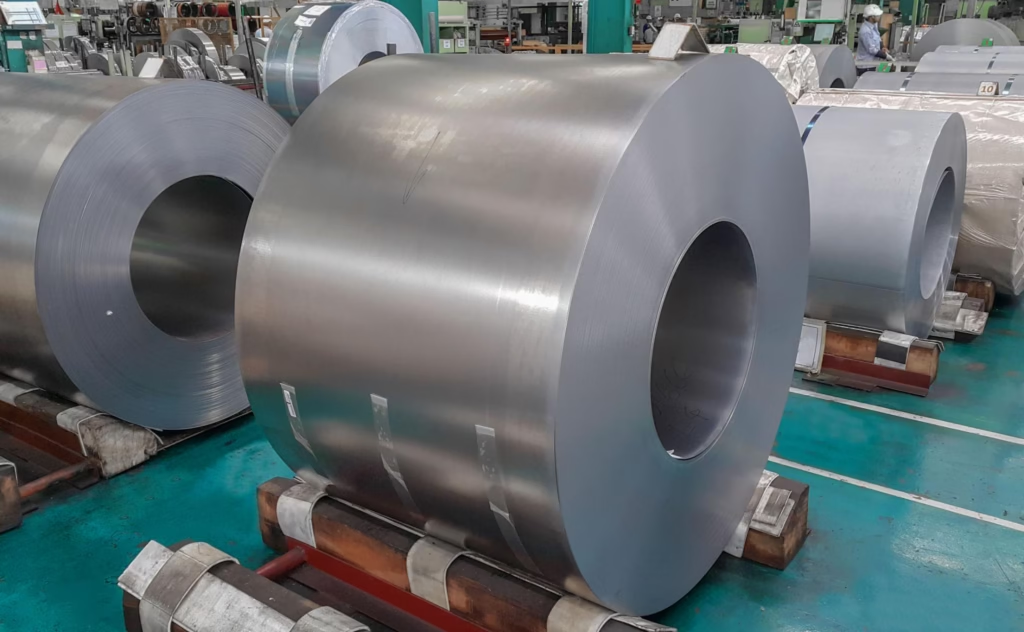
IF Steel (Interstitial-Free Steel) — DC04 / DC05 / DC06 / DC07
Interstitial-Free Steel (IF Steel) — DC04 / DC05 / DC06 / DC07 — is ultra-low carbon cold-rolled deep drawing steel with exceptional plastic strain ratio (r̄ ≥ 1.6-2.1) and total elongation (A80 ≥ 38-45%) for automotive inner body panels and complex deep drawing applications. Thickness 0.4-2.5mm, width 600-1900mm. IATF 16949 certified with r-value and n-value certification.
| Material | Cold-Rolled Ultra-Low Carbon Interstitial-Free (IF) Deep Drawing Steel |
|---|---|
| Grade / Standard | DC04 / DC05 / DC06 / DC07 (per EN 10130) | IF-HS 180 / IF-HS 220 / IF-HS 260 (High-Strength IF variants) |
| Thickness | 0.4mm - 2.5mm |
| Width | 600mm - 1900mm |
| Inner Diameter (ID) | 508mm / 610mm |
| Coil Weight | 8-25 Tons (Standard 10-20 Tons) |
| Surface Treatment | galvanized / coated |
| MOQ | 5 Tons |
| Delivery Time | 30-45 Days (Custom) / 15-25 Days (Stock) |
| Loading Port | Tianjin / Shanghai / Qingdao |
Overview of IF Steel (Interstitial-Free Steel)
Interstitial-Free Steel (IF Steel) represents the pinnacle of cold-rolled deep drawing steel technology, engineered to achieve the maximum possible formability and deep drawability for automotive outer body panels, complex stamped components, and demanding deep drawing applications where conventional low-carbon steel cannot meet the required forming severity. The defining characteristic of IF steel is the complete or near-complete elimination of interstitial atoms — dissolved carbon and nitrogen — from the iron crystal lattice through ultra-low carbon steelmaking (carbon content typically 0.001-0.005%, compared to 0.02-0.08% in conventional low-carbon steel) combined with stoichiometric microalloying additions of titanium and/or niobium that chemically combine with all remaining dissolved carbon and nitrogen to form stable carbide and nitride precipitates (TiC, TiN, Ti₄C₂S₂, NbC), leaving the ferrite matrix completely free of interstitial solute atoms. This ‘interstitial-free’ ferrite microstructure produces the extraordinary plastic strain ratio (r-value, also called Lankford coefficient) of 1.6-2.5+ that defines IF steel’s exceptional deep drawing performance — far exceeding the r-value of 0.9-1.2 achievable with conventional cold-rolled low-carbon steel.
IF steel grades are standardized primarily under EN 10130 (European cold-rolled low-carbon steel for forming) as DC04, DC05, DC06, and DC07 grades — representing an ascending scale of formability from very good (DC04) to exceptional (DC07, the highest formability cold-rolled steel grade defined in EN 10130). Equivalent designations include SPCD, SPCE, SPCF, SPCG under JIS G 3141 (Japan), St14 under former DIN 1623 (Germany, now superseded by EN 10130), and IF-340, IF-380 under various automotive customer-specific specifications for IF high-strength variants. The automotive industry is the dominant consumer of IF steel globally, using DC05 and DC06 grades as the standard material for complex automotive outer body panels (door inner panels, floor panels, inner cowl panels, wheel houses) and DC06/DC07 for the most challenging deep drawing applications (door inner panels with complex contours, floor tunnel sections, rear quarter inner panels). Beyond standard IF grades, IF High-Strength Steel (IF-HS) variants incorporating solid solution strengthening (phosphorus additions) or precipitation strengthening achieve yield strength 180-340 MPa while maintaining superior r-values (≥1.4-1.8), providing a balanced combination of strength and formability for structural inner body panels. Tanglu Group supplies all major IF steel grades from leading Chinese automotive steel mills including Baosteel, HBIS, Angang, and Shougang, with complete automotive certification and PPAP documentation support.
Key Features and Manufacturing Process
IF Steel manufacturing requires the most stringent process control in the entire cold-rolled steel production chain, demanding ultra-low interstitial content verification at every stage from steelmaking through final annealing to ensure the defining property — complete freedom from dissolved interstitial atoms — is consistently achieved throughout the entire coil. The manufacturing process begins with basic oxygen furnace (BOF) steelmaking followed by mandatory Ruhrstahl-Heraeus (RH) or DH vacuum degassing treatment to reduce carbon content to 0.001-0.005% and nitrogen to 0.001-0.003% in the molten steel — a step that is not required for conventional low-carbon steel but is essential for IF steel to achieve the ultra-low interstitial levels that define the grade. Precise microalloying additions of titanium (0.04-0.12%) and/or niobium (0.01-0.05%) are made to stoichiometrically combine with all remaining dissolved carbon and nitrogen, calculated to ensure complete fixation: the Ti/C ratio (by atomic weight) must exceed the stoichiometric ratio for TiC formation (Ti:C = 4:1 by weight) and similarly for TiN, TiS, and Nb(C,N) precipitates. Excess titanium beyond stoichiometric requirement is maintained to ensure complete carbon and nitrogen fixation even with normal steelmaking process variation.
The hot rolling process applies controlled finish rolling temperatures (880-920°C) and coiling temperatures (680-750°C, higher than conventional steel to promote complete precipitation of remaining solute carbon and nitrogen as carbides and nitrides during coil cooling) to the continuously cast slabs. Cold rolling with reduction ratios of 70-85% develops the deformed microstructure required for the subsequent recrystallization annealing step that produces the crystallographic texture responsible for high r-values. The critical annealing step — either batch annealing (660-720°C for 8-20 hours in protective atmosphere) or continuous annealing (760-840°C with controlled cooling) — must achieve complete recrystallization of the deformed ferrite grains and develop the strong {111} recrystallization texture (gamma fiber) that provides high r-values. Batch annealing at lower temperatures with longer times produces stronger {111} texture and higher r-values than continuous annealing, which is why the highest formability grades (DC06, DC07) are predominantly batch annealed, while DC04/DC05 can be produced on continuous annealing lines. Skin pass rolling (0.5-1.5% reduction) after annealing suppresses yield point elongation (Lüders bands) that would cause surface defects during forming, provides controlled surface roughness (Ra 0.6-1.9 μm depending on surface finish specification), and sets the final mechanical properties. The finished IF steel coil undergoes comprehensive quality testing including chemical composition verification by combustion analysis (critical for ultra-low C and N verification), tensile and yield strength, total elongation (A80 typically ≥38-45% depending on grade), n-value (strain hardening exponent, typically ≥0.21-0.24), r-value (plastic strain ratio, the defining IF steel quality parameter, measured at 10-20% strain in three directions and averaged as r̄ = (r₀ + 2r₄₅ + r₉₀)/4), Δr (planar anisotropy ≤±0.4 to minimize earing during deep drawing), surface quality inspection, and dimensional verification. Tanglu Group provides complete quality documentation including r-value and n-value test results that are mandatory for automotive forming process validation.
Main Applications of IF Steel
Interstitial-Free Steel is the dominant material for automotive inner body panel stampings and complex deep-drawn automotive components across global automotive manufacturing, where the exceptional r-value (deep drawability) and total elongation are essential for forming the complex three-dimensional shapes required by modern automotive body designs while maintaining the surface quality and dimensional accuracy demanded by automated assembly processes. The primary application of DC05 and DC06 IF steel is automotive door inner panels (door inners) for passenger cars, SUVs, light commercial vehicles, and pickup trucks — components that combine deep draws in multiple directions simultaneously (requiring high r̄-value ≥1.6-1.9), large area stretching of complex contours (requiring high n-value ≥0.21 and high elongation ≥38%), and functional features including speaker mounting holes, door latch reinforcement flanges, hinge attachment flanges, window regulator mounting areas, and side impact beam attachment features. Modern door inner panels represent some of the most forming-demanding components in automotive body-in-white manufacturing, and IF steel’s superior formability enables the single-piece progressive die stampings and transfer die stampings that automotive assembly plants require for cost-efficient manufacturing.
Floor panels and floor tunnel sections represent high-volume IF steel applications where the complex three-dimensional shape of modern monocoque floor structures — combining the floor pan with integrated transmission tunnel, front and rear seat attachment features, floor beam integration, and side sill attachment flanges — demands the high elongation and balanced formability of DC05/DC06 IF steel. Inner cowl (firewall) panels, dash panels, and engine compartment inner panels use DC05/DC06 for the severe deep draws around brake master cylinder, steering column, HVAC duct, and pedal box penetrations that require exceptional local formability without thinning failure. Rear quarter inner panels (rear wheel house inner panels) and rear fender inner panels use DC06/DC07 for the complex compound curvature around the wheel arch opening combined with the deep draws of the inner wheel house shape that approaches the limit of steel formability. Roof inner panels, headliner mounting panels, and sunroof reinforcement frames use DC04/DC05 for the large flat-to-curved surfaces requiring consistent stretch distribution across the entire panel area. Body side inner panels and package tray panels use DC05/DC06 for the combination of deep draws and large area forming. Engine compartment closure panels including hood inner panels (hood inners/hood reinforcements) use DC04/DC05 for the complex contours required to provide torsional stiffness while integrating hinge attachment features, latch striker mounting, and secondary hood latch areas. Tailgate inner panels for SUVs and hatchbacks use DC05/DC06 for the complex shapes integrating window frame, hinge attachment, latch mechanism mounting, and rear light housing areas into a single stamped part. Trunk floor panels, spare tire mounting tubs, and luggage floor panels use DC05 for the deep-drawn tub shapes with complex flanged perimeter features. Beyond primary body panels, IF steel is also the standard material for automotive reinforcement brackets, seat pan stampings, console box structures, door hinge reinforcements, striker plates, weld-on attachment brackets, and numerous functional stampings throughout vehicle body and chassis assemblies where complex forming is required. Non-automotive applications of IF steel include household appliance stampings (washing machine inner tub, dishwasher inner liner, refrigerator inner liner, oven cavity shells) requiring extreme deep drawing capability for seamless one-piece tub and liner constructions, steel cookware including deep-drawn pots, pressure cooker bodies, and wok bases requiring high elongation and consistent wall thickness distribution, stainless steel kitchen sinks and utility sinks (IF-based ultra-low carbon ferritic stainless is the baseline for IF technology), metal containers including deep-drawn canisters, aerosol can bodies, and specialty packaging requiring deep drawing without thinning failures, musical instrument manufacturing (tubas, trombones, and other deep-drawn brass instrument bodies using IF steel as the blanking material), and general industrial deep drawing applications where maximum formability is required.
Why Choose Us for IF Steel
Shandong Tanglu Metal Material Co., Ltd. supplies Interstitial-Free Steel from major Chinese automotive steel mills — Baosteel (Baoshan Iron & Steel), HBIS (Hesteel Group), Angang Steel, and Shougang — all operating IATF 16949 certified quality management systems with proven international export records and consistent production of automotive-grade IF steel meeting the stringent r-value, n-value, and surface quality requirements of global automotive OEM specifications. IF steel quality verification requires specialized testing beyond standard tensile testing, and our supply chain includes mandatory r-value measurement (plastic strain ratio tested at 0°, 45°, and 90° to rolling direction per ISO 10113, reported as r̄ average and Δr planar anisotropy), n-value measurement (strain hardening exponent per ISO 10275), total elongation (A80 gauge length per ISO 6892), and surface quality inspection to automotive Class A inner panel surface standards. Carbon and nitrogen content are verified by combustion analysis (not optical emission spectrometry alone) to confirm the ultra-low interstitial levels defining IF steel grade compliance — a verification step critical for IF steel that many standard structural steel suppliers cannot perform. All mechanical property and forming parameter data (r-value, n-value, elongation) are reported on original mill test certificates and available for customer forming simulation (FEA) input validation.
Our complete IF steel supply range covers DC04, DC05, DC06, and DC07 per EN 10130 (and equivalent JIS SPCD/SPCE/SPCF/SPCG grades), IF High-Strength variants (IF-HS 180, IF-HS 220, IF-HS 260, IF-HS 300 with controlled phosphorus additions for solid solution strengthening), and customer-specific automotive OEM IF steel grades meeting VW Group PV 1210, BMW Group GS 93001, Toyota TSZ0416, Ford WSS-M1A365-A, and General Motors GMW 3032 IF steel specifications. Available thickness 0.4mm to 2.5mm, width 600mm to 1900mm, in coil form (8-25 ton coil weight) or cut-to-length sheets. Surface finishes include matte finish (for weld-through primer and forming lubricant adhesion on inner panels), bright finish (for outer panel-quality surface requiring minimal post-form inspection), and phosphate-pretreated surfaces for specific automotive assembly processes. Monthly supply capacity 5,000 tons of cold-rolled forming steel with established relationships with automotive Tier 1 body panel stamping suppliers in Europe, North America, Asia, and emerging automotive markets. Every shipment includes original mill test certificate per EN 10204 3.1 with r-value and n-value reported, PPAP documentation support at Level 1-3 per customer requirement, and third-party inspection (SGS, BV, TUV) for automotive OEM direct-supply verification.
📐 Dimension & Size Table
| Grade | r̄ Value (Min) | Total Elongation A80 (Min) | Typical Application |
|---|---|---|---|
| DC04 | ≥1.6 | ≥38% | General deep drawing — roof panels, hood inners, simple body stampings |
| DC05 | ≥1.8 | ≥40% | Deep drawing — floor panels, door inners (standard complexity) |
| DC06 | ≥2.1 | ≥43% | Extra-deep drawing — complex door inners, floor tunnels, wheel houses |
| DC07 | ≥2.5 | ≥45% | Exceptional deep drawing — most demanding automotive body stampings |
| IF-HS 180 | ≥1.6 | ≥34% | High-strength IF — structural inner panels (yield ≥180 MPa) |
| IF-HS 220 | ≥1.5 | ≥30% | High-strength IF — reinforced body inner panels (yield ≥220 MPa) |
| IF-HS 260 / 300 | ≥1.4 | ≥26% | High-strength IF — structural panels requiring strength + drawability |
* Custom sizes available upon request. Tolerances per relevant international standards.
🔬 Chemical Composition
| Element | Min | Max | Display Value | Note |
|---|---|---|---|---|
| C | 0.001 | 0.005 | ≤0.005 | Ultra-low carbon — the defining IF steel requirement, verified by combustion analysis |
| Si | - | 0.030 | ≤0.030 | Very low silicon for maximum surface quality and zinc coating adhesion |
| Mn | 0.05 | 0.30 | 0.05-0.30 | Moderate manganese for sulfide inclusion morphology control |
| P | - | 0.020 | ≤0.020 | Low P for DC04-DC07 (higher P for IF-HS solid solution strengthening) |
| S | - | 0.020 | ≤0.020 | Low sulfur for deep drawability and formability |
| Al | 0.020 | 0.070 | 0.020-0.070 | Deoxidizer and grain refiner, critical for IF steel cleanliness |
| Ti | 0.040 | 0.120 | 0.040-0.120 | CRITICAL — stoichiometric addition to fix all dissolved C and N as TiC, TiN, TiS |
| Nb | - | 0.050 | ≤0.050 | Optional — used with Ti in Ti+Nb IF steel for enhanced r-value (DC06/DC07) |
| N | 0.001 | 0.003 | ≤0.003 | Ultra-low nitrogen — combined with Ti as TiN to ensure interstitial-free matrix |
| Cu | - | 0.060 | ≤0.060 | Residual element — strictly controlled for surface quality |
* Chemical composition may vary by heat, thickness and specification. Please refer to the actual mill test certificate.
⚙️ Mechanical Properties
| Property | Value | Unit | Test Condition |
|---|---|---|---|
| Yield Strength (DC04) | ≤210 | MPa | Upper yield point or Rp0.2, as-delivered skin passed condition |
| Yield Strength (DC06) | ≤180 | MPa | Very low yield — maximum formability for deep drawing |
| Yield Strength (DC07) | ≤160 | MPa | Lowest yield strength — exceptional deep drawing grade |
| Tensile Strength (DC04) | 270-350 | MPa | Per EN 10130 specification |
| Tensile Strength (DC05) | 270-330 | MPa | Per EN 10130 specification |
| Tensile Strength (DC06) | 270-350 | MPa | Per EN 10130 specification |
| Total Elongation (A80, DC04) | ≥38 | % | 80mm gauge length, transverse direction — critical formability indicator |
| Total Elongation (A80, DC05) | ≥40 | % | 80mm gauge length, transverse direction |
| Total Elongation (A80, DC06) | ≥43 | % | 80mm gauge length, transverse direction |
| Total Elongation (A80, DC07) | ≥45 | % | 80mm gauge length — highest elongation cold-rolled steel grade |
| r̄ Value — Plastic Strain Ratio (DC04) | ≥1.6 | - | Average r̄ = (r₀ + 2r₄₅ + r₉₀)/4, per ISO 10113 — deep drawability indicator |
| r̄ Value — Plastic Strain Ratio (DC05) | ≥1.8 | - | Average r̄ per ISO 10113 — superior deep drawability |
| r̄ Value — Plastic Strain Ratio (DC06) | ≥2.1 | - | Average r̄ per ISO 10113 — extra-deep drawing capability |
| r̄ Value — Plastic Strain Ratio (DC07) | ≥2.5 | - | Highest r̄ value in EN 10130 — exceptional deep drawing grade |
| n-value (Strain Hardening Exponent, DC06) | ≥0.22 | - | Per ISO 10275 — critical for stretch forming and dome height performance |
| Δr (Planar Anisotropy) | ≤ ±0.4 | - | Δr = (r₀ - 2r₄₅ + r₉₀)/2 — controls earing tendency in deep drawing |
| Surface Roughness (Ra) | 0.6-1.9 | μm | Skin passed surface — matte or bright finish per automotive specification |
* Values shown are minimum requirements unless otherwise stated.
📦 Commercial Information
| Packaging | Premium automotive-grade packaging for IF steel coils designed to protect the exceptional surface quality and prevent any mechanical damage, moisture ingress, or atmospheric corrosion that could compromise the ultra-smooth forming surface required for automotive inner body panel stampings. Each IF steel coil is wrapped with multiple layers of VCI (volatile corrosion inhibitor) paper providing minimum 12-month anti-corrosion protection — essential for IF steel which has no coating protection and extremely high surface cleanliness requirements for automotive forming lubricant adhesion and weld-through primer compatibility. Inner layer of interleaved VCI paper provides direct surface contact protection, outer layer of heavy-duty kraft-backed VCI paper provides structural moisture barrier. Soft plastic film interlining between VCI paper layers and coil outer wrap prevents any paper fiber contamination of the sensitive cold-rolled surface. Medium-duty galvanized steel strapping (25mm × 0.9mm, 4-6 wraps per coil) with purpose-designed foam-backed edge protectors at all strapping contact points — critical for IF steel where strapping contact pressure on the soft low-yield-strength surface can create indentation marks that propagate as surface defects during forming. Precision steel inner diameter protection rings (minimum 5mm wall thickness) inserted into the coil bore prevent coil eye collapse during handling and storage, protecting the inner wraps from telescoping damage that causes edge waviness affecting forming performance. Outer diameter protection includes full circumference corrugated cardboard wrap under the outer VCI paper layer to cushion mechanical impacts during handling. Each coil identified by weather-resistant printed polyester adhesive label and stainless steel wire-attached metal tag including heat number, EN 10130 grade designation (DC04/DC05/DC06/DC07), actual r̄ value and n-value from production lot testing (reported for customer FEA validation), thickness, width, coil weight, annealing route (BAF or CAL), surface finish designation, production date, and customer purchase order reference. Stacked coil configurations use heavy-duty wooden coil cradles (certified load capacity per coil weight) with non-marking rubber-faced contact surfaces to prevent coil surface marking. Complete waterproof shrink wrapping over entire packaged coil for moisture protection during ocean transit. Custom individual wooden crate packaging available for highest-value DC06/DC07 grades and small-quantity trial orders requiring maximum protection. All wood packaging ISPM-15 phytosanitary treated. Material documentation (MTC, r-value/n-value test reports, CoO, PPAP documents) in waterproof sealed polyethylene envelope attached to coil and duplicate sent electronically. |
|---|---|
| Payment Terms | T/T (Telegraphic Transfer),L/C (Letter of Credit),D/P (Documents against Payment),Western Union,PayPal |
| Price Term | FOB,CFR,CIF,EXW |
| Supply Capacity | 5,000 Tons/Month (Cold-Rolled Forming Steel) |
| Loading Port | Tianjin / Shanghai / Qingdao |
Why Choose Our IF Steel (Interstitial-Free Steel) — DC04 / DC05 / DC06 / DC07?
r-Value and n-Value Certified per ISO 10113 / ISO 10275
Every IF steel shipment includes mandatory r-value (plastic strain ratio, measured at 0°, 45°, 90° to rolling direction and reported as r̄ average and Δr planar anisotropy per ISO 10113) and n-value (strain hardening exponent per ISO 10275) on original mill test certificates. These forming parameters — the defining quality indicators for IF steel deep drawing performance — are essential for customer forming simulation (FEA) validation, die tryout acceptance criteria, and automotive PPAP material certification. Carbon and nitrogen content verified by combustion analysis confirming the ultra-low interstitial levels that define IF steel grade compliance.
Complete IF Grade Range — DC04 to DC07 and IF-HS
Full range of IF steel grades from DC04 (r̄ ≥1.6, general deep drawing) through DC05, DC06 to DC07 (r̄ ≥2.5, exceptional deep drawing — the highest formability grade in EN 10130). IF High-Strength variants (IF-HS 180 through IF-HS 300) with controlled phosphorus solid solution strengthening provide increased yield strength (180-300 MPa) while maintaining superior r-values (≥1.4-1.8) for structural inner panels. Available 0.4-2.5mm thickness, 600-1900mm width, bare or galvanized surface.
Maximum Formability for Complex Automotive Stampings
IF steel DC06 (r̄ ≥2.1, A80 ≥43%) and DC07 (r̄ ≥2.5, A80 ≥45%) provide the maximum formability achievable in cold-rolled steel, enabling automotive door inner panels, floor tunnels, wheel house inner panels, and complex body stampings that cannot be manufactured from conventional low-carbon steel without splitting failures. The IF microstructure — completely free of dissolved carbon and nitrogen — produces the strong {111} recrystallization texture responsible for the exceptional plastic strain ratio that resists thinning during deep drawing.
Global Automotive OEM Specification Compliance
IF steel grades meeting EN 10130 (DC04-DC07), JIS G 3141 (SPCD/SPCE/SPCF/SPCG), VDA 239-100, and major automotive OEM customer-specific specifications including VW PV 1210, BMW GS 93001, Toyota TSZ0416, Ford WSS-M1A365-A, and GMW 3032 IF steel requirements. Grade equivalency cross-reference and technical consultation provided for multi-market automotive programs. PPAP documentation support at Level 1-3 per customer program requirements.
Reliable Supply for Automotive Body Panel Production
Standard DC04/DC05/DC06 grades available from stock for prototype tooling development, 15-25 day delivery. High-volume production programs for DC06/DC07 and IF-HS grades scheduled 30-45 days from mill with reliable production planning for just-in-time delivery to automotive stamping plants. 5,000 tons/month capacity supporting continuous body panel production programs at automotive Tier 1 stamping operations worldwide. Complete packing and documentation for international ocean freight.
🏭 Applications of IF Steel (Interstitial-Free Steel) — DC04 / DC05 / DC06 / DC07
Interstitial-Free Steel is the industry-standard material for automotive inner body panel stampings and complex deep drawing applications throughout global automotive manufacturing, with DC05 and DC06 grades representing the dominant materials for the most forming-intensive components in modern vehicle body-in-white structures. Automotive door inner panels (door inners) for passenger cars, SUVs, crossovers, light commercial vehicles, and pickup trucks are the single highest-volume application for IF steel globally — the typical mid-size passenger vehicle uses 2-4 door inner panels per vehicle, each requiring DC05/DC06 IF steel for the combination of deep draws in multiple simultaneous directions, large area stretching for complex character line features, and the numerous functional openings (speaker holes, window regulator mounting, door latch reinforcement, hinge attachment flanges, side impact beam attachment) that demand both high r̄-value for draw depth and high elongation for local stretch around openings. The global automotive production volume of approximately 85-90 million vehicles per year translates to 340-360 million door inner panel stampings annually — representing IF steel consumption of approximately 4-5 million tons per year for this single component category alone. Floor panel systems including floor front (front floor pan), floor rear (rear floor pan), transmission tunnel (center tunnel), and floor extensions represent the second major IF steel application category, where the complex three-dimensional monocoque floor structure of modern passenger vehicles integrates transmission tunnel geometry, front and rear seat mounting provisions, floor beam reinforcements, and side sill attachment flanges into a single (or two-piece) stamping that demands the high elongation and balanced formability of DC05/DC06 IF steel to achieve consistent forming without splitting or excessive thinning at the most severely strained tunnel radii and corner features. The floor tunnel section — the most severely formed area of the floor panel where the transmission hump rises from the floor plane at compound curvature radii while simultaneously providing clearance for transmission and driveline components — consistently represents the forming-limiting feature of floor panel design, and DC06 IF steel's r̄ ≥2.1 is frequently the minimum formability level that enables single-piece floor panel stampings without supplementary local material. Cowl inner panels (firewall panels, dash panels) and engine compartment inner closures use DC05/DC06 for the severe local draws around brake master cylinder mounting, steering column penetration, HVAC plenum attachment, and pedal box integration that require maximum local elongation without splitting in the complex corner features of the engine-to-cabin interface structure. Inner wheel house panels (inner fender panels, rear wheel arch inner panels) for both front and rear wheel positions represent the most forming-demanding IF steel application after door inners, where the compound-curved wheel arch geometry combined with the deep draw of the wheel house pocket and the integration of suspension attachment reinforcement areas requires DC06 or DC07 IF steel grades — with DC07 (r̄ ≥2.5, A80 ≥45%) reserved for the rear inner wheel house stampings of vehicles with complex suspension geometry (multilink rear suspension, semi-trailing arm rear suspension) where the local draw depth and contour complexity approach the theoretical forming limit of steel sheet. Roof inner panels and headliner attachment panels use DC04/DC05 for the large flat-to-curved surfaces of vehicle roof structures where consistent stretch distribution across the entire panel area (requiring high n-value ≥0.20) and the dome-height forming performance are more critical than maximum draw depth. Rear quarter inner panels, C-pillar inner panels, and package tray panels use DC05/DC06 for the combination of deep draws around rear wheel arch integration and the large area stretching of trunk-to-passenger compartment closure panels. Hood inner panels (bonnet inners, hood reinforcements) for passenger cars and SUVs use DC04/DC05 for the complex corrugated and ribbed geometry of modern hood inner panels designed for pedestrian protection (reducing hood deceleration in pedestrian head impact scenarios per Euro NCAP, JNCAP requirements) while integrating hood hinge attachment reinforcements, primary and secondary latch striker mounting areas, and hood support rod attachment points. Tailgate inner panels for SUVs, hatchbacks, and station wagons use DC05/DC06 for the integrated window frame, hinge reinforcement, latch mechanism mounting area, and rear light housing integration that characterizes modern powered and unpowered tailgate inner panel designs. Beyond primary body closure panels, IF steel is the standard material for automotive reinforcement stampings throughout vehicle body and chassis including door impact beam end caps, hinge reinforcement doublers, bracket arrays welded to door inners and body sides, seat pan assemblies, console inner box structures, instrument panel mounting brackets, body mounting bracket plates, and the hundreds of individual stamped reinforcement and bracket components that make up the complete body-in-white structure of a modern passenger vehicle — each requiring the reliable formability of IF steel to achieve complex geometry within the tolerance and surface quality requirements of automated body assembly processes. Household appliance applications represent the second-largest IF steel consumption segment after automotive, where washing machine inner tubs (requiring extremely deep draws for the drum geometry without thinning failures at the drum-to-flange transition), dishwasher inner liners (requiring complex corner forming for the rectangular tub shape), refrigerator inner liners (requiring deep draws for the door cavity and multi-shelf mounting features), oven cavity shells (requiring precise dimensional forming for the sealed oven cavity structure), and microwave oven inner cavities use IF steel's exceptional elongation and r-value for cost-efficient single-piece deep drawing that eliminates the welded assembly joints required when using lower-formability conventional steel grades. Steel cookware manufacturing for deep-drawn pots, pressure cooker bodies, milk boiler vessels, and specialty culinary equipment uses IF steel for uniform wall thickness distribution during deep drawing that ensures consistent heat distribution and structural integrity in food preparation vessels subjected to pressure and thermal cycling. Tanglu Group provides application engineering support for IF steel grade selection, forming parameter guidance, and process optimization across automotive and industrial deep drawing applications, with technical consulting available for new part feasibility assessment and existing production troubleshooting.
📋 Quality & Certification
Our Certifications
- ✅ ISO 9001:2015
- ✅ CE Marking
- ✅ ABS
- ✅ DNV GL
- ✅ Lloyd's Register (LR)
- ✅ Bureau Veritas (BV)
- ✅ SGS Certified
- ✅ NK
- ✅ RINA
Mill Certificate Type
- 📋 EN 10204 3.1
- 📋 EN 10204 3.2
- 📋 Original Mill Certificate
- 📋 Third Party Inspection Available
- 📋 Certificate of Origin
❓ Frequently Asked Questions
What is Interstitial-Free (IF) Steel and what makes it different from conventional low-carbon steel?
Interstitial-Free (IF) Steel is a specialized cold-rolled low-carbon steel in which all dissolved carbon and nitrogen atoms have been removed from the iron crystal lattice — the interstitial sites between iron atoms where these small atoms normally reside in conventional steel. This 'interstitial-free' condition is achieved through two complementary metallurgical processes: ultra-low carbon steelmaking (carbon reduced to 0.001-0.005% through vacuum degassing, compared to 0.02-0.08% in conventional low-carbon steel) and stoichiometric microalloying with titanium and/or niobium which chemically combines with all remaining dissolved carbon and nitrogen to form stable precipitates (TiC, TiN, NbC) that remove these interstitial atoms from solid solution.
The technical significance of eliminating interstitial atoms from the ferrite crystal lattice is profound for forming performance:
1) Maximum r-value (Plastic Strain Ratio / Lankford Coefficient): Dissolved carbon and nitrogen in conventional steel pin grain boundaries and dislocations, suppressing the development of the strong {111} recrystallization texture (gamma fiber texture) during annealing that is responsible for high r-values. IF steel, without interstitial atom pinning, develops much stronger {111} texture during recrystallization annealing, achieving r̄ values of 1.6-2.5+ versus 1.0-1.4 for conventional low-carbon steel. The r-value physically represents the ratio of width strain to thickness strain during tensile testing — high r-value means the material preferentially thins less and strains more in the width direction during drawing, which is exactly the behavior needed for deep drawing where maintaining material thickness at the punch nose and sidewall while thinning the flange is essential for drawing depth without failure.
2) No Yield Point Phenomenon / Lüders Bands: Conventional low-carbon steel exhibits a sharp yield point and Lüders band formation (surface markings called stretcher strains) during forming because dissolved carbon atoms pin dislocations until a critical stress releases them suddenly. IF steel, with no dissolved carbon to pin dislocations, deforms smoothly without Lüders bands — eliminating the surface defects that would make conventional steel unacceptable for automotive visible inner panels.
3) No Aging: Dissolved carbon in conventional steel causes strain aging — gradual strengthening and embrittlement during room temperature storage after skin pass rolling — which degrades formability over time and can cause Lüders bands to reappear after initial suppression by skin pass rolling. IF steel has no dissolved carbon and thus no aging, maintaining consistent formability properties throughout storage and transport to automotive stamping plants.
4) Maximum Elongation: The clean, precipitation-free ferrite matrix of IF steel with no interstitial solute drag on dislocation movement provides maximum total elongation (A80 ≥38-45%) and uniform elongation compared to equivalent-thickness conventional steel.
In summary, IF steel's elimination of interstitial atoms transforms the fundamental deformation behavior of the steel from conventional slip-limited plasticity with anisotropic texture limitations to maximum crystallographic texture-controlled deep drawability — making IF steel the only cold-rolled steel grade capable of forming the most complex automotive body stampings within production press cycle times and die investment constraints.
What is the difference between DC04, DC05, DC06, and DC07 IF steel grades?
DC04, DC05, DC06, and DC07 are the four IF steel grades defined in EN 10130 (Cold-rolled low-carbon steel flat products for cold forming), representing an ascending scale of formability performance from DC04 (very good deep drawing) to DC07 (exceptional deep drawing — the highest formability cold-rolled steel grade standardized in EN 10130). The grades are differentiated primarily by minimum r̄ value (average plastic strain ratio, the key deep drawability indicator) and minimum total elongation (A80):
DC04 (r̄ ≥1.6, A80 ≥38%, Yield ≤210 MPa, Tensile 270-350 MPa): The entry-level IF steel grade, often called 'deep drawing quality' steel. Provides significantly better formability than standard CR2/CR4 cold-rolled steel but the lowest r-value in the IF steel family. Applications: hood outer panels, roof panels, trunk lid outer panels, simple inner bracket stampings, floor front panels with limited tunnel depth, door outer panels (where BH steel is not required), general body panel stampings where forming severity is moderate. Often used as a cost-optimized alternative to DC05 where the component forming analysis confirms DC04 r-value is sufficient.
DC05 (r̄ ≥1.8, A80 ≥40%, Yield ≤190 MPa, Tensile 270-330 MPa): The most commonly used IF steel grade in automotive body panel manufacturing, balancing formability performance with production cost. The 'workhorse' IF grade representing approximately 40-50% of total IF steel consumption in automotive body-in-white production. Applications: door inner panels (standard complexity), floor panels (standard tunnel depth), cowl inner panels, package tray panels, quarter inner panels, seat pan assemblies, and the majority of automotive inner body panel applications. Most automotive Tier 1 body stamping operations stock DC05 as their primary IF steel grade.
DC06 (r̄ ≥2.1, A80 ≥43%, Yield ≤180 MPa, Tensile 270-350 MPa): Extra-deep drawing IF steel for the most forming-demanding automotive inner panel applications. Produced predominantly by batch annealing (BAF) to develop the stronger {111} texture responsible for r̄ ≥2.1. Applications: complex door inner panels with severe multi-directional draws, deep floor tunnel sections, rear inner wheel house panels, rear quarter inner panels with complex wheel arch geometry, inner cowl panels with multiple deep penetrations, tailgate inner panels. Typically specified when DC05 trials in tooling show localized thinning or splitting failures at the most severely strained areas of complex panel geometry.
DC07 (r̄ ≥2.5, A80 ≥45%, Yield ≤160 MPa, Tensile 250-330 MPa): The highest formability grade in EN 10130, reserved for the most demanding deep drawing applications in the automotive industry. The extremely high r̄ ≥2.5 is achieved through optimized Ti+Nb dual microalloying chemistry combined with precisely controlled batch annealing thermal cycles to develop maximum {111} texture intensity. Applications: extremely complex rear inner wheel house panels (particularly for multilink suspension vehicles), inner quarter panels with maximum draw depth, and any component where DC06 trials show the forming limit is being exceeded. DC07 carries a significant cost premium (estimated 15-25% above DC06) reflecting the specialized production route and lower production volumes.
Grade selection guideline: Begin component feasibility assessment with DC05 as the default IF grade. If FEA (finite element forming simulation) predicts thinning exceeding 20% or forming limit curve violations in localized areas with DC05, upgrade to DC06. Reserve DC07 for components where DC06 trial stampings show splitting or excessive thinning that cannot be resolved through die geometry adjustments, lubrication optimization, or blank shape modification.
What is r-value (plastic strain ratio) and why is it the critical quality parameter for IF steel?
The r-value (plastic strain ratio, also called the Lankford coefficient or Lankford value) is the single most important mechanical property for evaluating steel deep drawing performance, quantifying how the material distributes plastic strain between the width direction and the thickness direction during tensile deformation. Understanding r-value is essential for evaluating IF steel for deep drawing applications and interpreting the r-value data reported on IF steel mill test certificates.
Definition and Measurement: The r-value is defined as the ratio of true width strain (εw) to true thickness strain (εt) measured during a uniaxial tensile test: r = εw / εt = ln(w/w₀) / ln(t/t₀), where w and w₀ are final and initial specimen width, t and t₀ are final and initial thickness, measured at a specified strain level (typically 15-20% elongation per ISO 10113). Since r-value varies with the direction of testing relative to the rolling direction, it is measured at three orientations: r₀ (0° to rolling direction), r₄₅ (45° to rolling direction), and r₉₀ (90° to rolling direction), and the average r̄ (also written as r_m or rm) is calculated as: r̄ = (r₀ + 2r₄₅ + r₉₀) / 4.
Physical Significance — Why High r-value Enables Deep Drawing: During deep drawing (pulling a flat blank over a punch into a die cavity), the flange material must flow radially inward (compressive strain in the circumferential direction) and thicken slightly as it is drawn into the die. The critical failure mode is tearing of the cup sidewall or punch nose where the material is being stretched rather than drawn. A high r-value means the material strongly resists thinning (high thickness strain resistance) while accommodating large width/circumferential strains — exactly the behavior required for deep drawing. Physically, high r-value corresponds to a strong {111}⟨uvw⟩ crystallographic texture in the annealed steel where the {111} crystallographic planes are oriented parallel to the sheet surface. Grains with {111} texture have their easiest slip directions oriented to accommodate in-plane shear strains (drawing flow) while having no easy slip system that produces thickness strain — resulting in high resistance to thinning. IF steel's freedom from interstitial atom pinning allows this {111} texture to develop fully during recrystallization annealing, achieving r̄ 1.6-2.5+ versus 1.0-1.4 for conventional steel with weaker {111} texture.
Planar Anisotropy (Δr): The difference between r-values in different directions — Δr = (r₀ - 2r₄₅ + r₉₀) / 2 — determines the tendency for 'earing' during deep drawing (formation of scalloped ears at the top of deep drawn cups, corresponding to the directions of highest r-value). Low |Δr| (close to zero) provides the most uniform ear height and most efficient material utilization in deep drawing. EN 10130 specifies maximum |Δr| ≤ 0.4 for DC06 and DC07 grades.
Practical implication for IF steel procurement: Always request r̄ and Δr values — not just yield and tensile strength — when ordering IF steel for deep drawing applications. These forming parameters are the true measure of IF steel quality and deep drawing capability, and are mandatory information for FEA forming simulation model calibration and die tryout acceptance criteria. Tanglu Group reports r₀, r₄₅, r₉₀, r̄, and Δr on all IF steel mill test certificates as standard documentation.
What is IF High-Strength Steel (IF-HS) and when should it be used instead of standard IF grades?
IF High-Strength Steel (IF-HS) is a family of strengthened IF steel variants that maintain the interstitial-free microstructure of standard IF grades while achieving higher yield strength (180-340 MPa) through additional strengthening mechanisms — primarily solid solution strengthening by phosphorus additions and/or precipitation strengthening by increased microalloying. IF-HS steel is standardized under EN 10292 (Hot-dip zinc-coated IF-HS grades as H180YD, H220YD, H260YD, H300YD) and equivalent designations in other standards (JFS A2001 JSC270F/340F/390F/440F, VDA 239-100 equivalents), and represents a growing segment of automotive steel as vehicle manufacturers seek to replace conventional HSLA structural steels with materials combining strength and formability.
Strengthening Mechanisms in IF-HS Steel:
1) Solid Solution Strengthening — Phosphorus (P): The primary strengthening mechanism in most IF-HS grades, where controlled phosphorus additions (0.04-0.12% for H220YD to H300YD) provide approximately 80-100 MPa yield strength increase per 0.1% P addition through solid solution hardening of the ferrite matrix. Phosphorus does not form precipitates in IF steel chemistry and remains in solid solution, providing strength without significantly degrading the interstitial-free microstructure's deep drawing capability. However, high phosphorus levels (>0.10%) can slightly reduce r-value and increase the risk of cold shortness (brittle fracture tendency), limiting the maximum achievable strength through P addition alone.
2) Precipitation Strengthening — Increased Nb/Ti Microalloying: Higher niobium and/or titanium additions beyond the stoichiometric level required for interstitial fixation provide additional precipitation strengthening through NbC and TiC precipitate dispersion strengthening of the ferrite matrix, contributing 50-100 MPa additional yield strength while maintaining the interstitial-free microstructure.
3) Grain Boundary Strengthening — Reduced Grain Size: More aggressive microalloying combined with controlled processing produces finer recrystallized grain size (ASTM 9-11 versus ASTM 7-9 for standard IF grades), providing additional yield strength through Hall-Petch strengthening mechanism.
IF-HS Grade Properties Comparison:
H180YD (IF-HS 180): Yield 180-240 MPa, Tensile ≥290 MPa, A80 ≥34%, r̄ ≥1.6 — replacing standard DC04 with 30-50% yield strength increase for moderate structural loading inner panels
H220YD (IF-HS 220): Yield 220-300 MPa, Tensile ≥340 MPa, A80 ≥30%, r̄ ≥1.5 — the most common IF-HS grade for automotive inner structural panels
H260YD (IF-HS 260): Yield 260-340 MPa, Tensile ≥380 MPa, A80 ≥26%, r̄ ≥1.4 — higher strength for load-bearing inner panels
H300YD (IF-HS 300): Yield 300-380 MPa, Tensile ≥420 MPa, A80 ≥23%, r̄ ≥1.3 — maximum strength IF-HS grade with minimum formability reduction
When to Specify IF-HS Instead of Standard IF Steel:
- Inner structural panels requiring strength for load-bearing function (floor tunnel center section, inner sill panels, seat mounting reinforcements, subframe attachment panels) where standard IF steel's low yield strength (≤180-210 MPa) is insufficient for static and dynamic loading requirements but conventional HSLA's poor formability prevents forming the required component geometry
- Weight reduction programs replacing thicker standard HSLA (e.g., 1.5mm HSLA 340) with thinner IF-HS (e.g., 1.2mm H260YD) at equivalent load capacity — the higher r-value of IF-HS versus HSLA enables the thinner gauge to be formed without splitting that would occur with conventional HSLA
- Galvanized inner structural panels (H180YD-H300YD are available as hot-dip galvanized per EN 10292) for corrosion-critical structural locations
Caution: IF-HS steel has lower r-value than standard IF at equivalent thickness. Always perform forming feasibility analysis (FEA) when substituting IF-HS for standard IF grades — the strength increase comes at the cost of reduced formability, and components designed for DC06 IF steel will generally require standard IF grade rather than IF-HS to achieve the same forming result.
What quality documentation is required for IF steel in automotive inner panel production programs?
IF steel for automotive inner body panel production requires comprehensive quality documentation meeting both general automotive quality management requirements (IATF 16949) and specific forming steel material certification requirements that include the critical forming parameters (r-value, n-value) not present in standard structural steel certificates. Understanding the documentation requirements ensures smooth PPAP approval and prevents supply chain disruptions during automotive program launch.
Mandatory Documentation for Every IF Steel Shipment:
1) Original Mill Test Certificate (MTC) per EN 10204 3.1 — the minimum requirement for all automotive IF steel. Must include: heat number, coil number, chemical composition (critical: carbon by combustion analysis verified ≤0.005%, nitrogen ≤0.003%, titanium, niobium), mechanical properties (yield strength Rp0.2 or ReH, tensile strength Rm, total elongation A80), forming parameters (r̄ average plastic strain ratio per ISO 10113, with individual r₀, r₄₅, r₉₀ values reported; n-value strain hardening exponent per ISO 10275; Δr planar anisotropy), surface quality inspection results, dimensional inspection (thickness, width, flatness, edge camber per EN 10131), annealing route (BAF or CAL — affects texture and r-value for same grade), and EN 10130 grade designation confirmation (DC04/DC05/DC06/DC07).
2) EN 10204 3.2 Third-Party Inspection Certificate: Required for automotive OEM direct-supply programs and available from SGS, BV, or TUV. Particularly required for DC06/DC07 grades where the high r-value specification (≥2.1, ≥2.5) represents a critical material requirement that OEMs want independently verified.
PPAP Documentation Requirements (New Program Qualification):
Level 3 PPAP (standard for new automotive programs) for IF steel supply includes:
- Design Records: Material specification drawing requirement (e.g., 'DC06 per EN 10130' or customer-specific equivalent) mapped to mill grade designation
- Material Certificate per customer drawing requirements (VW PV 1210, BMW GS 93001, or equivalent)
- Initial Sample Inspection Report (ISIR) / Initial Sample Test Report (ISTR) including actual r-value, n-value, elongation results from production lots proposed for supply
- Forming Limit Curve (FLC) data from actual production lots — required by many automotive OEMs for die tryout and FEA validation
- Process Flow Diagram showing steelmaking, hot rolling, cold rolling, annealing, skin pass, inspection, and packaging steps with critical process control points
- Process FMEA identifying critical failure modes for IF steel production (most critical: insufficient r-value due to incorrect annealing, carbon/nitrogen not fully fixed by microalloying, Lüders band formation from residual interstitials)
- Control Plan with inspection frequency for r-value (typically tested per heat for DC06/DC07), n-value, chemistry, mechanical properties
- Initial Process Study (Cpk) demonstrating statistical process capability for r̄ (minimum Cpk ≥1.33 typically required for automotive qualification)
- Part Submission Warrant (PSW)
Customer-Specific Requirements for Major Automotive OEMs:
- VW Group: PV 1210 IF steel specification, ISIR per VDA volume 2, r-value reported to 2 decimal places, n-value at 10-20% strain range per ISO 10275
- Toyota: TSZ0416 IF material specification, JIS G 3141 equivalent grade confirmation, r-value tested at 15% strain per JIS Z 2254
- Ford: WSS-M1A365-A specification compliance, AIAG PPAP 4th edition Level 3 documentation, forming limit curve submission
- General Motors: GMW 3032 specification, GPDS material approval process, Cpk ≥1.67 for r-value on high-volume DC06 programs
Tanglu Group provides complete documentation packages for IF steel PPAP submissions with experienced quality engineers familiar with all major automotive OEM documentation requirements. Forming limit curve data, material data sheets for FEA input (true stress-true strain flow curves, Hill's 1948 anisotropic yield criterion parameters), and historical production data for statistical process capability analysis are available to support new program qualification and ongoing production monitoring for automotive DC04-DC07 and IF-HS steel supply programs.
Get a Quote for
IF Steel (Interstitial-Free Steel) — DC04 / DC05 / DC06 / DC07
Submit your requirements and receive a competitive price quote within 24 hours.
- ✓ Fast response within 24 hours
- ✓ Competitive factory-direct pricing
- ✓ Free technical consultation
- ✓ Mill test certificate provided
- ✓ Flexible payment terms available
⏱ Response within 24 hours
Send Your Inquiry
All fields marked with * are required