
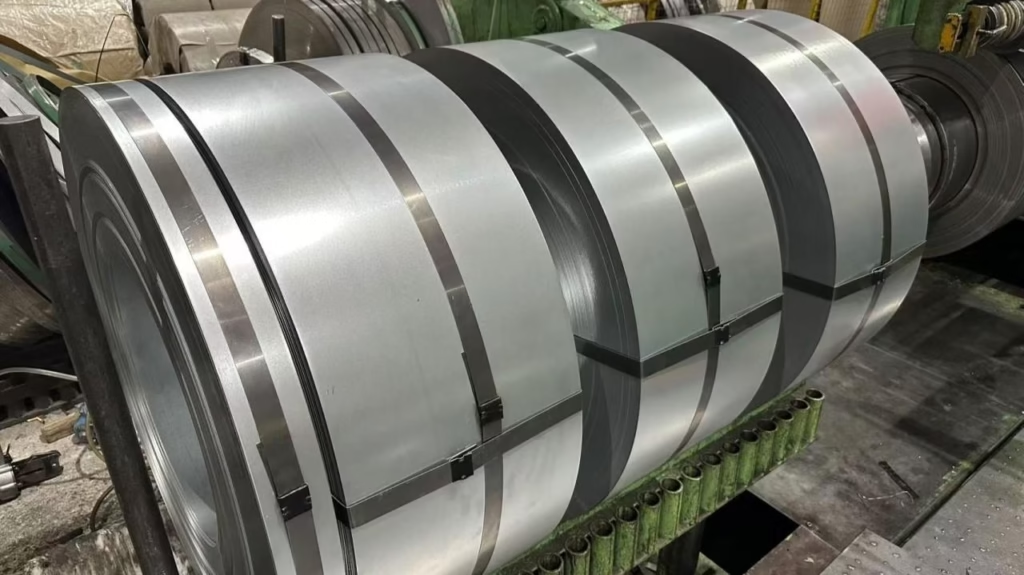
TRIP Steel (Transformation-Induced Plasticity Steel) — TRIP590 / TRIP780 / TRIP980
TRIP Steel (Transformation-Induced Plasticity Steel) — TRIP590 / TRIP780 / TRIP980 — is advanced high-strength steel combining tensile strength 590-980 MPa with exceptional elongation (24-34%) and n-value (≥0.20-0.24) through strain-induced martensitic transformation of retained austenite. Superior crash energy absorption for automotive longitudinal rails, B-pillars, and structural crash components. Thickness 0.6-3.0mm. IATF 16949 certified.
| Material | Advanced High-Strength Steel (AHSS) — Transformation-Induced Plasticity (TRIP) Multiphase Microstructure |
|---|---|
| Grade / Standard | TRIP590 / TRIP780 / TRIP980 (per EN 10338 HCT590T / HCT780T / HCT980T) |
| Thickness | 0.6mm - 3.0mm |
| Width | 600mm - 1800mm |
| Inner Diameter (ID) | 508mm / 610mm |
| Coil Weight | 8-25 Tons (Standard 10-20 Tons) |
| Surface Treatment | galvanized / coated |
| MOQ | 5 Tons |
| Delivery Time | 30-45 Days (Custom) / 15-25 Days (Stock) |
| Loading Port | Tianjin / Shanghai / Qingdao |
Overview of TRIP Steel (Transformation-Induced Plasticity Steel)
Transformation-Induced Plasticity Steel (TRIP Steel) is a premium category of advanced high-strength steel (AHSS) that achieves an exceptional combination of high tensile strength and outstanding uniform elongation through a unique deformation mechanism — the transformation of metastable retained austenite to martensite during plastic deformation, known as the TRIP effect. Unlike conventional high-strength steels that derive strength entirely from their initial microstructure, TRIP steel possesses a carefully engineered multiphase microstructure consisting of a soft ferrite matrix (40-60% volume fraction), bainite (25-40%), and critically, metastable retained austenite islands (5-15% volume fraction) stabilized at room temperature through precise silicon and aluminum alloying that suppresses cementite precipitation during bainitic transformation. When TRIP steel is deformed during stamping, the metastable retained austenite progressively transforms to hard martensite in the regions of highest local strain — the TRIP effect — providing continuous local strain hardening exactly where the material is most severely deformed, effectively suppressing the formation of localized necking that limits formability in conventional steels.
This strain-induced martensitic transformation mechanism produces TRIP steel’s defining property profile: tensile strength 590-980 MPa combined with total elongation 24-34% and exceptionally high uniform elongation and n-value (strain hardening exponent ≥0.20-0.24), far exceeding what is achievable with dual phase (DP) steel at equivalent tensile strength. The three primary commercial TRIP steel grades are TRIP590 (tensile strength ≥590 MPa, the entry-level TRIP grade for complex structural stampings), TRIP780 (tensile strength ≥780 MPa, the most widely specified TRIP grade for automotive structural and reinforcement components), and TRIP980 (tensile strength ≥980 MPa, the ultra-high-strength TRIP grade for weight-critical structural applications). Per EN 10338 designation, TRIP grades are identified as HCT590T, HCT780T, and HCT980T respectively, with equivalent VDA 239-100 designations CR240Y590T-TR, CR400Y780T-TR, and CR550Y980T-TR. The silicon content (1.0-1.8% Si) or aluminum content (0.5-1.5% Al in Si-free TRIP variants) that stabilizes retained austenite is the defining alloying characteristic of TRIP steel, and its control during continuous annealing heat treatment is the critical process parameter determining retained austenite fraction and TRIP effect magnitude. Tanglu Group supplies all major TRIP steel grades from leading Chinese automotive steel mills with complete automotive certification and PPAP documentation support meeting global automotive OEM requirements.
Key Features and Manufacturing Process
TRIP Steel manufacturing requires the most sophisticated continuous annealing process control in cold-rolled steel production, demanding precise management of three distinct thermal processing stages to develop the specific retained austenite fraction (5-15%) and carbon enrichment (austenite carbon content 0.8-1.2%) that provide optimal TRIP effect during forming. The steelmaking process begins with controlled carbon content (0.12-0.22%) — higher than IF or BH steel but carefully balanced to enable sufficient carbon enrichment of retained austenite during bainitic transformation while maintaining weldability. The defining alloying additions are silicon (1.0-1.8% Si) and/or aluminum (0.5-1.5% Al), which suppress cementite (Fe₃C) precipitation during bainitic transformation, preventing the dissolution of retained austenite and maintaining the metastable austenite islands essential for the TRIP effect. Without sufficient Si or Al, carbon rejected from growing bainite laths precipitates as cementite rather than enriching the surrounding austenite, eliminating the carbon stabilization mechanism that maintains austenite metastability at room temperature. Manganese (1.2-2.0%) provides solid solution strengthening and hardenability, while microalloying additions of niobium (0.01-0.04%) and titanium (0.01-0.03%) provide grain refinement contributing to strength and formability.
The critical continuous annealing thermal cycle consists of three precisely controlled stages: Stage 1 — Intercritical Annealing at 760-840°C (two-phase ferrite + austenite region) for 60-120 seconds to produce the target ferrite fraction (40-60%) and partition carbon between ferrite and austenite (austenite carbon content 0.3-0.5% after intercritical annealing); Stage 2 — Rapid Quenching at 50-150°C/second cooling rate to 380-450°C (just above Ms — martensite start temperature) to suppress martensite formation while retaining the high-carbon austenite from Stage 1; Stage 3 — Isothermal Bainitic Transformation (Overaging) at 380-450°C for 60-300 seconds, during which bainite forms from the austenite, rejecting carbon into the remaining austenite and progressively enriching it to 0.8-1.2% carbon content — sufficient to stabilize retained austenite at room temperature against spontaneous martensitic transformation. The precision of Stage 3 temperature control (±5°C) is critical: too high (>460°C) results in pearlite formation instead of bainite, losing retained austenite; too low (<360°C) results in excessive martensite formation during the overaging hold, also reducing retained austenite fraction. The finished TRIP steel is available in cold-rolled coil form, thickness 0.6mm to 3.0mm, width 600mm to 1800mm, coil weight 8-25 tons. Electrogalvanized (ZE coated) and hot-dip galvanized (GI/GA) TRIP variants are available, though galvanizing of high-silicon TRIP steel requires special flux treatments or aluminum-based TRIP chemistry (Al-TRIP) to achieve adequate zinc coating adhesion on the silicon-rich surface oxide. Comprehensive quality testing includes chemical composition verification (especially Si, Mn, C by spectrometric analysis), full mechanical property testing (tensile, yield, elongation), retained austenite fraction measurement by X-ray diffraction (XRD) on qualification lots confirming 5-15% RA fraction, n-value (≥0.20-0.24, the critical TRIP steel formability indicator), forming limit curve (FLC) determination, and weldability assessment (resistance spot welding parameter development). Tanglu Group provides all mandatory documentation including XRD-verified retained austenite data for initial qualification and complete PPAP packages for automotive program approval.
Main Applications of TRIP Steel
TRIP Steel occupies a unique application space in automotive body-in-white design where the exceptional combination of high tensile strength (590-980 MPa) and outstanding elongation (24-34%) enables structural components requiring both high crash energy absorption and complex stamped geometry that cannot be achieved with either standard HSLA (insufficient strength) or DP steel (insufficient elongation for complex forming at equivalent strength). The primary automotive application of TRIP780 and TRIP980 is longitudinal crash rails (front side members, front longitudinal rails) — the primary crash energy absorbing structures in frontal collision events — where TRIP steel’s extraordinary energy absorption capacity per unit mass (a function of the area under the stress-strain curve, which is maximized by TRIP steel’s combination of high strength AND high elongation) provides superior crash performance compared to equivalent-strength DP steel, which achieves high strength at the expense of uniform elongation and energy absorption. Modern NCAP (New Car Assessment Program) frontal crash requirements and IIHS small overlap rigid barrier tests place extreme demands on front rail energy absorption, and TRIP780/TRIP980 are increasingly specified for front rail inner and outer stampings in premium and performance vehicle platforms pursuing maximum crash rating with minimum structural mass.
B-pillar inner reinforcements and B-pillar outer reinforcements for vehicles requiring maximum side impact protection use TRIP780 and TRIP980 as alternatives to press-hardened boron steel in non-tailor-welded applications, providing the high tensile strength needed for IIHS side impact and pole impact test performance while maintaining sufficient elongation for the complex stamped geometry of modern B-pillar designs including the numerous punched holes for attachment features. Tunnel reinforcements and transmission tunnel structural members use TRIP590 and TRIP780 for the combination of high energy absorption in floor intrusion scenarios (IIHS moderate overlap, small overlap tests) and the complex three-dimensional forming required to match the transmission tunnel geometry of specific vehicle platforms. Side impact door beams and door impact reinforcements use TRIP780 for the combination of high strength (FMVSS 214 side impact door beam strength requirements) and sufficient elongation to form the complex end geometry and attachment features of stamped door impact beams without the press-hardening tooling investment required for boron steel alternatives. Roof rail inner reinforcements and roof side rail structures use TRIP590 and TRIP780 for rollover protection (FMVSS 216 roof crush resistance) while accommodating the complex forming of the rail cross-section that integrates headliner attachment features, roof panel sealing flanges, and A/B/C pillar connection geometry. Floor cross members and underbody structural cross members use TRIP590 for improved crash energy absorption in side impact floor intrusion scenarios compared to conventional HSLA structural steel, with TRIP590’s superior elongation enabling the complex cross-member end geometry and web piercing features required for underbody structural assembly. Suspension components including control arm forgings and stampings, twist beam rear suspension cross members, and rear suspension trailing arms increasingly use hot-rolled TRIP steel variants for weight reduction while maintaining the fatigue resistance and dynamic impact resistance demanded by chassis component durability requirements — the retained austenite TRIP effect provides particularly beneficial fatigue crack growth resistance by creating compressive residual stresses around crack tips during fatigue loading. Energy absorber (crash box) assemblies for bumper systems use TRIP590 and TRIP780 for superior energy absorption per unit mass in both progressive axial crush (low-speed impacts) and high-speed crash loading scenarios compared to conventional HSLA or DP steel crash boxes of equivalent gauge. Seat structural components including seat back frames, seat cushion frame cross members, and recliner mechanism reinforcement brackets use TRIP590 for weight reduction meeting FMVSS 207/210 seat and belt anchorage requirements while providing superior energy absorption in frontal crash seat loading scenarios. Beyond automotive structural applications, TRIP steel finds applications in railway vehicle structural components requiring high strength combined with impact energy absorption for collision safety, military vehicle structural panels requiring ballistic resistance combined with formability for complex panel geometry, pressure vessel components requiring high strength with resistance to hydrogen-induced cracking (TRIP steel’s retained austenite provides beneficial hydrogen trapping that resists hydrogen embrittlement in some applications), industrial machinery structural frames requiring weight-optimized high-strength steel with sufficient formability for welded fabrication, and mining and construction equipment structural members requiring resistance to dynamic impact loading and fatigue in severe service environments. Tanglu Group provides comprehensive technical support for TRIP steel application engineering including grade selection, forming process parameter development, crash simulation material data, and welding procedure qualification.
Why Choose Us for TRIP Steel
Shandong Tanglu Metal Material Co., Ltd. supplies Transformation-Induced Plasticity Steel from qualified Chinese automotive steel mills operating IATF 16949 certified quality management systems with specialized continuous annealing line capabilities for the precise three-stage thermal cycle (intercritical annealing, rapid quench, bainitic overaging) required to consistently achieve the target retained austenite fraction (5-15%) and mechanical properties that define TRIP steel performance. TRIP steel quality verification requires specialized analytical capabilities beyond standard steel testing, and our supply chain includes mandatory retained austenite fraction measurement by X-ray diffraction (XRD) on initial qualification lots confirming the microstructural basis for TRIP effect performance, alongside full mechanical property testing (tensile, yield, elongation), n-value measurement per ISO 10275 (the critical TRIP steel formability indicator, typically ≥0.20-0.24), forming limit curve (FLC) determination for customer forming simulation validation, and weldability assessment including resistance spot welding (RSW) parameter development for the high-silicon TRIP chemistry that requires adjusted welding parameters compared to conventional steel. Chemical composition is verified by optical emission spectrometry with specific attention to silicon (1.0-1.8%), manganese (1.2-2.0%), and carbon (0.12-0.22%) as the critical elements determining TRIP steel microstructure and retained austenite stability.
Our TRIP steel supply range covers all primary grades: TRIP590 (HCT590T per EN 10338, entry-level TRIP for complex structural stampings), TRIP780 (HCT780T, the most commonly specified TRIP grade for automotive crash structures), and TRIP980 (HCT980T, ultra-high-strength TRIP for weight-critical applications), in both conventional silicon-alloyed (Si-TRIP) and aluminum-alloyed (Al-TRIP) variants where galvanizing compatibility is required. Available thickness 0.6mm to 3.0mm (cold-rolled), width 600mm to 1800mm, in bare cold-rolled, electrogalvanized (ZE coated), and hot-dip galvanized (GI/GA Al-TRIP) surface conditions. Monthly supply capacity 2,000 tons of TRIP and other advanced AHSS grades with stock availability of standard TRIP590 and TRIP780 grades enabling 15-25 day delivery for prototype and tooling development programs. Production volume orders for TRIP780 and TRIP980 are scheduled at 30-45 days from mill with reliable production planning to support automotive program launch timelines. Every shipment includes original mill test certificate per EN 10204 3.1 with n-value reported as standard, EN 10204 3.2 third-party inspection (SGS, BV, TUV) available for automotive OEM direct-supply applications, forming limit curve data and true stress-strain flow curves for FEA input on request, complete PPAP documentation support at Level 1-3 per customer program requirements, and technical engineering support for forming process development, springback management, and RSW parameter qualification throughout vehicle program development from concept feasibility to production launch.
📐 Dimension & Size Table
| Grade | Tensile Strength | Total Elongation (A80) | Typical Application |
|---|---|---|---|
| TRIP590 | ≥590 MPa | ≥30% | Complex structural stampings, tunnel reinforcements, floor cross members |
| TRIP780 | ≥780 MPa | ≥26% | Front longitudinal rails, B-pillar reinforcements, door impact beams |
| TRIP980 | ≥980 MPa | ≥20% | Ultra-high-strength crash rails, weight-critical structural members |
| TRIP590 (ZE — Al-TRIP) | ≥590 MPa | ≥28% | Galvanized structural stampings requiring corrosion resistance |
| TRIP780 (GI/GA — Al-TRIP) | ≥780 MPa | ≥24% | Galvanized B-pillar, corrosion-critical crash structural members |
| TRIP980 (CR) | ≥980 MPa | ≥20% | Bare high-strength crash rails, premium vehicle structural applications |
| HR TRIP Equivalent | 590-780 MPa | ≥24-30% | Hot-rolled TRIP for chassis structural members, suspension components |
* Custom sizes available upon request. Tolerances per relevant international standards.
🔬 Chemical Composition
| Element | Min | Max | Display Value | Note |
|---|---|---|---|---|
| C | 0.12 | 0.22 | 0.12-0.22 | Critical for retained austenite carbon enrichment during bainitic transformation |
| Si | 1.00 | 1.80 | 1.00-1.80 | CRITICAL — suppresses cementite precipitation, stabilizes retained austenite (Si-TRIP) |
| Al | 0.50 | 1.50 | 0.50-1.50 | Alternative to Si for cementite suppression in Al-TRIP (galvanizing compatible) |
| Mn | 1.20 | 2.00 | 1.20-2.00 | Solid solution strengthening and hardenability for bainite formation |
| P | - | 0.020 | ≤0.020 | Strict control for weldability and retained austenite stability |
| S | - | 0.010 | ≤0.010 | Low sulfur for formability and retained austenite microstructure homogeneity |
| Al (total) | 0.020 | 0.060 | 0.020-0.060 | Deoxidizer (in Si-TRIP; in Al-TRIP, Al is both deoxidizer and cementite suppressor) |
| Nb | 0.010 | 0.040 | 0.010-0.040 | Grain refinement, precipitation strengthening contribution |
| Ti | 0.010 | 0.030 | 0.010-0.030 | Grain boundary pinning, TiN formation for grain refinement |
| Cr | - | 0.500 | ≤0.500 | Optional hardenability addition for TRIP980 grade |
| Mo | - | 0.200 | ≤0.200 | Optional — hardenability and bainite transformation control in TRIP980 |
| N | - | 0.006 | ≤0.006 | Controlled for grain refinement and aging stability |
* Chemical composition may vary by heat, thickness and specification. Please refer to the actual mill test certificate.
⚙️ Mechanical Properties
| Property | Value | Unit | Test Condition |
|---|---|---|---|
| Tensile Strength (TRIP590) | 590-720 | MPa | Per EN 10338 HCT590T specification |
| Yield Strength (TRIP590, Rp0.2) | ≥240 | MPa | Low initial yield — enables complex forming before TRIP effect activates |
| Tensile Strength (TRIP780) | 780-950 | MPa | Per EN 10338 HCT780T specification |
| Yield Strength (TRIP780, Rp0.2) | ≥400 | MPa | 0.2% proof strength, cold-rolled continuously annealed condition |
| Tensile Strength (TRIP980) | 980-1150 | MPa | Per EN 10338 HCT980T specification |
| Yield Strength (TRIP980, Rp0.2) | ≥550 | MPa | 0.2% proof strength, cold-rolled condition |
| Total Elongation (A80, TRIP590) | ≥30 | % | Gauge length 80mm — exceptional for 590 MPa tensile strength steel |
| Total Elongation (A80, TRIP780) | ≥26 | % | Gauge length 80mm — far exceeds DP780 elongation (~14-18%) |
| Total Elongation (A80, TRIP980) | ≥20 | % | Gauge length 80mm — remarkable for 980 MPa tensile strength grade |
| n-value (Strain Hardening Exponent, TRIP780) | ≥0.20 | - | Per ISO 10275 — high n-value from progressive TRIP effect during deformation |
| n-value (Strain Hardening Exponent, TRIP590) | ≥0.24 | - | Highest n-value in TRIP family — superior stretch forming performance |
| Retained Austenite Fraction | 5-15 | Vol% | Measured by XRD on qualification lots — defines TRIP effect magnitude |
| Retained Austenite Carbon Content | 0.8-1.2 | wt% | Carbon enrichment in RA during bainitic overaging — stabilizes RA at room temperature |
| Yield-to-Tensile Ratio (TRIP780) | 0.50-0.60 | - | Low YR enables large uniform elongation before necking — key crash energy advantage |
| Energy Absorption (Area under Stress-Strain Curve) | Superior vs DP | - | TRIP780 absorbs ~40-60% more energy per unit volume than DP780 at equivalent strength |
* Values shown are minimum requirements unless otherwise stated.
📦 Commercial Information
| Packaging | Advanced automotive structural steel packaging for TRIP steel coils designed to protect the high-value AHSS material during ocean transit and storage at automotive stamping facilities, with particular attention to the sensitivity of TRIP steel retained austenite microstructure to any surface damage that could affect the edge quality and subsequent forming performance in crash structural components. Each TRIP steel coil is wrapped with dual-layer VCI (volatile corrosion inhibitor) paper system — inner micro-embossed VCI paper providing direct surface contact corrosion protection for minimum 18-month protection, outer heavy-duty kraft-backed VCI paper providing structural moisture barrier — with specific VCI formulation selected to be compatible with the high-silicon surface chemistry of Si-TRIP steel variants that can develop a distinctive blue-gray silicon oxide surface layer on cold-rolled bare material. Heavy-duty galvanized steel strapping (32mm × 1.2mm, 6-8 wraps per coil rated for coil weights up to 30 tons) with foam-backed edge protectors at all strapping contact points to prevent marking of the cold-rolled surface. Precision-machined steel inner diameter protection rings (6mm wall thickness minimum) prevent coil eye collapse and protect inner wraps from telescoping damage during crane handling in automotive stamping plant coil storage areas. Outer diameter receives full circumference reinforced cardboard impact protection layer beneath outer VCI wrap. Each TRIP steel coil is permanently identified with laser-engraved metal tag and printed polyester adhesive label including heat number, EN 10338 grade designation (HCT590T / HCT780T / HCT980T), VDA 239-100 equivalent designation, actual n-value and elongation from production lot (reported for customer FEA crash simulation validation), retained austenite fraction from XRD qualification (reported on qualification heat certificates), TRIP chemistry variant (Si-TRIP or Al-TRIP for galvanized variants), thickness, width, coil weight, production date, and customer purchase order and automotive program part number reference. Stacked coil configurations employ engineered heavy timber coil cradles (verified load capacity per stack configuration) with non-marking rubber contact pads. Full coil waterproof shrink-wrap system with moisture indicator windows for transit moisture monitoring on long-haul ocean shipments. All wood packaging ISPM-15 phytosanitary treated with official marking. Complete material documentation package including original MTC with n-value and elongation data, XRD retained austenite report for qualification heats, forming limit curve data, true stress-strain flow curves for FEA crash simulation, RSW welding parameter sheet, and CoO included in waterproof sealed documentation envelope attached to each shipment. |
|---|---|
| Payment Terms | T/T (Telegraphic Transfer),L/C (Letter of Credit),D/P (Documents against Payment),Western Union,PayPal |
| Price Term | FOB,CFR,CIF,EXW |
| Supply Capacity | 2,000 Tons/Month (TRIP Steel and Advanced AHSS) |
| Loading Port | Tianjin / Shanghai / Qingdao |
Why Choose Our TRIP Steel (Transformation-Induced Plasticity Steel) — TRIP590 / TRIP780 / TRIP980?
XRD Retained Austenite Verification + n-Value Certified
TRIP steel quality is verified through retained austenite fraction measurement by X-ray diffraction (XRD) on initial qualification lots confirming 5-15% RA volume fraction and carbon enrichment (0.8-1.2 wt%C) — the microstructural basis for the TRIP effect. Every production shipment includes mandatory n-value measurement per ISO 10275 (≥0.20-0.24) and total elongation (A80 ≥20-30%) on original mill test certificates, the critical forming performance parameters that confirm consistent TRIP effect activation during stamping.
Superior Energy Absorption vs Equivalent DP Steel
TRIP780 absorbs 40-60% more crash energy per unit volume than DP780 at equivalent tensile strength, directly measured as the area under the true stress-true strain curve. This superior energy absorption per unit mass enables automotive front longitudinal rails and B-pillar reinforcements to achieve equivalent crash test performance (IIHS, Euro NCAP) at reduced gauge thickness compared to DP steel alternatives — delivering both crash safety and vehicle weight reduction simultaneously.
Outstanding Elongation at High Strength Levels
TRIP780 achieves total elongation ≥26% at tensile strength ≥780 MPa — approximately 60-80% higher elongation than DP780 (typical A80 14-18%) at equivalent tensile strength. This exceptional elongation results from the progressive TRIP effect: retained austenite continuously transforms to martensite in the most strained regions during forming, providing local strain hardening that suppresses necking and distributes deformation uniformly across the entire component, enabling complex crash structure geometries impossible with conventional AHSS.
Si-TRIP and Al-TRIP Variants for All Applications
Both Si-TRIP (silicon-alloyed, bare cold-rolled) and Al-TRIP (aluminum-alloyed, galvanizing-compatible) variants supplied to cover all automotive structural applications. Al-TRIP chemistry enables electrogalvanized (ZE) and hot-dip galvanized (GI/GA) TRIP steel for corrosion-critical structural locations without the galvanizing adhesion problems of high-silicon Si-TRIP. Grade equivalency cross-reference for EN 10338, VDA 239-100, JFS A2001, and major OEM customer specifications provided.
FEA Crash Simulation Data Package Included
Comprehensive material data package for crash simulation and forming FEA provided with TRIP steel supply: true stress-true strain flow curves (to failure strain), forming limit curve (FLC), Lankford r-values, retained austenite transformation kinetics data for advanced material models (TRIP-enhanced material cards for LS-DYNA, PAM-CRASH, RADIOSS FEA solvers), and RSW welding parameter sheets. Supports rapid material qualification for new automotive program feasibility and PPAP submission.
🏭 Applications of TRIP Steel (Transformation-Induced Plasticity Steel) — TRIP590 / TRIP780 / TRIP980
TRIP Steel is the preferred advanced high-strength steel for automotive crash structural applications requiring the unique combination of high tensile strength and exceptional crash energy absorption that only the Transformation-Induced Plasticity mechanism can provide — a combination unachievable with conventional dual phase or complex phase steel at equivalent strength levels. Front longitudinal rails (front side members) represent the primary application driving TRIP steel adoption in global automotive body-in-white design, where TRIP780 and TRIP980 have become the preferred material for premium vehicle front crash rail stampings in European vehicles (BMW, Mercedes-Benz, Audi, Volkswagen, Volvo), Japanese vehicles (Toyota, Honda, Mazda), and electric vehicles (Tesla, Rivian, Lucid) pursuing maximum frontal crash protection ratings in IIHS small overlap rigid barrier, IIHS moderate overlap, Euro NCAP full-width deformable barrier, and NHTSA frontal impact tests at minimum structural mass. The physics driving TRIP steel's front rail advantage is straightforward: the energy absorbed in a frontal crash by a front rail structure is directly proportional to the area under the force-displacement curve of the crushing structure, which corresponds to the area under the stress-strain curve of the material (integrated over the structural volume). TRIP780's combination of high tensile strength (≥780 MPa) and high elongation (≥26%) produces a significantly larger area under the stress-strain curve than DP780 (780 MPa tensile, 14-18% elongation), translating to 40-60% more energy absorbed per kilogram of front rail material — enabling either equivalent crash performance at reduced front rail gauge (weight reduction) or superior crash performance at equivalent gauge (improved safety rating). B-pillar reinforcement assemblies for passenger cars and SUVs use TRIP780 and TRIP980 as cold-stamped alternatives to press-hardened boron steel (22MnB5) in vehicle programs where the capital investment in hot forming press equipment is not justified by production volume, or where the B-pillar geometry complexity can be achieved by cold stamping TRIP steel but not by hot forming. TRIP980 provides tensile strength approaching 1000 MPa sufficient for Euro NCAP 5-star side pole impact performance in cold-stamped form, avoiding the press-hardening process complexity (dedicated hot press tooling, heating furnace, quenching dies, 3-5 minute cycle time versus 5-15 second cold stamping cycle) while achieving competitive structural performance in mid-volume vehicle programs (30,000-100,000 units per year). Tunnel reinforcement stampings and floor tunnel structural members for passenger cars use TRIP590 and TRIP780 for the combination of high energy absorption in floor intrusion crash scenarios (IIHS moderate overlap, small overlap tests where floor deformation directly affects occupant lower leg injury) and the complex three-dimensional tunnel geometry with deep draws, multiple opening features, and compound curvature that requires TRIP steel's high elongation to form without splitting at the most severely strained tunnel radius and corner features. Side impact door beam stampings and tubular door beams use TRIP780 for the combination of high static strength meeting FMVSS 214 door beam requirements and sufficient elongation to form the end geometry of stamped door beams — the progressive forming of the beam end features that anchor the door beam to the door inner panel reinforcement structure requires local elongation exceeding the capability of CP steel at equivalent strength. Roof structure reinforcements including roof rail inner stampings, roof bow cross members, and A-pillar to C-pillar roof rail members for SUVs and crossovers use TRIP590 and TRIP780 for rollover protection (FMVSS 216 / Euro NCAP rollover) combined with the complex geometry integration of headliner attachment rails, moonroof surround structures, and roof panel attachment flanges. Energy absorber (crash box) assemblies positioned between the bumper beam and front longitudinal rail represent a growing TRIP steel application where the crash box must absorb maximum energy in low-speed impacts (2.5-5 mph IIHS bumper tests, RCAR 15 km/h tests for insurance rating) through progressive axial folding while also providing initial high-force crush resistance in high-speed frontal impacts before the front rail absorbs remaining energy — TRIP590's extraordinary combination of high n-value (≥0.24) and high tensile strength produces superior progressive folding energy absorption versus conventional HSLA or DP steel crash boxes. Suspension structural components represent an important growth application for hot-rolled TRIP steel variants, particularly twist beam rear suspension cross members for front-wheel-drive passenger cars where the cross member simultaneously functions as a torsion spring and lateral structural member — TRIP590 and TRIP780 in hot-rolled form (1.5-4.0mm thickness) provide the combination of high fatigue resistance (retained austenite provides beneficial compressive residual stress around fatigue crack initiation sites, retarding crack growth) and high tensile strength for weight reduction versus conventional HSLA twist beam designs. Control arm stampings (lower control arm front and rear brackets, upper control arm for SUVs) and suspension trailing arms for rear suspension systems use TRIP steel for weight reduction meeting global wheel/suspension endurance requirements while providing sufficient elongation for the complex stamped geometry of modern multi-arm suspension components. Seat back structural frames and recliner mechanism reinforcement brackets use TRIP590 for improved energy absorption in frontal crash rear occupant loading scenarios (FMVSS 207/210 seat and belt strength requirements) while providing the elongation needed for the complex bracket geometries of modern powered seat back recliner mechanisms. Electric vehicle battery tray perimeter frames and battery module mounting structures represent an emerging TRIP steel application where the high specific energy absorption of TRIP780 per unit mass provides superior battery protection in both side impact (pole impact, MDB side impact) and underfloor impact scenarios critical for battery safety in electric vehicle crash certification, while maintaining cold-stamping manufacturability for the complex perimeter frame geometry with numerous battery module attachment bolt holes and thermal management system integration features. Beyond automotive structural applications, TRIP steel is applied in railway passenger vehicle anti-climb and crash management systems where high energy absorption per unit weight is critical for passive safety in train collision scenarios, offshore platform structural connection nodes requiring high strength with excellent toughness and fatigue resistance in marine environments, military vehicle structural hull sections requiring high ballistic resistance combined with post-impact residual structural integrity, and industrial press frames and die structural components requiring high strength with resistance to dynamic fatigue loading from press impact forces. Tanglu Group provides comprehensive engineering support for TRIP steel application development including crash simulation material cards, forming feasibility assessment, and complete technical documentation for automotive program qualification.
📋 Quality & Certification
Our Certifications
- ✅ ISO 9001:2015
- ✅ CE Marking
- ✅ ABS
- ✅ DNV GL
- ✅ Lloyd's Register (LR)
- ✅ Bureau Veritas (BV)
- ✅ SGS Certified
- ✅ NK
- ✅ RINA
Mill Certificate Type
- 📋 EN 10204 3.1
- 📋 EN 10204 3.2
- 📋 Original Mill Certificate
- 📋 Third Party Inspection Available
- 📋 Certificate of Origin
❓ Frequently Asked Questions
What is the TRIP effect and how does it improve steel formability and crash performance?
The TRIP effect (Transformation-Induced Plasticity effect) is a metallurgical phenomenon where metastable retained austenite present in the steel microstructure transforms to hard martensite during plastic deformation, providing continuous local strain hardening in the regions of highest strain concentration. This mechanism fundamentally improves both forming performance and crash energy absorption compared to conventional high-strength steels.
The TRIP Mechanism Step by Step:
1) Microstructure Design: TRIP steel is manufactured with a carefully engineered multiphase microstructure containing 5-15% metastable retained austenite islands distributed within a ferrite-bainite matrix. The retained austenite is stabilized at room temperature (below its normal transformation temperature) through carbon enrichment to 0.8-1.2 wt%C during the bainitic overaging heat treatment step — high carbon content depresses the martensite start temperature (Ms) below room temperature, preventing spontaneous transformation during cooling.
2) Deformation-Triggered Transformation: When TRIP steel is plastically deformed (during stamping or crash loading), the mechanical energy of deformation provides the driving force that triggers transformation of the metastable retained austenite to martensite in the most highly strained regions. The transformation is progressive — retained austenite with lowest stability (lowest carbon content, smallest island size) transforms first at low strain levels, while more stable austenite (higher carbon content) transforms at progressively higher strains.
3) Local Strain Hardening Effect: The fresh martensite formed during deformation is approximately 3-5 times harder than the surrounding ferrite-bainite matrix. This localized hardening in the highest-strain regions: a) Suppresses the formation of localized necking (diffuse neck development) by increasing the flow stress exactly where necking is beginning to form, redistributing strain to adjacent lower-strain regions; b) Maintains high strain hardening rate (high n-value) throughout the deformation range, even at strains where conventional steel n-value decreases toward zero near fracture; c) Produces the characteristic continuously rising n-value at higher strains that is unique to TRIP steel.
Formability Benefit: The TRIP effect produces total elongation (A80 ≥26-30% for TRIP780) far exceeding DP steel at equivalent tensile strength (A80 14-18% for DP780), enabling deeper draws, more complex panel geometry, and larger stretch areas without thinning failure. The high n-value (≥0.20-0.24) ensures excellent stretch formability for dome-forming and biaxial stretch operations.
Crash Energy Absorption Benefit: The same mechanism that improves formability also enhances crash energy absorption. During crash loading (axial crushing of front rails, bending of B-pillars), the progressive TRIP transformation maintains high flow stress throughout large plastic strains, producing a stress-strain curve with large area (= energy absorbed) compared to DP steel which reaches its peak stress at lower strains then fractures. TRIP780 absorbs 40-60% more energy per unit volume than DP780, directly translating to better occupant protection in crash events.
What is the difference between Si-TRIP and Al-TRIP steel, and which should I specify?
Si-TRIP and Al-TRIP represent two distinct alloying approaches to achieving the cementite suppression required for retained austenite stabilization in TRIP steel, each with specific advantages and limitations that determine their suitability for different automotive applications:
Si-TRIP (Silicon-Alloyed TRIP Steel):
Chemistry: 1.0-1.8% Si as the primary cementite suppressor, combined with moderate carbon (0.15-0.22%) and manganese (1.2-2.0%)
Mechanism: Silicon has very low solubility in cementite (Fe₃C) and is strongly rejected from growing cementite nuclei, effectively raising the activation energy for cementite nucleation during bainitic transformation. This maintains the carbon in solid solution within the bainite-surrounding austenite, enabling carbon enrichment to 0.8-1.2 wt%C and retained austenite stabilization.
Advantages: Si-TRIP achieves the highest retained austenite fractions (8-15%) and strongest TRIP effect compared to Al-TRIP at equivalent carbon content. Superior n-value (≥0.22-0.26) and total elongation performance. Lower alloy cost than Al-TRIP (silicon is less expensive than aluminum as a bulk alloying addition in steel quantities).
Limitations: HIGH SILICON CONTENT CAUSES SEVERE GALVANIZING PROBLEMS. During continuous galvanizing, the silicon-rich surface oxide (SiO₂, Fe₂SiO₄ fayalite) that forms during annealing is not wetted by molten zinc, resulting in bare spots (uncoated areas) in the zinc coating — a critical quality defect for any application requiring zinc corrosion protection. This fundamentally limits Si-TRIP to bare cold-rolled applications only. Additionally, the silicon-rich surface produces a distinctive blue-gray oxide color on cold-rolled Si-TRIP that some customers find visually unfamiliar.
Al-TRIP (Aluminum-Alloyed TRIP Steel):
Chemistry: 0.5-1.5% Al replacing Si as the primary cementite suppressor, with higher manganese (1.5-2.0%) to compensate for aluminum's lower solid solution strengthening contribution
Mechanism: Aluminum also suppresses cementite precipitation (like silicon) but forms surface oxides (Al₂O₃) that are more readily reduced by the hydrogen-nitrogen annealing atmosphere in continuous galvanizing lines, leaving a clean iron surface that zinc can wet properly — enabling hot-dip galvanizing without bare spot defects.
Advantages: Compatible with hot-dip galvanizing (GI/GA) and electrogalvanizing (ZE) — enables TRIP steel in corrosion-critical body-in-white structural locations requiring zinc corrosion protection. Acceptable surface appearance on bare cold-rolled Al-TRIP (no blue-gray silicon oxide coloration).
Limitations: Al-TRIP typically achieves slightly lower retained austenite fraction (5-10% versus 8-15% for Si-TRIP) and lower TRIP effect intensity, resulting in somewhat lower elongation and n-value compared to Si-TRIP at equivalent tensile strength. Higher alloy cost due to aluminum additions. Al-TRIP chemistry is more sensitive to processing parameter variations in continuous annealing.
Specification Guideline:
- Bare cold-rolled structural components not requiring corrosion protection (inner structural panels, hidden crash structures): Specify Si-TRIP for maximum TRIP effect and formability performance.
- Structural components requiring zinc corrosion protection (exposed or semi-exposed structural locations, galvanized B-pillar outer reinforcements, galvanized side sill inners): Specify Al-TRIP (galvanizing-compatible) in GI/GA or ZE surface treatment.
- When ordering, confirm with Tanglu Group whether Si-TRIP or Al-TRIP is required — the surface treatment requirement directly determines the correct chemistry variant.
How does TRIP steel compare to DP steel and CP steel for automotive crash applications?
TRIP steel, DP steel, and CP steel are all important AHSS families for automotive crash structural applications, each with distinct mechanical property profiles that make them optimal for different structural requirements. Understanding the comparison enables informed material selection for specific crash structure components:
Property Comparison at ~780 MPa Tensile Strength Level:
DP780 (Dual Phase): Tensile 780-950 MPa | Yield 450-550 MPa | A80 14-18% | n-value 0.14-0.18 | HER 25-40% | YR 0.55-0.65
Critical characteristics: Excellent strength-formability balance for stamped structural components with moderate forming severity. Good stretch forming (n-value) but limited deep drawing (lower r-value). Moderate HER limits application in components with punched holes and flanging. Lower elongation limits crash energy absorption compared to TRIP steel.
CP800 (Complex Phase): Tensile 800-950 MPa | Yield 640-760 MPa | A80 10-14% | n-value 0.10-0.14 | HER 50-65% | YR 0.80-0.88
Critical characteristics: Superior hole expansion ratio (HER) for components with punched holes and flanging operations. High yield-to-tensile ratio provides good static strength efficiency. Lower elongation and n-value compared to TRIP steel limits crash energy absorption capability. Best for structural components where edge formability is the primary manufacturing challenge.
TRIP780 (Transformation-Induced Plasticity): Tensile 780-950 MPa | Yield 380-500 MPa | A80 24-30% | n-value 0.20-0.24 | HER 35-50% | YR 0.48-0.60
Critical characteristics: Maximum elongation and n-value at 780 MPa tensile strength — far exceeding both DP and CP at equivalent strength. Low yield-to-tensile ratio enables largest uniform elongation range before necking, maximizing crash energy absorption. Superior crash energy absorption (40-60% more than DP780, 80-120% more than CP800 per unit volume). Moderate HER (between DP and CP) — adequate for most crash structure punched features but inferior to CP for severe edge flanging applications.
Application Selection Matrix:
Front Longitudinal Rails (crash energy absorption primary, forming secondary): TRIP780 preferred — maximum energy absorption per unit mass directly translates to best crash performance at lowest weight. TRIP780 front rails outperform DP780 by 40-60% energy absorption, enabling gauge reduction and weight savings.
B-Pillar Reinforcements (strength and intrusion resistance primary, forming moderate): TRIP980 or CP1000 depending on design. If numerous punched holes require flanging: CP1000 (better HER). If side impact intrusion resistance is maximum priority with moderate hole forming: TRIP980 (higher elongation maintains structural integrity during intrusion).
Bumper Beams (high strength + progressive folding crash boxes): CP800 for bumper beam (high yield strength for low-speed resistance) + TRIP590 for crash boxes (maximum energy absorption in progressive fold).
Door Impact Beams (high strength, limited forming): CP1000 or TRIP980 depending on beam geometry and end forming severity.
Suspension Components (fatigue, strength, moderate forming): Hot-rolled TRIP590/TRIP780 for twist beams and control arms (fatigue benefit from retained austenite, high strength for weight reduction).
Summary: Specify TRIP steel when crash energy absorption per unit mass is the primary design requirement (front rails, crash boxes, energy absorbers). Specify DP steel when balanced strength-formability for complex stamped geometry is primary. Specify CP steel when edge stretchability for punched hole flanging is primary. Many advanced vehicle body-in-white designs use all three AHSS families in a material mosaic approach, assigning each material to the components where its specific property advantages deliver the most benefit.
What are the resistance spot welding (RSW) challenges for TRIP steel and how should welding parameters be adjusted?
Resistance spot welding (RSW) of TRIP steel presents specific challenges related to the high silicon (Si-TRIP) or aluminum (Al-TRIP) content in the chemistry and the high-carbon martensitic microstructure that forms in the spot weld nugget during rapid cooling — challenges that require adjusted welding parameters compared to conventional mild steel or HSLA but are manageable with proper process development.
Key RSW Challenges for TRIP Steel:
1) Surface Oxide Contamination from High Silicon Content (Si-TRIP): The silicon-rich surface oxide (SiO₂, fayalite) on Si-TRIP cold-rolled steel has significantly higher electrical resistivity than the iron oxide surfaces on conventional steel, creating variable contact resistance during spot welding that produces inconsistent weld nugget formation and higher electrode wear rates. This requires: Increased electrode force (4.5-6.0 kN for 1.2-1.5mm Si-TRIP versus 3.0-4.0 kN for mild steel) to break through surface oxide and establish stable electrical contact; More frequent electrode dressing (every 300-500 welds versus 600-1000 welds for mild steel) to maintain consistent electrode face geometry and contact area on the resistive surface; Adjusted welding current profiles — stepped current programs (lower initial current to condition surface, higher current to form nugget) often outperform single-step programs for Si-TRIP.
2) Hard Martensitic Weld Nugget — Risk of Weld Nugget Fracture:
The high carbon content of TRIP steel (0.12-0.22% C) produces a weld nugget and heat-affected zone (HAZ) with high martensite content and hardness (450-550 HV weld nugget versus 250-320 HV for mild steel) when rapidly cooled during spot welding. This hard microstructure is susceptible to interfacial fracture mode during cross-tension (peeling) loading, producing lower cross-tension strength (CTS) to tensile shear strength (TSS) ratios than desired for automotive structural joint performance.
Solution — Post-Weld Tempering Pulse: A temper pulse (low-current pulse of 1-3 kA for 100-200 ms applied 100-400 ms after the main welding pulse, during which the weld cools to below Ms temperature) tempers the hard martensitic weld nugget, reducing peak hardness by 50-100 HV and significantly improving cross-tension strength and ductility ratio (CTS/TSS). This temper pulse is now standard practice for welding TRIP steel and other high-carbon AHSS in automotive body shops.
3) Retained Austenite in HAZ:
The heat-affected zone of TRIP steel spot welds may retain significant retained austenite fraction (5-10%) in the intercritically heated subcritical HAZ zone adjacent to the weld nugget. This RA-containing HAZ provides slightly improved fatigue performance at weld toes but creates a soft zone (lower hardness than base metal) that can be a static strength limiting region in some joint configurations.
Recommended RSW Parameters for TRIP780 (1.2mm + 1.2mm stack, Si-TRIP, Class B electrode):
- Electrode force: 5.0-5.5 kN
- Main welding current: 9.0-11.0 kA (adjust to achieve 4.5-5.5 × √t mm nugget diameter)
- Main weld time: 250-350 ms
- Hold time: 100-150 ms
- Temper pulse current: 5.0-6.0 kA
- Temper pulse time: 150-200 ms
- Temper pulse delay: 150-250 ms after main weld
- Electrode type: Class F Cu-Cr-Zr, 6mm face diameter, 45° cone angle
- Electrode dressing: every 400 welds
Tanglu Group provides TRIP steel RSW parameter development sheets and can connect customers with welding process engineers for specific stack-up and material combination parameter optimization. Complete weldability assessment including tensile shear strength (TSS), cross-tension strength (CTS), hardness traverse, and nugget geometry is performed on initial qualification heats and included in PPAP documentation packages.
What FEA material model data is needed for crash simulation and forming simulation of TRIP steel?
Accurate finite element analysis (FEA) of both crash simulation and forming simulation for TRIP steel components requires specialized material model data that captures the unique strain-hardening behavior arising from the progressive retained austenite to martensite transformation (TRIP effect) — data that is more complex than the simple elastic-plastic material models used for conventional steels and must be specifically developed for TRIP steel grades.
Forming Simulation (Stamping Feasibility FEA) Material Data Requirements:
1) True Stress — True Strain Flow Curve (to failure):
The fundamental input for forming simulation. For TRIP steel, the flow curve must capture: the continuously rising strain hardening rate at higher strains (characteristic of TRIP steel, unlike conventional steel where hardening rate decreases monotonically) and the high uniform elongation before necking. Data required: true stress (σ) vs. true strain (ε) from 0 to fracture strain, measured at 0°, 45°, 90° to rolling direction. Extrapolation beyond uniform elongation using Voce or modified Swift hardening laws fitted to the TRIP steel flow curve character (not standard power-law which underestimates TRIP steel hardening at high strains).
2) Anisotropy Parameters:
r₀, r₄₅, r₉₀ (Lankford r-values) for yield surface definition. TRIP steel r-values are typically lower than IF steel (r̄ ~0.8-1.2 for TRIP versus r̄ 1.6-2.5 for IF) reflecting the multiphase microstructure's lower crystallographic texture. Hill's 1948 or Barlat 1989/2000 yield criterion for stamping FEA (Barlat 2000 recommended for advanced AHSS with complex anisotropy).
3) Forming Limit Curve (FLC):
Experimentally determined forming limit curve defining the strain combinations that cause necking/fracture in biaxial stress states. For TRIP steel, FLC is typically higher than DP steel at equivalent tensile strength (reflecting the higher elongation from TRIP effect), but should be experimentally measured rather than estimated from theoretical models.
Crash Simulation (Crashworthiness FEA) Material Data Requirements:
1) Standard Elasto-Plastic Model (simplified approach):
For preliminary crash design optimization, TRIP780 can be modeled using standard piecewise linear plasticity (MAT24 in LS-DYNA, Material Type 36 in PAM-CRASH) with the experimentally measured true stress-true strain curve including post-uniform elongation behavior. Failure criteria: element deletion at effective plastic strain 0.25-0.35 (calibrated against tensile fracture strain). This simplified approach does not capture the TRIP transformation physics but provides acceptable accuracy for most crash structure design optimization.
2) Advanced TRIP-Enhanced Material Models (recommended for detailed analysis):
Dedicated TRIP steel material models that explicitly model the retained austenite to martensite transformation kinetics during crash loading. Required data: retained austenite initial fraction (5-15% from XRD), transformation kinetics parameters (α, β in the Olson-Cohen transformation model), martensite start stress (σMs — the stress at which retained austenite begins transforming, typically 300-500 MPa), transformation completion strain, and martensite hardness (600-700 HV). These parameters enable the FEA solver to calculate the local retained austenite fraction and martensite fraction as functions of local strain state during crash, accurately predicting the evolving flow stress and energy absorption.
Available Material Model Libraries: LS-DYNA MAT_TRIP (Tata Steel developed, available in LS-DYNA R9.0+); PAM-CRASH TRIP material; Abaqus user material subroutine (VUMAT) implementations from automotive OEM research groups.
Tanglu Group Material Data Package for TRIP Steel:
Supplied with every TRIP steel qualification order:
- True stress-true strain curves at 0°, 45°, 90° to rolling direction (to fracture strain)
- Lankford r-values (r₀, r₄₅, r₉₀, r̄, Δr)
- Forming Limit Curve (FLC) from Nakajima test
- Retained austenite fraction from XRD
- Retained austenite carbon content
- Olson-Cohen transformation kinetics parameters (on request for advanced FEA)
- LS-DYNA MAT24 input deck with fitted flow curve
- Density, elastic modulus, Poisson's ratio
This comprehensive data package enables customer FEA teams to immediately begin crash simulation and forming feasibility analysis for TRIP steel component development without additional material characterization testing delays, accelerating the vehicle program development timeline from material selection through PPAP approval.
Get a Quote for
TRIP Steel (Transformation-Induced Plasticity Steel) — TRIP590 / TRIP780 / TRIP980
Submit your requirements and receive a competitive price quote within 24 hours.
- ✓ Fast response within 24 hours
- ✓ Competitive factory-direct pricing
- ✓ Free technical consultation
- ✓ Mill test certificate provided
- ✓ Flexible payment terms available
⏱ Response within 24 hours
Send Your Inquiry
All fields marked with * are required