
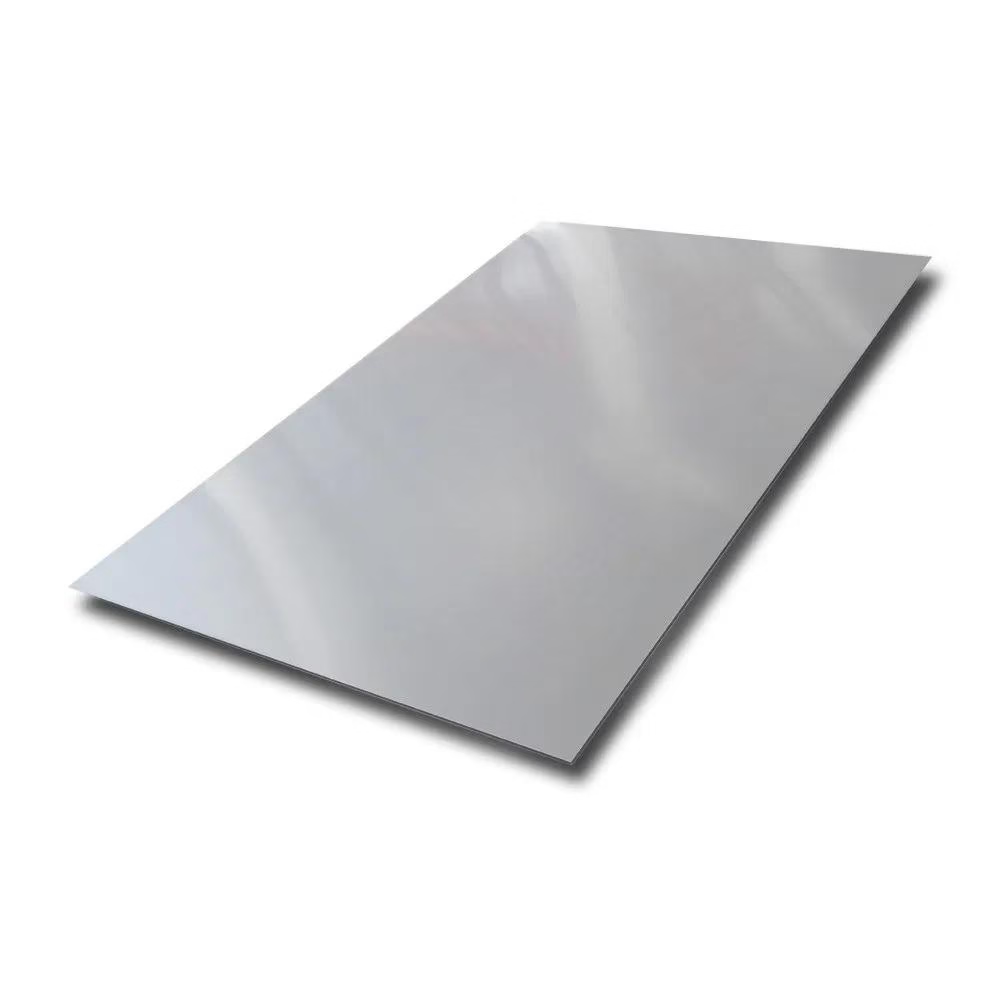
316L Stainless Steel Plate
AISI 316L (UNS S31603) low-carbon molybdenum-bearing austenitic stainless steel plate combining superior marine/chloride corrosion resistance with exceptional weldability. Max 0.030% C, 2-3% Mo, PREN ≥24. Ideal for welded marine, offshore, chemical, and pharmaceutical applications. Thickness 3-200mm, marine certified, ASME BPE compliant.
| Material | Austenitic Stainless Steel (Low Carbon, Molybdenum-Bearing) |
|---|---|
| Grade / Standard | AISI 316L / UNS S31603 |
| Thickness | 3mm - 200mm (plate), 0.3mm - 6mm (sheet) |
| Width | 1000mm - 2500mm |
| Length | 2000mm - 12000mm (plate), 2000mm - 6000mm (sheet) |
| Delivery Condition | hot_rolled / cold_rolled / quenched_tempered |
| Surface Treatment | bare / polished |
| MOQ | 1 Ton |
| Delivery Time | 12-30 Days / In Stock for Common Marine Grades |
| Loading Port | Tianjin / Shanghai / Qingdao / Ningbo |
Offshore & pharmaceutical certified - Response within 24 hours
Overview of 316L Stainless Steel Plate
AISI 316L is the low-carbon variant of the molybdenum-bearing 316 austenitic stainless steel, specifically engineered to combine superior corrosion resistance in chloride and marine environments with exceptional weldability and resistance to intergranular corrosion. Specified under ASTM A240 / EN 10088-2 standards with UNS designation S31603, 316L stainless steel plate contains nominally 16-18% chromium, 10-14% nickel, and 2-3% molybdenum with maximum carbon content of 0.030% (the ‘L’ stands for ‘Low carbon’). This composition provides the characteristic non-magnetic austenitic microstructure with enhanced resistance to pitting corrosion, crevice corrosion, and stress corrosion cracking, while eliminating the risk of carbide precipitation during welding or prolonged exposure to temperatures in the sensitization range of 425-815°C.
316L stainless steel plate has become the international standard for welded marine equipment, offshore platform structures, seawater desalination plants, chemical processing vessels, pharmaceutical production equipment, nuclear fuel reprocessing facilities, and pulp and paper digesters where both superior chloride corrosion resistance and weld integrity are critical for long-term service reliability. The molybdenum content provides PREN (Pitting Resistance Equivalent Number) ≥24, significantly outperforming 304/304L in chloride-containing environments, while the low carbon content ensures that chromium remains in solution rather than forming chromium carbides at grain boundaries during welding, maintaining corrosion resistance throughout welded structures without post-weld heat treatment. 316L plate is supplied in comprehensive thickness range from 3mm to 200mm with multiple surface finishes to meet demanding marine, pharmaceutical sanitary, and chemical processing requirements.
Key Features and Surface Finishes
316L stainless steel plate is manufactured through hot rolling for thicker gauges (typically over 6mm) or cold rolling for thinner sheets, followed by solution annealing at 1010-1120°C with rapid water quenching to achieve optimal low-carbon microstructure, complete dissolution of molybdenum-rich precipitates, and maximum corrosion resistance per ASTM A240 specifications. The reduced carbon content (≤0.030%) combined with molybdenum addition (2.0-3.0%) provides exceptional weldability without requiring post-weld heat treatment for most applications, making 316L the mandatory specification for thick-section welded marine structures, offshore platforms, pharmaceutical pressure vessels, and chemical processing equipment where post-weld solution annealing is impractical.
The plate undergoes comprehensive quality control including chemical composition verification with special attention to both carbon content (≤0.030%) and molybdenum content (2.0-3.0%) verification by OES or XRF spectroscopy, mechanical property testing, intergranular corrosion testing per ASTM A262 Practice E confirming freedom from sensitization, pitting resistance evaluation per ASTM G48 Method A with PREN calculation (≥24), and dimensional inspection. Available surface finishes include No.1 (hot rolled, annealed, descaled — typical for thick marine and offshore structural plates), 2B (cold rolled, annealed, pickled — most common for chemical processing and general fabrication), No.4 (brushed satin finish with 120-150 grit for marine architectural and pharmaceutical applications), BA (bright annealed mirror finish for clean room and high-purity pharmaceutical equipment), and No.8 (mirror polish for decorative marine interiors and medical device manufacturing). Thickness range spans 3mm to 200mm with widths up to 2500mm and standard lengths of 6 meters, with precision cutting services available including water jet cutting for complex marine fittings, plasma cutting for thick offshore platform plates, and laser cutting for pharmaceutical sanitary components.
Main Applications of 316L Stainless Steel Plate
316L stainless steel plate is the mandatory specification for welded marine and offshore engineering including ship hull and superstructure fabrications, offshore oil and gas platform topsides equipment, subsea pipeline supports and manifolds, FPSO (Floating Production Storage and Offloading) vessel process equipment, seawater desalination plant multi-effect distillation (MED) and multi-stage flash (MSF) evaporators, reverse osmosis (RO) membrane pressure vessels and housings, coastal architectural welded structures, marina floating docks and pontoons, yacht and luxury vessel welded assemblies, naval vessel critical components, submarine pressure hull penetrations, marine pollution control systems, ballast water treatment equipment, seawater lift pumps and piping, and offshore wind turbine foundation structures where superior chloride corrosion resistance combined with weld integrity and zero risk of weld decay corrosion are essential for 25-30 year service life in aggressive marine environments.
The chemical processing industry extensively uses 316L for welded reactors and vessels handling sulfuric acid, phosphoric acid, acetic acid, and halogenated compounds, large-capacity storage tanks for aggressive chemicals, distillation columns and fractionation towers, heat exchangers in corrosive service, process piping systems exposed to chlorides and elevated temperatures, chlor-alkali production equipment, petrochemical alkylation units, sour crude oil refining equipment, and chemical intermediate storage where molybdenum-enhanced corrosion resistance and freedom from intergranular corrosion in welded heat-affected zones are critical. Pharmaceutical and biotechnology GMP facilities specify 316L for large welded biopharmaceutical reactors, sterile processing vessels, fermentation tanks for antibiotic and vaccine production, WFI (Water For Injection) generation, storage and distribution systems, buffer preparation vessels, clean-in-place (CIP) distribution manifolds, steam-in-place (SIP) systems, lyophilization chamber construction, and clean room equipment requiring ASME BPE sanitary surface finishes combined with superior corrosion resistance to cleaning chemicals and sanitizing agents. Nuclear power generation and fuel reprocessing facilities use 316L for spent fuel pool structures, radioactive waste storage tanks, reprocessing equipment, and containment vessel internals per ASME Section III. The pulp and paper industry specifies 316L for welded digesters, chlorine dioxide bleaching towers, chemical recovery boilers, white liquor storage tanks, and caustic extraction equipment. Other critical applications include cryogenic LNG storage tank inner shells, pressure vessels per ASME Section VIII Division 1 & 2, food processing equipment in coastal facilities, textile dyeing and finishing equipment, wastewater treatment clarifiers and digesters, flue gas desulfurization scrubbers, architectural structures in aggressive industrial atmospheres, medical implant blank production, and surgical instrument manufacturing.
Why Choose Us for 316L Stainless Steel Plate
Shandong Tanglu Metal Material Co., Ltd. supplies premium 316L stainless steel plate sourced from certified Chinese and international stainless steel mills including Tisco (Taiyuan Iron & Steel), Baosteel Stainless, Lisco, POSCO, and Outokumpu with strict dual control of carbon content (verified ≤0.030%) and molybdenum content (verified 2.0-3.0%), proven marine, offshore, pharmaceutical, and chemical processing project experience, and certified production facilities meeting ISO 9001, ISO 14001, ASME Section VIII, ASME Section III (nuclear grade available), ASME BPE, PED 2014/68/EU, NACE MR0175/ISO 15156 for sour service, and ABS/DNV/LR/BV marine classification society requirements. Every 316L plate undergoes mandatory chemical composition analysis with special verification of both carbon content control (OES verification ≤0.030%) and molybdenum content (2.0-3.0% verified), PMI (Positive Material Identification) testing available for critical applications, mechanical property testing including tensile, yield, elongation and hardness verification, intergranular corrosion testing per ASTM A262 Practice E (Copper-Copper Sulfate-Sulfuric Acid Test) confirming complete freedom from sensitization, pitting resistance testing per ASTM G48 Method A with PREN calculation and critical pitting temperature (CPT) determination, surface finish quality inspection per ASTM A480, and dimensional inspection per ASTM A240 / EN 10088-2 latest revision.
We offer comprehensive thickness range from 3mm precision sheets to 200mm heavy plates for offshore platform and pressure vessel construction, multiple surface finishes (No.1, 2B, No.4, BA, No.8) with ASME BPE sanitary finishes available for pharmaceutical applications, standard widths up to 2500mm and lengths up to 12 meters, plus precision fabrication services including water jet cutting for complex marine fittings and pharmaceutical components, plasma cutting for thick offshore structural plates, laser cutting with ±0.1mm tolerance for precision sanitary equipment, edge beveling for welding preparation, and surface passivation per ASTM A967. With monthly supply capacity of 5,000 tons of stainless steel plates and established export experience to marine engineering, offshore oil and gas, chemical processing, pharmaceutical manufacturing, nuclear power, desalination, pulp and paper, and pressure vessel fabrication clients in over 50 countries including demanding markets in Middle East (Saudi Arabia, UAE for desalination), Southeast Asia (Singapore for offshore), North America (USA for pharmaceutical), and Europe (Norway for marine), we support both small trial orders for equipment prototypes and large project supply contracts for turnkey plant construction and offshore platform fabrication. Each shipment includes original mill test certificate (MTC) conforming to EN 10204 3.1 standard with verified low carbon content (≤0.030%), molybdenum content (2.0-3.0%), PREN value (≥24), and complete heat treatment parameters, with EN 10204 3.2 third-party inspection, PMI report, ASTM A262 intergranular corrosion test report, ASTM G48 pitting resistance test report with CPT data, NACE compliance certification for sour service, marine classification certificates (ABS, DNV, LR, BV, NK, CCS, RINA), and independent third-party inspection (SGS, BV, TÜV, ABS, DNV, Lloyds Register) available for critical marine, offshore, pharmaceutical, nuclear, and chemical processing applications requiring enhanced documentation, code compliance verification, and project-specific material qualification testing.
📐 Dimension & Size Table
| Thickness (mm) | Width (mm) | Length (mm) | Weight (kg/m²) |
|---|---|---|---|
| 3 | 1000-2000 | 2000-6000 | 23.95 |
| 4 | 1000-2000 | 2000-6000 | 31.93 |
| 5 | 1000-2000 | 2000-6000 | 39.92 |
| 6 | 1000-2000 | 2000-6000 | 47.90 |
| 8 | 1000-2200 | 2000-8000 | 63.86 |
| 10 | 1000-2200 | 2000-8000 | 79.83 |
| 12 | 1500-2200 | 3000-8000 | 95.79 |
| 16 | 1500-2200 | 3000-8000 | 127.72 |
| 20 | 1500-2500 | 3000-10000 | 159.65 |
| 25 | 1500-2500 | 3000-10000 | 199.56 |
| 30 | 1500-2500 | 3000-10000 | 239.48 |
| 40 | 1500-2500 | 3000-12000 | 319.30 |
| 50 | 1500-2500 | 3000-12000 | 399.13 |
| 60 | 1500-2500 | 3000-12000 | 478.95 |
| 80 | 1500-2200 | 3000-12000 | 638.60 |
| 100 | 1500-2200 | 3000-12000 | 798.25 |
| 150 | 1500-2000 | 3000-10000 | 1197.38 |
| 200 | 1500-2000 | 3000-8000 | 1596.50 |
* Custom sizes available upon request. Tolerances per relevant international standards.
🔬 Chemical Composition
| Element | Min | Max | Display Value | Note |
|---|---|---|---|---|
| C | - | 0.030 | ≤0.030 | Low carbon - prevents sensitization |
| Si | - | 0.75 | ≤0.75 | |
| Mn | - | 2.00 | ≤2.00 | |
| P | - | 0.045 | ≤0.045 | |
| S | - | 0.030 | ≤0.030 | |
| Cr | 16.00 | 18.00 | 16.00-18.00 | Corrosion resistance element |
| Ni | 10.00 | 14.00 | 10.00-14.00 | Austenite stabilizer |
| Mo | 2.00 | 3.00 | 2.00-3.00 | KEY ELEMENT - Marine & pitting corrosion resistance |
| N | - | 0.10 | ≤0.10 | Optional |
| Fe | - | - | Balance | Base element |
* Chemical composition may vary by heat, thickness and specification. Please refer to the actual mill test certificate.
⚙️ Mechanical Properties
| Property | Value | Unit | Test Condition |
|---|---|---|---|
| Tensile Strength (Rm) | ≥485 | MPa | Solution annealed, per ASTM A240 |
| Yield Strength (Rp0.2) | ≥170 | MPa | 0.2% proof stress (lower than 316 due to low carbon) |
| Elongation (A) | ≥40 | % | Gauge length 50mm |
| Brinell Hardness (HBW) | ≤217 | HBW | Solution annealed |
| Rockwell Hardness (HRB) | ≤95 | HRB | Solution annealed |
| Vickers Hardness (HV) | ≤220 | HV | Solution annealed |
| Impact Energy (KV2) | ≥150 | J | Charpy V-notch at +20°C |
| Density | 7.98 | g/cm³ | Reference value |
| PREN (Pitting Resistance) | ≥24 | - | PREN = %Cr + 3.3×%Mo + 16×%N (typically 24-26) |
| Critical Pitting Temp (CPT) | ≥10 | °C | Per ASTM G48 Method A in 6% FeCl₃ |
| Magnetic Permeability | ≤1.02 | μ | Non-magnetic austenitic structure |
* Values shown are minimum requirements unless otherwise stated.
📦 Commercial Information
| Packaging | Premium seaworthy export packing for 316L stainless steel plates with marine-grade corrosion protection. Thinner plates and sheets (≤6mm) individually wrapped with PE film and VCI (Vapor Corrosion Inhibitor) paper specifically formulated for marine-grade stainless steel, then bundled with heavy-duty corrosion-resistant steel strapping and protective wooden frame with moisture barrier to prevent edge damage, surface contamination, and atmospheric corrosion during ocean freight. Thicker plates (>6mm) bundled with marine-grade steel strapping and corner edge protectors, with weather-resistant and moisture-barrier interleaving paper between plates to prevent surface scratching, staining, and saltwater exposure during transit and storage. Bundle weight typically 3-5 tons depending on plate dimensions, optimized for container loading and crane handling at offshore fabrication yards. Each bundle clearly tagged with heat number, grade designation (316L / S31603), verified carbon content (≤0.030%), verified molybdenum content (2.0-3.0%), PREN value, dimensions, surface finish, marine classification approval (if applicable), and quantity. For offshore platform and subsea equipment, special marine packaging with double VCI wrapping, desiccant sachets, humidity indicators, and vacuum-sealed outer wrapping available to ensure zero corrosion during extended storage in humid tropical climates. For pharmaceutical and ASME BPE applications, clean room packaging with particle-free PE film wrapping, sealed in moisture-proof bags with inert gas flushing available. Wooden crates with ISPM-15 fumigation certification available for air shipment and export to countries requiring phytosanitary compliance. Marine project packaging includes waterproof tarpaulin covering, steel banding with plastic edge protection, and clear identification marking for offshore platform module assembly and subsea equipment fabrication. |
|---|---|
| Payment Terms | T/T (Telegraphic Transfer),L/C at Sight (Letter of Credit),D/P (Documents against Payment),D/A (Documents against Acceptance),Escrow (for large offshore projects),Western Union,PayPal (for small orders) |
| Price Term | FOB,CFR,CIF,EXW,DDP,DAP |
| Supply Capacity | 5,000 Tons/Month (Stainless Steel Plates & Sheets) |
| Loading Port | Tianjin / Shanghai / Qingdao / Ningbo |
Why Choose Our 316L Stainless Steel Plate?
Dual-Certified Low Carbon & Molybdenum Content
316L plate with verified carbon content ≤0.030% AND molybdenum content 2.0-3.0% providing PREN ≥24 for superior marine corrosion resistance. Supplied with EN 10204 3.1/3.2 mill certificate including chemical analysis (C and Mo verified by OES), ASTM A262 Practice E intergranular corrosion test, ASTM G48 pitting test with CPT data, and complete heat treatment traceability.
Superior Weldability for Marine Fabrication
Low carbon content eliminates carbide precipitation during welding, maintaining corrosion resistance in heat-affected zones without post-weld heat treatment. Ideal for thick-section welded offshore platforms, ship hulls, subsea manifolds, pressure vessels per ASME Section VIII, and pharmaceutical vessels per ASME BPE. TIG, MIG, SMAW, and SAW welding qualified.
Marine & Offshore Classification Certified
ABS, DNV GL, Lloyd's Register, BV, NK, CCS, RINA, and KR approved for marine hull construction, offshore platform equipment, and subsea structures. NACE MR0175/ISO 15156 compliant for sour service oil and gas applications. Suitable for 25-30 year service life in seawater and marine atmospheres with proper design and maintenance.
Multi-Code & Multi-Industry Compliance
FDA CFR 21 compliant for food contact in coastal plants, ASME BPE SF1-SF7 sanitary finishes for pharmaceutical bioreactors, ASME Section VIII Division 1 & 2 for pressure vessels, ASME Section III for nuclear components, PED 2014/68/EU for European pressure equipment, and 3A Sanitary Standards for dairy processing. ISO 9001, ISO 14001, CE certified.
Marine Project Stock & Global Logistics
Common marine welding grades (8mm-30mm, 2B/No.4 finish) maintained in stock for 12-20 days dispatch. Thick offshore platform plates (40mm-100mm) production cycle 25-35 days. Experienced in marine project logistics including container optimization (25-27 tons/20FT, 27-29 tons/40FT), offshore platform module delivery, and worldwide shipping to shipyards and offshore fabrication yards.
🏭 Applications of 316L Stainless Steel Plate
316L stainless steel plate is the mandatory specification for welded marine and offshore engineering including commercial ship hull plating and superstructure fabrications requiring ABS/DNV/LR classification approval, offshore oil and gas platform topsides process modules and equipment foundations, FPSO (Floating Production Storage and Offloading) vessel crude oil storage and processing systems, subsea pipeline end manifolds (PLEM) and subsea production trees requiring NACE MR0175 sour service compliance, tension leg platform (TLP) and semi-submersible drilling rig structural components, offshore wind turbine monopile foundations and transition pieces, seawater desalination plant multi-effect distillation (MED) evaporators operating at 70-110°C, multi-stage flash (MSF) distillation heat recovery and brine heater tubes, reverse osmosis (RO) membrane pressure vessels (operating at 55-70 bar) and high-pressure pump housings, seawater intake and outfall piping systems, coastal architectural welded structures including curtain walls and structural columns in marine atmospheres with 50+ year design life, marina floating dock pontoons and pile-supported pier structures, luxury yacht and superyacht welded hull and deck structures, naval vessel critical welded assemblies including destroyer and frigate hulls, submarine pressure hull penetrations and ballast tank structures, marine pollution control and ballast water treatment system pressure vessels, seawater lift pump casings and impellers, offshore aquaculture cage frames and fish farm structures, and LNG carrier cargo containment system supports where superior chloride-induced pitting and crevice corrosion resistance (PREN ≥24), weld integrity without post-weld heat treatment, and verified freedom from intergranular corrosion in heat-affected zones are essential for 25-30 year service life in aggressive marine environments with seawater temperatures ranging from -2°C (Arctic) to +35°C (Persian Gulf). The chemical processing industry extensively uses 316L for welded reactors and pressure vessels handling sulfuric acid (H2SO4) up to 80% concentration at moderate temperatures, phosphoric acid (H3PO4) production equipment including evaporators and concentration units, acetic acid (CH3COOH) synthesis reactors and distillation columns, halogenated organic compound processing including chlorinated solvents and fluorochemicals, large-capacity storage tanks (50,000+ gallon) for aggressive chemical intermediates, distillation columns and fractionation towers with multiple welded trays, shell-and-tube heat exchangers in corrosive service, process piping systems (6-24 inch diameter) exposed to chlorides and elevated temperatures (up to 150°C), chlor-alkali production electrolytic cells and brine systems, petrochemical alkylation unit reactors and settlers, sour crude oil refining desulfurization equipment, chemical intermediate storage and blending vessels, polymer production reactors, and specialty chemical batch processing equipment where molybdenum-enhanced resistance to localized corrosion (pitting PREN ≥24, crevice corrosion, stress corrosion cracking) and elimination of intergranular corrosion risk in multi-pass welded thick-wall vessels are critical for safe operation and 15-20 year equipment life. Pharmaceutical and biotechnology GMP manufacturing facilities specify 316L for large welded biopharmaceutical production reactors (500-20,000 liter capacity) requiring ASME BPE compliance, sterile processing vessels for injectable drug formulation with internal electropolished surfaces (Ra ≤0.4 μm), mammalian cell culture bioreactors with jacketed vessels and internal cooling coils, fermentation tanks for antibiotic and vaccine production with CIP spray ball systems, WFI (Water For Injection) generation systems including multiple-effect distillation units and storage loops maintaining 80°C circulation, buffer and media preparation vessels with magnetic mixer drive assemblies, clean-in-place (CIP) chemical storage and distribution skids, steam-in-place (SIP) condensate collection vessels, lyophilization (freeze-drying) chamber construction with internal shelf assemblies, chromatography column housings for protein purification, viral inactivation and filtration system pressure vessels, aseptic filling line product surge tanks, clean room HVAC ductwork and plenums, and pharmaceutical wastewater neutralization tanks requiring superior corrosion resistance to aggressive CIP chemicals (2-4% NaOH at 80°C, 2-3% HNO3, hypochlorite sanitizers), freedom from intergranular corrosion in extensively welded sanitary vessels, and validated ASME BPE sanitary surface finishes (SF4: Ra ≤0.4 μm, SF7: Ra ≤0.2 μm after electropolishing) for FDA 21 CFR Part 211 GMP compliance and EMA/WHO pharmaceutical manufacturing validation. Nuclear power generation and fuel reprocessing facilities use 316L per ASME Section III Class 2 and 3 for spent fuel pool stainless steel liner welded construction, radioactive liquid waste storage tank fabrication, fuel reprocessing nitric acid dissolver vessels, high-level waste vitrification equipment, contaminated water treatment system vessels, and reactor containment vessel internal structures where resistance to radiolytic corrosion, stress corrosion cracking, and weld integrity without sensitization are critical for nuclear safety systems. The pulp and paper industry specifies 316L for welded kraft pulp digesters (continuous and batch), chlorine dioxide (ClO2) generation and bleaching tower construction, elemental chlorine-free (ECF) bleach plant equipment, chemical recovery boiler economizer and superheater tubing, white liquor clarifier and storage tank fabrication, black liquor oxidation vessels, caustic extraction and washing stages, pulp washing and screening equipment, and effluent treatment neutralization tanks where resistance to alkaline sulfide solutions, chlorinated bleaching chemicals, and high-temperature caustic environments with extensive welding is required for 20+ year service life. Other critical applications include cryogenic LNG (Liquified Natural Gas) storage tank 9% nickel steel inner tank support structures and secondary containment, pressure vessels per ASME Section VIII Division 1 & 2 for compressed industrial gas storage (nitrogen, oxygen, argon, CO2), food processing equipment in coastal seafood plants and salt production facilities, textile dyeing and finishing equipment using chlorine-based bleaches and salt-containing dyes, automotive catalytic converter substrate washcoat application equipment, wastewater treatment anaerobic digesters and activated sludge aeration tanks, flue gas desulfurization (FGD) wet scrubber construction for coal-fired power plants, architectural structures in aggressive industrial atmospheres including chemical plant pipe racks and equipment supports, medical device manufacturing including orthopedic implant blank production and surgical instrument forging, and pollution control equipment for industrial emissions requiring long-term corrosion resistance, weld structural integrity, and cost-effective fabrication in chemically aggressive, marine, and high-purity service conditions.
📋 Quality & Certification
Our Certifications
- ✅ ISO 9001:2015
- ✅ ABS
- ✅ DNV GL
- ✅ Lloyd's Register (LR)
- ✅ Bureau Veritas (BV)
- ✅ SGS Certified
- ✅ RINA
Mill Certificate Type
- 📋 EN 10204 3.1
- 📋 EN 10204 3.2
- 📋 Certificate of Origin
❓ Frequently Asked Questions
What is the difference between 316 and 316L stainless steel plate?
The primary difference between 316 and 316L is carbon content: 316 has maximum carbon of 0.08%, while 316L has maximum carbon of 0.030% (the 'L' stands for 'Low carbon'). Both grades contain 2-3% molybdenum providing PREN ≥24 for superior chloride corrosion resistance compared to 304/304L. The critical advantages of 316L over 316 include: (1) SUPERIOR WELDABILITY - The low carbon content in 316L prevents chromium carbide precipitation at grain boundaries during welding or exposure to 425-815°C sensitization temperature range, eliminating the risk of intergranular corrosion (weld decay) in heat-affected zones adjacent to welds, making 316L the mandatory choice for welded marine structures, offshore platforms, pressure vessels, pharmaceutical equipment, and chemical processing vessels where post-weld solution annealing is impractical or impossible; (2) NO POST-WELD HEAT TREATMENT REQUIRED - 316L welded fabrications maintain full corrosion resistance without requiring post-weld solution annealing at 1010-1120°C, significantly reducing fabrication costs and lead times for large welded structures like ship hulls, offshore platform modules, storage tanks, and pharmaceutical reactors; (3) BETTER INTERGRANULAR CORROSION RESISTANCE - 316L passes ASTM A262 Practice E intergranular corrosion test even after prolonged exposure to sensitization temperatures, while standard 316 may fail without post-weld heat treatment; (4) MANDATORY FOR ASME BPE - Pharmaceutical and bioprocessing equipment per ASME BPE requires low-carbon grades (316L) to ensure sanitary weld quality and freedom from intergranular corrosion in aggressive CIP cleaning cycles. The trade-off is slightly lower mechanical properties: 316L has yield strength ≥170 MPa vs ≥205 MPa for 316, but this difference is minimal and rarely limiting for structural applications. Standard 316 is acceptable for: non-welded components (flanges, fittings, machined parts), thin sections (<3mm) where rapid cooling prevents sensitization, applications where post-weld solution annealing will be performed, and situations requiring maximum strength. In practice, 316L has become the default specification for marine, offshore, chemical, pharmaceutical, and pressure vessel plate applications because: (a) Most stainless fabrication involves extensive welding, (b) The cost premium of 316L over 316 is minimal (<5%), (c) 316L eliminates the risk and cost of post-weld heat treatment, and (d) Modern mills commonly produce dual-certified 316/316L material with carbon typically 0.020-0.025% meeting both specifications. For critical welded applications in marine, offshore, chemical processing, pharmaceutical manufacturing, and nuclear service, 316L is the strongly recommended grade to ensure long-term corrosion resistance, weld integrity, and compliance with international codes (ASME, PED, NACE, marine classification societies).
Can 316L stainless steel plate be used for offshore oil and gas platforms?
Yes, 316L stainless steel plate is extensively used for offshore oil and gas platform applications and is approved by major marine classification societies (ABS, DNV GL, Lloyd's Register, Bureau Veritas) for offshore construction, though specific applications depend on environmental severity and design requirements. 316L is suitable for: (1) TOPSIDE PROCESS EQUIPMENT - Heat exchangers, separators, storage vessels, piping systems, valve bodies, instrument tubing, and chemical injection skids on platform topsides where seawater exposure is primarily atmospheric (salt spray) rather than continuous immersion, and operating temperatures are moderate (<150°C); (2) STRUCTURAL COMPONENTS - Platform deck grating, handrails, stairs, walkways, equipment supports, cable trays, and architectural panels in the splash zone and above where PREN ≥24 provides good resistance to marine atmospheric corrosion with 25-30 year design life when properly maintained; (3) SUBSEA EQUIPMENT COMPONENTS - Subsea manifold internal components, control system housings, hydraulic actuator bodies, and instrumentation housings where 316L provides adequate corrosion resistance for warm shallow water applications (<1000m depth, <40°C), though higher grades may be specified for deep water or high H2S environments; (4) SOUR SERVICE APPLICATIONS - 316L can be used in oil and gas service containing H2S (sour service) if it meets NACE MR0175/ISO 15156 material requirements including maximum hardness limits (HRC 22 or HBW 237) and meets SSC (Sulfide Stress Cracking) testing requirements per NACE TM0177, making it suitable for some sour crude production and gas processing equipment; (5) SEAWATER INJECTION SYSTEMS - Seawater lift pump components, injection manifolds, and distribution piping for enhanced oil recovery (EOR) where 316L provides acceptable corrosion resistance for filtered, deaerated seawater at moderate temperatures (<60°C). LIMITATIONS AND HIGHER-GRADE ALTERNATIVES: (1) For continuous seawater immersion in warm tropical waters (>25°C), particularly in stagnant or low-velocity conditions, 316L may experience pitting corrosion in crevices and under deposits - consider 2205 duplex (PREN ≥35) or 2507 super duplex (PREN ≥42) for seawater piping and pumps; (2) For deep subsea applications (>1000m depth) with high hydrostatic pressure, low temperatures, and potential for microbially influenced corrosion (MIC), higher nickel alloys like 625, 825, or C-276 may be required; (3) For high H2S concentration sour service (>0.05 bar partial pressure) or high chloride combined with H2S, duplex grades (2205, 2507) or nickel-base alloys provide better resistance to SSC and pitting; (4) For seawater heat exchangers and desulfurization equipment, 904L (PREN ≥35) or super austenitic grades provide better performance. DESIGN CONSIDERATIONS for successful 316L use in offshore platforms: Avoid crevices, stagnant areas, and dead legs in seawater systems; ensure adequate flow velocity (>1 m/s) to prevent biofilm formation; specify proper surface finish (2B minimum, No.4 preferred for marine atmospheric exposure); use cathodic protection for continuously immersed components; implement regular inspection and maintenance programs; follow NACE, API, and DNV guidelines for material selection and design. 316L remains highly cost-effective for offshore platform topside equipment, atmospheric zone structural components, process vessels not in direct seawater contact, and many subsea equipment applications when properly specified and designed, offering excellent corrosion resistance, weldability, and 25+ year service life with significantly lower material cost compared to super duplex or nickel-base alternatives.
What surface finish is recommended for 316L pharmaceutical vessels and bioreactors?
For pharmaceutical vessels and bioreactors fabricated from 316L stainless steel plate, surface finish selection is critical for regulatory compliance, cleanability, bacterial resistance, and product quality assurance. Recommended finishes based on application severity: (1) 2B FINISH (Ra ≤0.8 μm) - Cold rolled, annealed, pickled finish is the MINIMUM acceptable for general pharmaceutical contact surfaces per FDA CFR 21 Part 170.39 and basic 3A Sanitary Standards, suitable for buffer storage tanks, non-sterile intermediate vessels, water-for-injection (WFI) pre-treatment equipment, and utility systems where frequent CIP cleaning is not required and bacterial control is less critical; (2) No.4 BRUSHED FINISH (Ra 0.4-0.6 μm) - Directional 120-150 grit mechanical polish is widely used for non-sterile pharmaceutical processing vessels, fermentation seed tanks, media preparation vessels, chromatography feed tanks, and buffer blending systems where good cleanability is required but electropolishing cost is prohibitive - the linear grain pattern provides adequate cleanability while hiding minor scratches from routine operation; (3) ASME BPE SANITARY FINISH SF4 (Ra ≤0.4 μm) - Mechanically polished to ASME BPE (Bioprocessing Equipment Standard) SF4 level is the INDUSTRY STANDARD for most pharmaceutical production bioreactors, sterile processing vessels, API synthesis reactors, fermentation production vessels, cell culture bioreactors, clean-in-place (CIP) distribution systems, and steam-in-place (SIP) condensate vessels requiring validated CIP cleaning, GMP compliance, and control of bacterial adhesion - this finish provides reliable cleanability, passes surface roughness validation, and is cost-effective for large vessels (500-20,000 liter capacity); (4) ELECTROPOLISHED FINISH (Ra ≤0.25 μm, typical Ra 0.10-0.20 μm) - Electrochemical polishing per ASTM B912 removing 20-40 microns of surface material is REQUIRED for high-purity pharmaceutical applications including WFI storage and distribution loops (must maintain 80°C or continuous circulation), injectable drug formulation vessels, sterile filtration housing internals, aseptic filling system product contact surfaces, vaccine production bioreactors, monoclonal antibody purification equipment, and any vessel requiring ASME BPE SF6 or SF7 finish (Ra ≤0.25 μm or ≤0.20 μm) - electropolishing removes embedded iron particles, welding heat scale, and mechanical polishing compound residues while creating a chromium-enriched passive layer (Cr2O3) that enhances corrosion resistance to aggressive CIP chemicals and minimizes protein adhesion, bacterial attachment, and endotoxin retention; (5) PASSIVATION per ASTM A967 using citric acid (preferred for pharmaceutical due to lower environmental impact and reduced hydrogen embrittlement risk) or nitric acid is MANDATORY after all fabrication operations including welding, mechanical polishing, or electropolishing to remove free iron contamination from machining and welding, enhance the chromium oxide passive film formation, and ensure maximum corrosion resistance and cleanability - passivation must be validated by water break test or ferroxyl test showing uniform passive film; (6) SPECIALIZED FINISHES for critical applications: Ba (Bright Annealed) mirror finish (Ra ≤0.5 μm) for sight glass ports and observation windows, 400-grit mechanical polish (Ra ≤0.3 μm) for agitator shafts and impellers requiring mechanical strength with good surface quality, and specialized electropolish + passivation + surface analysis protocols for semiconductor ultrapure water systems and medical device manufacturing. ASME BPE FINISH SPECIFICATIONS: SF1 (Ra ≤1.0 μm) - utility systems, SF2 (Ra ≤0.8 μm) - general bioprocessing, SF3 (Ra ≤0.6 μm) - fermentation, SF4 (Ra ≤0.4 μm) - most pharmaceutical production [MOST COMMON], SF5 (Ra ≤0.3 μm) - sterile processing, SF6 (Ra ≤0.25 μm) - WFI systems, SF7 (Ra ≤0.2 μm) - high purity applications. VALIDATION REQUIREMENTS: Surface finish must be verified by calibrated profilometer per ASME B46.1 at multiple locations including base material, heat-affected zones adjacent to welds, and complex geometries (nozzles, agitator penetrations); typical specification requires Ra ≤0.4 μm (SF4) with maximum peak-to-valley roughness Rt ≤3.0 μm to prevent bacterial harboring; surface must be validated for cleanability using riboflavin tracer or ATP swab testing demonstrating ≥3-log reduction after CIP cycle; passivation must be verified by water break test showing complete wetting or ferroxyl test showing no free iron. COST CONSIDERATIONS: Electropolishing adds $8-15/ft² for large vessels and $25-40/ft² for complex geometries compared to mechanical SF4 finish, but is justified for sterile products and WFI systems; citric acid passivation adds $2-4/ft² compared to nitric acid; total surface finishing can represent 15-25% of fabrication cost for pharmaceutical vessels. For most GMP pharmaceutical bioreactor applications, 316L base material with mechanical polish to ASME BPE SF4 (Ra ≤0.4 μm) followed by citric acid passivation per ASTM A967 provides optimal balance of regulatory compliance (FDA 21 CFR Part 211, EU GMP Annex 1, WHO GMP), validated cleanability (CIP/SIP), bacterial resistance, long-term corrosion resistance to aggressive cleaning chemicals (2-4% NaOH at 80°C, 2-3% HNO3), and cost-effectiveness for commercial-scale pharmaceutical manufacturing.
How does 316L compare to duplex 2205 stainless steel for marine applications?
316L austenitic and 2205 duplex stainless steels represent different metallurgical approaches to marine corrosion resistance, each with distinct advantages and limitations. KEY PERFORMANCE COMPARISONS: (1) PITTING CORROSION RESISTANCE - 2205 duplex provides significantly superior resistance with PREN ≥35 (calculated as 22% Cr + 3.3×3% Mo + 16×0.17% N = 22 + 9.9 + 2.7 = 34.6) compared to 316L with PREN ≥24 (17% Cr + 3.3×2.5% Mo + 16×0.05% N ≈ 26), making 2205 the better choice for continuous seawater immersion, warm tropical seawater (>25°C), and high-chloride process streams, while 316L is adequate for marine atmospheric exposure, intermittent seawater contact, and properly designed equipment with flow velocity >1 m/s preventing crevice corrosion; (2) MECHANICAL STRENGTH - 2205 duplex offers approximately DOUBLE the yield strength of 316L (2205: yield ≥450 MPa, tensile ≥620 MPa vs 316L: yield ≥170 MPa, tensile ≥485 MPa), enabling significant weight reduction for offshore platform structures, pressure vessels (allowing thinner walls for same design pressure), and subsea equipment, with 2205 also providing superior fatigue resistance critical for dynamic offshore loading and wave action; (3) STRESS CORROSION CRACKING RESISTANCE - 2205 duplex is virtually immune to chloride stress corrosion cracking (Cl-SCC) up to 150-200°C due to its two-phase ferrite-austenite microstructure, while 316L austenitic can experience Cl-SCC above 60°C in chloride solutions under tensile stress, making 2205 mandatory for hot seawater service, heat exchangers with seawater cooling, and desalination plant evaporators; (4) WELDABILITY - 316L offers superior weldability with wider process windows for TIG, MIG, and SMAW welding, no risk of intermetallic precipitation with standard welding procedures, easier fabrication training, and lower welding consumable costs, while 2205 duplex requires careful heat input control (0.5-2.5 kJ/mm), interpass temperature monitoring (<150°C), and nitrogen-bearing shielding gas (N2+Ar) to maintain balanced ferrite-austenite microstructure and corrosion resistance in weld metal and heat-affected zones, making 316L preferred for complex welded fabrications, field welding, and repair welding; (5) MACHINABILITY - 316L is significantly easier to machine than 2205 duplex due to lower strength and work-hardening rate, reducing tool wear and cycle times for complex components like flanges, valve bodies, and machined fittings, though 2205 is still machinable with proper tooling; (6) FORMABILITY - 316L offers better cold formability and deep-drawing capability due to fully austenitic structure, making it preferred for complex formed shapes, dished heads, and hydroformed components, while 2205 requires higher forming forces and has greater springback; (7) COST - 2205 duplex typically costs 30-60% more than 316L (as of 2024: 316L plate ≈$3,500-4,500/ton FOB China vs 2205 ≈$5,000-6,500/ton), though total project cost may favor 2205 when weight savings, thinner sections, and longer service life are considered. MARINE APPLICATION SELECTION GUIDELINES: CHOOSE 316L FOR: (1) Marine atmospheric exposure and splash zone structures where continuous immersion is not expected (handrails, platforms, architectural cladding); (2) Seawater equipment with proper flow design (>1 m/s velocity) and regular maintenance preventing crevice corrosion; (3) Complex welded fabrications requiring field welding or extensive weld joint configurations; (4) Machined components like flanges, fittings, and valve bodies where machinability reduces fabrication costs; (5) Formed components requiring deep drawing or complex shapes; (6) Budget-constrained projects where 25-year design life is acceptable with maintenance. CHOOSE 2205 DUPLEX FOR: (1) Continuous seawater immersion in warm tropical waters (>25°C) or stagnant conditions; (2) Seawater piping systems, pumps, and heat exchangers in desalination plants; (3) Offshore platform structural members requiring high strength-to-weight ratio; (4) Subsea manifolds and equipment exposed to seawater at depth; (5) Hot seawater service (>60°C) or chloride environments with risk of stress corrosion cracking; (6) Applications requiring 30-50 year design life with minimal maintenance; (7) Pressure vessels where wall thickness reduction justifies higher material cost. HYBRID APPROACH: Many offshore platforms use 316L for topside atmospheric zone components, complex fabrications, and equipment not in direct seawater contact, while specifying 2205 duplex for seawater piping, pumps, heat exchangers, and splash zone structural members, optimizing total project cost while ensuring adequate corrosion resistance for each service environment. For subsea equipment, 2507 super duplex (PREN ≥42) or nickel-base alloys (625, 825, C-276) may be required for extreme deep water or high H2S sour service conditions beyond the capabilities of both 316L and 2205.
What welding procedures should be followed for 316L stainless steel plate?
Welding 316L stainless steel plate requires specific procedures to maintain corrosion resistance, mechanical properties, and avoid common defects. QUALIFIED WELDING PROCESSES: (1) GTAW/TIG (Gas Tungsten Arc Welding) - Preferred for root passes, thin sections (<6mm), and high-quality pharmaceutical/sanitary applications requiring ASME BPE compliance, using ER316L filler wire (matching composition) with argon or argon+2-5% hydrogen (for increased penetration and oxide cleaning) shielding gas, pure argon backing gas for full penetration welds to prevent sugaring (chromium carbide/oxide formation) on root side, DC electrode negative (DCEN) polarity, amperage 80-200A depending on thickness, and travel speed 10-20 cm/min maintaining tight arc length (2-3mm) for clean, spatter-free welds suitable for sanitary service; (2) GMAW/MIG (Gas Metal Arc Welding) - Most productive for plate thickness >4mm in shipbuilding, offshore fabrication, and pressure vessel construction, using ER316L solid wire (0.9-1.6mm diameter) or metal-cored wire for higher deposition rates, shielding gas argon+1-2% oxygen or argon+15-25% CO2 (tri-mix: Ar+He+CO2 for better penetration on thick sections), spray transfer mode (>250A) for thick plates or short-circuit/pulsed modes for thinner sections, with stringent control of heat input (0.8-2.0 kJ/mm) to minimize grain growth and maintain corrosion resistance; (3) SMAW/Stick (Shielded Metal Arc Welding) - Still common for field welding offshore platforms, ship repair, and situations where portability and wind protection are critical, using E316L-15, E316L-16, or E316L-17 electrodes (electrode designation indicates tensile strength and coating type), with proper electrode storage (<150°F, <65°C, and <50% RH to prevent moisture absorption causing porosity), DCEP (electrode positive) polarity, and careful slag removal between passes; (4) SAW (Submerged Arc Welding) - Used for automated welding of thick plates (>12mm) in shipyards and pressure vessel shops, using ER316L wire with neutral or slightly basic flux, achieving high deposition rates (5-20 kg/hr) with excellent weld quality, though requiring proper flux handling and recovery to prevent contamination; (5) FCAW (Flux-Cored Arc Welding) - Sometimes used for offshore welding with self-shielded or gas-shielded flux-cored wires providing slag protection, though requiring careful procedure qualification to ensure corrosion resistance. CRITICAL WELDING PARAMETERS: (1) HEAT INPUT CONTROL - Maintain heat input between 0.5-2.5 kJ/mm (calculate as: Heat Input kJ/mm = (Arc Voltage × Current × 60) / (1000 × Travel Speed mm/min)) to prevent excessive grain growth reducing corrosion resistance and toughness, with lower heat input preferred for thin sections and sanitary applications; maximum interpass temperature should be limited to 150°C (measured 75mm from weld) to maintain corrosion resistance and prevent excessive grain growth; (2) FILLER METAL SELECTION - Use ER316L filler matching base metal composition (≤0.030% C, 2-3% Mo, 10-14% Ni, 16-18% Cr) to ensure weld metal corrosion resistance matches base metal; for dissimilar welding or service above 350°C, consider ER316LSi or ER309L/309MoL fillers; verify filler metal certification includes chemistry, mechanical properties, and ferrite number (FN 4-10 typical for austenitic weld metal helps prevent hot cracking); (3) SHIELDING AND BACKING GAS - Use argon or argon-rich mixtures for face shielding; CRITICAL for full-penetration welds: use pure argon or forming gas (95% N2 + 5% H2) backing gas purging to prevent root-side oxidation (sugaring) that depletes chromium and creates cosmetic/corrosion issues - purge until oxygen content <100 ppm measured with oxygen analyzer before welding; (4) JOINT PREPARATION - Machined or ground edges preferred over flame-cut edges (flame cutting can harden edges); maintain proper root gap and included angle per WPS (Welding Procedure Specification); thoroughly clean joint area with stainless steel wire brush (dedicated to stainless only, never used on carbon steel) or grind to bright metal removing all oil, grease, paint, and oxide scale within 25mm of joint; (5) PREHEAT AND POST-WELD HEAT TREATMENT - 316L generally requires NO preheat (though preheat to 50-150°C may help prevent cracking on heavy sections >50mm or when welding in cold environments <0°C); PWHT (Post-Weld Heat Treatment) is NOT required for 316L due to low carbon content preventing sensitization, though stress relief at 870-900°C may be specified for very thick sections (>100mm) or dimensional stability requirements. DEFECT PREVENTION: (1) HOT CRACKING - Maintain weld metal ferrite number FN 4-10 using ER316L filler (verified by ferrite gauge or calculation); avoid excessive constraint and rapid cooling; use proper joint design with adequate root gap; (2) POROSITY - Use properly dried/stored electrodes and clean, dry base metal; ensure adequate gas flow rate (12-15 L/min for TIG, 20-25 L/min for MIG); protect weld pool from wind drafts; (3) LACK OF FUSION - Maintain proper heat input, arc voltage, and travel speed; ensure joint cleanliness; use proper welding technique with adequate weave pattern; (4) SENSITIZATION - While 316L is resistant to sensitization due to low carbon (≤0.030%), avoid excessive heat input or multiple thermal cycles in the 425-815°C range; for critical corrosive service, test per ASTM A262 Practice E after welding to verify freedom from intergranular corrosion; (5) SIGMA PHASE PRECIPITATION - Avoid prolonged exposure to 600-900°C temperature range (during multi-pass welding or PWHT) which can form brittle sigma phase reducing toughness and corrosion resistance. QUALITY CONTROL: (1) VISUAL INSPECTION - 100% visual per AWS D1.6 or ASME Section VIII for surface defects, weld profile, and discoloration; (2) PMI (Positive Material Identification) - Verify filler metal and tack welds using XRF analyzer to prevent material mix-ups; (3) NDT (Non-Destructive Testing) - Radiography (RT), ultrasonic testing (UT), magnetic particle testing (MT, note: 316L is non-magnetic so only detects ferrite stringers), or liquid penetrant testing (PT) per code requirements; (4) CORROSION TESTING - For critical applications, perform ASTM A262 Practice E (intergranular corrosion) and ASTM G48 Method A (pitting resistance) on weld coupons to verify corrosion resistance matches base metal; (5) MECHANICAL TESTING - Tensile, bend, and Charpy impact testing per ASME Section IX or applicable code to qualify welding procedures. For pharmaceutical ASME BPE applications, additional requirements include: polished and passivated weld surfaces achieving SF4 (Ra ≤0.4 μm) or better, autogenous (no filler) orbital TIG welding for tube-to-tube and tube-to-fitting joints achieving interior smoothness, dye penetrant testing of all welds, and documented weld procedure specifications (WPS) and procedure qualification records (PQR) maintaining GMP documentation requirements.
What thickness of 316L plate is recommended for seawater desalination plant evaporators?
For seawater desalination plant evaporators using 316L stainless steel plate, thickness selection depends on the specific evaporator design (multi-effect distillation MED, multi-stage flash MSF, or mechanical vapor compression MVC), operating parameters (pressure, temperature, brine concentration), and applicable design codes (ASME Section VIII, PED 2014/68/EU, or regional standards). TYPICAL THICKNESS SPECIFICATIONS: (1) MED (Multi-Effect Distillation) EVAPORATOR SHELLS operating at low pressure (0.05-0.15 bar absolute) and moderate temperature (40-70°C) typically use 316L plate thickness 6-12mm for shell diameter 2-6 meters, with thickness increasing for larger diameters per ASME Section VIII Division 1 external pressure calculations; internal components including tube sheets, distribution boxes, and mist eliminators commonly use 6-10mm plate; vapor-liquid separators may use 8-16mm depending on diameter and height; the relatively low operating pressure allows economical plate thickness while providing adequate corrosion allowance (typically 1-2mm over 25-year design life) for seawater/brine exposure at moderate temperatures where 316L PREN ≥24 provides acceptable pitting resistance; (2) MSF (Multi-Stage Flash) EVAPORATOR FLASH CHAMBERS operating at higher temperature (90-110°C top brine temperature) and pressure (0.3-0.8 bar in flashing stages) typically require 316L plate thickness 10-20mm for stage chamber shells depending on chamber size (3-8 meter diameter, 20-40 meter length), with thickness calculated per ASME Section VIII considering internal pressure, external atmospheric loading when under vacuum, seismic loads, and wind loads; heat recovery and brine heater tube bundles use 12-20mm tube sheets with corrosion allowance for hot brine (90-110°C, 50,000-70,000 ppm TDS) exposure; flash box internal partitions commonly use 8-12mm plate providing structural rigidity and corrosion resistance; the elevated temperature (>90°C) in MSF increases pitting corrosion risk for 316L, requiring either increased thickness for corrosion allowance or consideration of 2205 duplex (PREN ≥35) or 904L super austenitic (PREN ≥35) alternatives for critical hot brine components; (3) HEAT EXCHANGER TUBE SHEETS in both MED and MSF designs commonly use 316L plate thickness 25-50mm (for tube sheet diameter 2-4 meters) providing adequate ligament efficiency between tube holes, structural support for tube bundle, and corrosion allowance on both seawater and brine sides; thicker tube sheets (40-60mm) may be required for large-diameter (>4 meter) exchangers or high tube count designs to maintain structural integrity under differential thermal expansion and tube-side pressure loading; (4) BRINE CIRCULATION PUMP CASINGS typically use 316L plate thickness 12-25mm depending on pump size (discharge 500-5000 m³/hr) and design pressure (3-10 bar), with increased thickness for larger pumps and higher head requirements; impeller shrouds and vanes commonly fabricated from 12-16mm plate providing erosion resistance in high-velocity brine service; (5) SEAWATER INTAKE STRUCTURES, SURGE TANKS, AND DISTRIBUTION HEADERS typically use 316L plate thickness 8-16mm for vessels 2-6 meter diameter, with thickness selected per ASME Section VIII for operating pressure (typically 2-6 bar for feed pumps) plus corrosion allowance and structural considerations for seismic/wind loading. DESIGN CONSIDERATIONS AFFECTING THICKNESS: (1) CORROSION ALLOWANCE - Industry standard practice adds 1.5-3.0mm corrosion allowance beyond pressure-required thickness for 25-30 year design life in seawater/brine service, with higher values (2-3mm) specified for hot brine (>90°C) or poorly controlled brine chemistry; some designers specify 2205 duplex or 904L for hot-side components eliminating the need for excessive corrosion allowance on 316L; (2) OPERATING TEMPERATURE - 316L pitting resistance decreases with increasing temperature; for continuous operation above 60°C in seawater or concentrated brine, consider upgrading to 2205 duplex (suitable to 120°C in seawater) or 904L super austenitic rather than increasing 316L thickness; (3) BRINE CONCENTRATION - Higher TDS (Total Dissolved Solids) increases chloride activity and pitting tendency; for brine >50,000 ppm TDS at >70°C, 2205 duplex provides better cost-effectiveness than thick 316L; (4) PRESSURE VESSEL CODE REQUIREMENTS - ASME Section VIII Division 1 minimum thickness for pressure vessels is 2.5mm (excluding corrosion allowance), though practical minimum for welded fabrication is 6mm; PED 2014/68/EU has similar requirements with additional safety factors for Category II-IV equipment; (5) FABRICATION CONSIDERATIONS - Plates <8mm may be difficult to weld without distortion for large-diameter evaporators; plates >50mm may require special welding procedures, pre-heat (though not typically for 316L), and extended fabrication time increasing costs; (6) AVAILABILITY AND COST - Common stock thicknesses (6, 8, 10, 12, 16, 20, 25, 30mm) are more economical and readily available than special thicknesses; material cost scales linearly with thickness (e.g., 20mm plate costs approximately double 10mm plate per square meter), making over-specification economically significant for large evaporator shells. THICKNESS RECOMMENDATIONS BY COMPONENT: Small MED pilot plants (<100 m³/day): 6-8mm shells, 10-12mm tube sheets; Commercial MED plants (1,000-10,000 m³/day): 8-12mm shells, 20-30mm tube sheets, 10-16mm internal components; Large MSF plants (10,000-50,000+ m³/day): 12-20mm flash chamber shells, 30-50mm heat exchanger tube sheets, 12-16mm brine heater shells; Hybrid MSF-RO or MED-RO plants: 8-16mm for moderate-temperature components. ALTERNATIVE MATERIAL CONSIDERATIONS: For hot brine (>80°C) tube sheets and flash chamber components, 2205 duplex stainless steel plate (PREN ≥35, higher strength allowing 20-30% thickness reduction, better SCC resistance) often provides better lifecycle cost than thick 316L despite 30-50% higher material cost; for extremely corrosive service (>110°C brine, high CO2, or chlorination/biocide injection points), 904L (UNS N08904) or AL-6XN super austenitic (PREN >42) or titanium Grade 2 may be required. Final thickness selection should be based on: detailed pressure vessel stress analysis per ASME Section VIII or equivalent code, site-specific seawater chemistry analysis (chloride, sulfate, pH, temperature, DO), operating condition definition (pressure, temperature, brine concentration factor), corrosion rate data from pilot testing or similar operating plants, lifecycle cost analysis comparing 316L thickness options vs. upgraded alloys (2205, 904L, titanium), and consultation with desalination plant OEM design standards and operational experience in similar seawater conditions.
Get Marine Grade 316L Quote for
316L Stainless Steel Plate
Submit your requirements and receive a competitive price quote within 24 hours.
- ✓ Fast response within 24 hours
- ✓ Competitive factory-direct pricing
- ✓ Free technical consultation
- ✓ Mill test certificate provided
- ✓ Flexible payment terms available
⏱ Offshore & pharmaceutical certified - Response within 24 hours
Send Your Inquiry
All fields marked with * are required